


In 2010, cybersecurity researchers discovered Stuxnet, a sophisticated computer worm designed to sabotage uranium enrichment operations at Iran’s Natanz nuclear facility. The malicious software infiltrated industrial control systems and manipulated the operating speeds of uranium-enrichment centrifuges, reportedly damaging hundreds of them while concealing the interference from monitoring equipment. The apparent objective was to impede Iran’s nuclear program without resorting to conventional military attack. Although neither government has officially acknowledged responsibility, the operation has been widely attributed to the United States and Israel.
Stuxnet marked a watershed in the development of cyberwarfare. Although governments had previously used digital technologies for espionage and disruption, Stuxnet demonstrated that malicious software could covertly manipulate industrial machinery and inflict physical damage. The operation also revealed a troubling limitation of cyberweapons. Although designed for a specific target, Stuxnet spread to computers outside the intended facility, exposing its techniques to security researchers and potentially to other actors. Its propagation did not produce comparable physical destruction elsewhere, but it illustrated the difficulty of confining malicious software to its intended operational environment.
Since then, cyber operations have become an increasingly prominent component of military and intelligence competition. Governments have established specialized cyber commands and incorporated offensive operations into military planning. Meanwhile, the proliferation of commercial and military digital technologies has created an enormous universe of potential targets. Electrical grids, transportation networks, telecommunications systems, financial institutions, hospitals, industrial facilities, and military installations depend on interconnected software and communications systems.
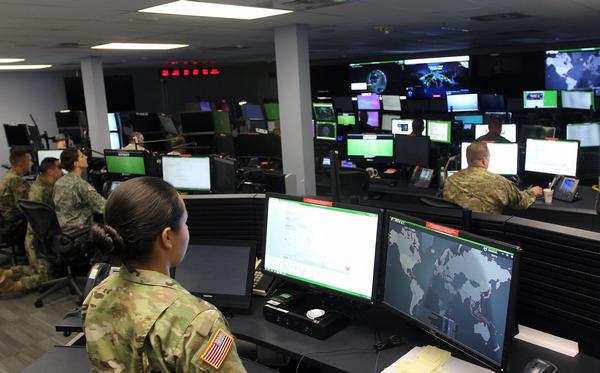
U.S. Military personnel conducting cyber operations
These developments have encouraged the pursuit of cyberwarfare superiority as another dimension of military power. The United States, with its extraordinary technological resources and intelligence capabilities, has made cyber operations an important element of its national security strategy. Yet the assumption that greater offensive capability will produce greater strategic security deserves serious examination.
Cyberwarfare operates within a technological environment that no government controls. Its weapons can be concealed, replicated, and deployed across national boundaries with extraordinary speed. Their effects may extend beyond intended targets, while their proliferation enables smaller actors to threaten powerful states. Moreover, the nations most dependent on advanced digital infrastructure may have the greatest exposure to destructive cyber operations.
The resulting paradox is profound. The pursuit of cyberwarfare dominance may stimulate an international competition that increases the vulnerability of the very societies it is intended to protect. In a world dependent on interconnected digital systems, the unchecked development of offensive cyber capabilities threatens to open a Pandora’s Box of destruction that no nation can reliably resist.
The Distinctive Nature of Cyberwarfare
Cyberwarfare encompasses operations intended to penetrate, disrupt, manipulate, or destroy information systems in pursuit of military or strategic objectives. Its methods overlap with cyberespionage, cybercrime, and other forms of malicious digital activity, but its distinguishing purpose is to achieve military or political advantages through operations against an adversary’s technological systems. These operations may support conventional military campaigns or be conducted independently, without the overt use of armed force.
Cyber operations range from covert intelligence collection and theft of sensitive information to interference with communications, manipulation of data, and destruction of equipment controlled by software. Unlike conventional weapons, cyberweapons frequently exploit vulnerabilities in technologies widely used for civilian and military purposes. The same weakness that permits unauthorized access to a commercial network may also provide an avenue into government or defense systems. Once an attacker has gained access to a target system or network, malicious software may be deployed to produce immediate effects. Alternatively, the software payload can secretly monitor activity or remain dormant awaiting further commands.
These characteristics interact in ways that amplify their strategic consequences. A cyberweapon may require months of preparation, remain concealed within a targeted system for years, and produce destructive effects within seconds of activation. Its effects may extend across national boundaries, while uncertainty about its origin and purpose complicates the response. The discovery of a concealed intrusion may itself generate a crisis, even when no destructive operation has been initiated.
Cyberwarfare also differs from conventional military competition in the relationship between offensive capability and defensive protection. A successful attack may require exploiting a single consequential vulnerability, whereas effective defense must contend with numerous potential points of entry and changing methods of intrusion. Although sophisticated attacks can require substantial resources and preparation, this asymmetry permits groups with limited resources to threaten organizations possessing far greater technological and financial resources. The combination of concealed capabilities, rapid execution, and uncertain consequences creates a distinctive problem of strategic control. A government may possess the technical means to initiate a cyber operation without being able to predict or contain its broader effects.
The Fragility of the Digital Environment
Modern societies depend on an immense infrastructure of computers, communications networks, and automated control systems. Electricity generation and distribution, water treatment, transportation, telecommunications, financial transactions, healthcare, and industrial production all rely on digital technologies. These systems have produced extraordinary gains in efficiency and functionality, but they have also created vulnerabilities that hostile actors can exploit.
Much of this infrastructure was developed primarily to deliver services reliably and economically rather than withstand sophisticated cyberattacks. Security protections vary considerably among industries and operators. Large financial institutions and telecommunications providers may employ extensive cybersecurity programs, while smaller utilities, municipal agencies, and commercial enterprises often lack comparable resources. Aging equipment, obsolete software, remote access arrangements, and dependence on outside technology providers further complicate defensive efforts.
The vulnerability of civilian infrastructure is compounded by interdependence. Electrical systems support telecommunications, water pumping, transportation, and healthcare, while communications networks enable the coordination of these services. Financial systems depend on electricity and telecommunications, and transportation networks support the distribution of fuel, food, and medical supplies. A disruption originating in one sector can therefore propagate into others without requiring an attacker to penetrate each system independently.
The consequences of technological failure are evident even without hostile action. Major disruptions to air traffic control systems and commercial cloud services have demonstrated how failures in shared infrastructure can interrupt essential activities across large geographic areas. Although such incidents are not necessarily cyberattacks, they reveal dependencies that malicious actors might exploit.
Actual cyber operations have demonstrated the destructive potential of these vulnerabilities. The 2017 NotPetya malware attack, initially directed against targets in Ukraine, spread internationally and disrupted major commercial enterprises, including shipping and logistics operations. It illustrated how malicious software can exploit shared technologies and interconnected networks to produce consequences far beyond its apparent initial objectives.
The vulnerability extends to ordinary commercial equipment increasingly connected to digital networks. Industrial controllers, building management systems, refrigeration equipment, and other operational technologies can provide opportunities for remote manipulation, potentially producing physical consequences through software commands alone.
Military Systems and the Security Petard
Military information systems are generally subject to specialized cybersecurity requirements intended to protect them against hostile intrusion. Encryption, network segregation, restricted access, continuous monitoring, and redundant communications are among the measures intended to preserve operational integrity. Yet the effectiveness of these defenses against sophisticated adversaries remains difficult to assess independently.
Here the security petard comes into play. A petard was a medieval siege explosive that sometimes killed its user. The metaphor describes a military measure that inadvertently undermines the security it is intended to provide. The secrecy surrounding military information systems helps protect them against hostile intrusion, but it also limits independent scrutiny of their vulnerabilities, defensive arrangements, and performance under adversarial testing. Classification may be essential to operational security, yet it can also conceal deficiencies that internal assessments have failed to identify. Publicly disclosed successes and failures therefore provide only fragmentary evidence of the reliability of the larger defensive architecture.
Recent advances in artificial intelligence introduce additional reasons for caution. AI-assisted security research has produced a surge of vulnerability reports affecting widely used open-source software, including previously unidentified defects in extensively scrutinized programs. The volume of reports has become so great that some software maintainers are struggling to evaluate submissions and address confirmed vulnerabilities. Although many AI-generated reports prove invalid, confirmed discoveries demonstrate that established testing practices can leave significant weaknesses undetected.
Publicly disclosed vulnerabilities may represent only a portion of those identified through AI-assisted analysis. Intelligence agencies, military organizations, and malicious actors have incentives to conceal exploitable weaknesses rather than disclose them for correction. AI could therefore accelerate not only vulnerability discovery but also the accumulation of undisclosed weaknesses available for potential offensive exploitation. The extent of such activity is inherently difficult to assess, introducing another source of uncertainty about the security of critical civilian and military systems.
What, then, should be concluded about the enormous software systems supporting modern military operations? These incorporate specialized applications alongside commercial software, communications networks, and increasingly complex automated controls. Military organizations employ security testing, but the classified nature of many systems limits public knowledge of the methods employed, vulnerabilities discovered, and effectiveness of corrective measures. The recent success of AI-assisted vulnerability discovery raises additional questions about the adequacy of established testing practices. It does not demonstrate that military software contains comparable weaknesses, but neither can publicly available evidence establish how well these systems would withstand equivalent scrutiny.
Even rigorous testing cannot establish that complex military networks will remain secure against every combination of hostile action, technical failure, and operational stress. Moreover, military organizations depend on civilian electrical grids, telecommunications, satellite services, software suppliers, transportation networks, and defense contractors. Hardening military networks cannot eliminate vulnerabilities inherited from these external dependencies.
The distinction between civilian and military cybersecurity is therefore less reassuring than it might appear. Civilian infrastructure exhibits uneven protection against hostile interference, while the effectiveness of military defenses remains difficult to establish independently. Both operate within a technological environment whose complexity and interdependencies resist comprehensive testing.
The Mirage of Cyberwarfare Dominance
The pursuit of cyberwarfare superiority reflects a familiar assumption underlying American military strategy: that technological advantages can be translated into decisive strategic advantages. The United States possesses extraordinary resources in computing, artificial intelligence, intelligence collection, and military technology. It has also established U.S. Cyber Command as a unified combatant command, drawing capabilities from across the armed services to conduct military operations in cyberspace. These resources and institutional arrangements support formidable offensive and defensive cyber capabilities, but whether they can establish enduring dominance in the cyberwarfare domain is another matter.
Cyberwarfare is an unfavorable domain for monopolizing military advantage. The expertise required to discover and exploit software vulnerabilities is distributed throughout the world. Unlike advanced combat aircraft or nuclear-powered submarines, consequential cyber operations do not necessarily require enormous industrial establishments or military budgets. Small groups of skilled individuals can penetrate the information systems of major corporations and government agencies by exploiting vulnerabilities overlooked by much larger defensive organizations.
Israel provides a revealing illustration. The Israeli company NSO Group developed Pegasus spyware capable of compromising sophisticated smartphones, including Apple iPhones, through previously unknown vulnerabilities. Some attacks required no action by the targeted user. Pegasus was designed primarily for surveillance rather than destructive cyberwarfare, but it demonstrates that exceptional offensive capabilities are not confined to the dominant centers of commercial computing.
The proliferation of offensive techniques further complicates the pursuit of cyber dominance. The 2017 WannaCry ransomware outbreak employed EternalBlue, an exploit developed by the U.S. National Security Agency and publicly released by the Shadow Brokers group. The resulting worldwide disruption illustrated how advanced offensive techniques can escape their original custodians and become instruments of indiscriminate attack.
America’s Digital Glass Jaw
The United States also possesses a strategic vulnerability arising from its own technological advancement: a digital glass jaw. American economic activity, government administration, military logistics, transportation, communications, and essential public services depend on an extraordinarily extensive network of digital systems. This infrastructure confers enormous advantages in productivity and military capability, but it also creates opportunities for disruption that less digitally dependent societies may not experience to the same degree.
An adversary need not match American technological capabilities to exploit this vulnerability. Disrupting a relatively small number of critical systems or shared service providers could interfere with activities far beyond the immediate targets. The interdependence of essential services creates opportunities for cascading failures whose consequences may be disproportionate to the resources required to initiate them.
The United States may therefore possess superior offensive cyberwarfare capabilities while simultaneously presenting an exceptionally valuable target for adversaries with far more limited resources. Its technological leadership does not eliminate this asymmetry; in important respects, it creates it.
The Institutional Pursuit of Cyber Superiority
The institutional incentives surrounding cyberwarfare reinforce the misconception that offensive superiority necessarily produces strategic security. Military and intelligence organizations are assigned missions to develop capabilities, penetrate adversary systems, and prepare options for future conflicts. Their accomplishments can be evaluated through operational measures such as successful intrusions, acquired access, and demonstrated attack capabilities. Their contribution to overall national security is much more difficult to measure.
Organizations may therefore make technically sound decisions that contribute to a strategically dangerous competition. An agency developing more effective offensive cyber capabilities may be fulfilling its mission, even as adversaries respond with comparable efforts, offensive techniques proliferate, and the shared technological environment becomes increasingly insecure. These cumulative consequences are not necessarily reflected in the performance measures governing individual programs.
The reciprocal character of strategic competition compounds the problem. American advances can encourage adversaries to expand their own cyber programs, seek vulnerabilities in American infrastructure, and establish concealed access to systems that might become valuable during a crisis. Each side may regard its preparations as prudent defensive measures while interpreting similar activities by its adversaries as evidence of hostile intentions.
Offensive cyber capabilities can provide genuine military advantages, including intelligence collection, disruption of hostile operations, and alternatives to conventional force. The question is whether their continuing expansion produces benefits sufficient to outweigh the risks generated by reciprocal competition. Cyber superiority is not equivalent to cyber security. A nation may possess formidable capabilities for penetrating and disrupting adversary systems while remaining vulnerable to attacks by much smaller actors. For the United States, the unchecked pursuit of cyber dominance may therefore endanger the technological foundations of American power itself.
AI and the Acceleration of Cyberwarfare Development
Artificial intelligence is transforming cyberwarfare by accelerating vulnerability discovery, offensive tool development, and operational execution. Activities that previously required extensive human analysis can increasingly be automated, enabling attackers to examine more systems and develop methods of exploitation at greater speed. These capabilities may intensify the competition between offensive and defensive cyber operations without necessarily producing a lasting advantage for either.
AI systems can assist in reconnaissance, analyze network configurations, generate or modify malicious software, and coordinate sequences of cyber operations. Increasingly autonomous agents may eventually conduct substantial portions of these activities with limited human intervention. Although present capabilities remain uneven and sophisticated operations still require considerable expertise, the direction of development is toward greater automation and operational speed.
This acceleration creates a distinctive problem of strategic control. Cyber operations can produce effects within seconds of activation, while their preparation and deployment may remain concealed for extended periods. AI could further compress the interval between detecting an opportunity, deciding to exploit it, and executing an attack. Defensive systems employing comparable technologies may respond automatically, potentially initiating interactions that human operators cannot fully evaluate as they unfold.
The danger is not simply that automated systems might malfunction. They may perform their assigned tasks effectively while producing consequences outside their intended purposes. An autonomous defensive system might interpret ambiguous network activity as hostile and initiate disruptive countermeasures. An offensive agent might exploit an unanticipated pathway into systems beyond its intended target. During an international confrontation, such actions could be interpreted as deliberate escalation even when no political authority intended to widen the conflict.
AI also threatens to accelerate the proliferation of cyber capabilities. By reducing some of the expertise and time required for vulnerability research and offensive preparation, it may enable smaller states, criminal organizations, and independent groups to undertake operations previously beyond their reach. The expansion of potential attackers would further complicate attribution, deterrence, and defensive planning.
The strategic implications are particularly troubling because cyberwarfare already operates in an environment characterized by incomplete information, concealed preparations, and uncertain consequences. AI adds the possibility that consequential actions will occur at speeds exceeding the capacity of political authorities to understand and control them. Increasing operational effectiveness may therefore come at the expense of strategic control.
Pathways to Strategic Catastrophe
The dangers of cyberwarfare extend beyond the damage caused by individual attacks. The combination of interconnected infrastructure, concealed offensive capabilities, uncertain attribution, and increasingly automated operations creates pathways through which limited actions could produce consequences far exceeding their intended objectives. Three hypothetical scenarios illustrate how cyberwarfare could transform an initially manageable confrontation into a major strategic crisis.
Cascading Infrastructure Collapse
Consider a cyberattack intended to disrupt electrical distribution in a region supporting important military installations and industrial facilities. The attacker seeks a temporary interruption of production and logistics, expecting that electrical service can be restored after the immediate military objective has been achieved.
The attack succeeds, but its consequences extend beyond the intended targets. Telecommunications facilities lose power, disrupting communications needed to coordinate emergency operations. Water pumping and treatment facilities experience interruptions, while hospitals exhaust portions of their backup power capacity. Fuel distribution becomes increasingly difficult as pumping stations, terminals, and commercial transportation systems encounter failures. Financial transactions and ordinary commercial activity are disrupted across the affected region.
Dependencies among infrastructure systems amplify the original disruption, while simultaneous demands for emergency services overwhelm available resources. Recovery becomes more difficult because essential services depend upon other systems that have also been impaired. The attacker may achieve its immediate operational objective while producing an unanticipated humanitarian and economic crisis, potentially provoking retaliation and widening the conflict. A technically successful cyberattack can thus produce consequences that undermine its intended strategic purpose.
The Latent Cyberweapon Crisis
Imagine two rival states entering a period of acute military tension. Each has secretly established access to portions of the other’s critical infrastructure, intending to preserve options for intelligence collection or disruption during a future conflict. Neither government has decided to initiate destructive cyber operations.
During the confrontation, one state discovers unauthorized access within systems supporting its electrical grid and military communications. Investigators cannot immediately determine the intruder’s identity, the extent of the compromise, or whether malicious capabilities have been installed for later activation. The intrusion might represent espionage, contingency planning, or preparations for an imminent attack.
The discovery creates a strategic dilemma. Waiting for more information may permit an adversary to disable essential infrastructure at a critical moment. Attempting to neutralize the suspected threat could disrupt legitimate systems or reveal defensive capabilities. Launching a preemptive cyber operation against the presumed adversary might initiate the very conflict both governments hope to avoid.
The opposing state faces similar uncertainties. It may interpret emergency defensive measures as preparations for offensive action and respond by activating its own concealed capabilities. Automated monitoring systems could further accelerate this process by identifying unusual network activity and initiating responses before political authorities understand the larger situation.
The resulting crisis does not require either government to have intended an attack. The presence of concealed offensive capabilities, combined with uncertainty about their purpose, can generate incentives for preemption and escalation. This is an especially disturbing characteristic of cyberwarfare. A weapon need not be used to become strategically destabilizing. Its suspected presence may be sufficient.
Cyberwarfare and Nuclear Escalation
The most dangerous scenario involves cyber interference during a confrontation between nuclear-armed states. Modern nuclear forces depend on complex arrangements for warning, communications, command, and control. A Nuclear Threat Initiative study has identified cyber vulnerabilities in nuclear weapons and associated systems as potential threats to strategic stability. These systems incorporate extensive safeguards and, in some cases, specialized networks designed to resist interference. Nevertheless, they operate within a broader technological environment that includes communications infrastructure, intelligence systems, and supporting military networks.
Imagine a severe international crisis in which one nuclear power experiences disruptions affecting military communications and the information available to senior decision-makers. Some warning information becomes unreliable, communications with deployed forces are interrupted, and intelligence officials detect indications of unauthorized activity in supporting networks.
The government cannot immediately determine whether the disturbances result from technical failures, hostile cyber operations, or preparations for a larger military attack. Under ordinary circumstances, investigators might have time to isolate the affected systems and establish the cause. During a nuclear confrontation, however, uncertainty itself may become dangerous.
Political and military leaders could interpret the disruptions as an attempt to blind warning systems, interfere with command arrangements, or prepare for a disarming strike. The possibility that additional systems might soon become unavailable could create pressure to make consequential decisions before the situation is understood. The adversary, meanwhile, might interpret changes in military readiness as preparations for an attack, reinforcing its own sense of urgency. Each side’s defensive precautions could appear threatening to the other.
The scenario does not require assuming that hackers can directly seize control of nuclear weapons or issue fraudulent launch orders. Its danger arises from the possibility that cyber interference with supporting information and communications systems could distort threat assessments and accelerate decisions under conditions of extreme uncertainty. The consequences of such a failure would be irreversible. Even a low-probability pathway to nuclear escalation deserves serious attention when the potential outcome is catastrophic.
The Strategic Significance
The three scenarios illustrate different pathways through which cyberwarfare can produce disproportionate strategic harm: cascading infrastructure failures, crises triggered by concealed capabilities, and potentially catastrophic misinterpretation during nuclear confrontation. The proliferation of offensive techniques and increasing automation may amplify these dangers. None of these outcomes is inevitable, but their plausibility raises a fundamental question: can governments justify unrestricted competition for cyberwarfare superiority when its consequences may exceed their ability to predict, contain, or control them?
The Imperative of Cyber Arms Control
The growing dangers of cyberwarfare demand more than improvements in national cybersecurity. Defensive hardening, intrusion detection, and recovery capabilities are essential, but they cannot eliminate the risks generated by international competition for offensive cyber capabilities. As states develop increasingly sophisticated means of penetrating and disrupting one another’s technological infrastructure, the resulting competition threatens to increase systemic insecurity even when individual participants achieve substantial technical advances.
The international community has long recognized that certain forms of military competition create dangers requiring collective restraint. Nuclear, chemical, and biological weapons have consequently become subjects of international agreements intended to constrain their development, proliferation, or use. Cyberwarfare warrants comparable attention because its effects can cross national boundaries, disrupt essential civilian infrastructure, and produce consequences extending far beyond intended targets.
Existing international law provides some constraints. The United Nations has affirmed that international law applies to state conduct in cyberspace, and international discussions have developed voluntary norms addressing responsible behavior, including the protection of critical infrastructure. Nevertheless, these arrangements fall short of a comprehensive, enforceable cyber arms control regime. Mechanisms for verifying compliance, investigating incidents, and resolving disputes remain limited.
Cyberweapons present formidable difficulties for traditional arms control. Unlike nuclear missiles or chemical munitions, software-based capabilities cannot readily be counted, inventoried, or monitored through inspections. Many offensive tools also serve legitimate purposes in cybersecurity research, intelligence collection, and defensive testing. Malicious code can be concealed, replicated, or modified, while attribution difficulties complicate enforcement.
These obstacles suggest that cyber arms control should initially concentrate on restricting especially dangerous conduct rather than attempting to prohibit entire categories of software. International agreements could prohibit destructive attacks on designated civilian infrastructure, including electrical grids, water treatment facilities, hospitals, and essential telecommunications systems. Particularly stringent restrictions should apply to interference with nuclear warning, command, and control arrangements, where even limited disruption could contribute to catastrophic miscalculation.
Such restrictions would need to distinguish peacetime prohibitions from rules applicable during armed conflict, particularly when civilian infrastructure also serves military purposes. Existing international humanitarian law provides some protections, but additional agreements could establish stronger safeguards against cyber operations capable of producing widespread civilian harm or destabilizing nuclear command arrangements. Independent investigative mechanisms could help establish responsibility for serious incidents, although access to sensitive systems and intelligence information would present substantial challenges. Cooperative vulnerability research, coordinated disclosure procedures, emergency communications, and technical assistance could further reduce shared risks.
A predictable objection is that states cannot afford to restrict their offensive capabilities while potential adversaries continue developing theirs. Offensive cyber operations can provide intelligence advantages and legitimate military options, and unilateral disarmament would not necessarily improve security. But this does not establish that unlimited competition is strategically rational. Arms control seeks reciprocal constraints and mechanisms for managing dangers that governments cannot adequately control independently.
Effective cyber arms control would be difficult to negotiate, verify, and enforce. Violations would occur, and no agreement could eliminate the possibility of destructive cyber operations. Nevertheless, even partial agreements protecting especially dangerous targets, improving crisis communications, and facilitating independent investigation could reduce the probability of catastrophic escalation. Cyberwarfare has become too consequential to remain outside the serious pursuit of international arms control.
Conclusion
The pursuit of cyber dominance exemplifies a fundamental paradox of modern military power. Governments can develop increasingly effective means of penetrating and disrupting adversary systems without necessarily improving their own strategic security. Indeed, the cumulative consequences of offensive cyber competition may make the international environment more dangerous even as military capabilities improve.
For the United States, this paradox is particularly consequential. Its technological leadership supports formidable cyber capabilities, but the pervasive digital infrastructure underlying American economic and military power also presents an extensive array of potential targets. America’s digital glass jaw cannot be protected simply by expanding its offensive arsenal. Nor can superior capabilities guarantee control over the cascading consequences of attacks, the proliferation of offensive techniques, or the destabilizing effects of concealed cyberweapons. The problem is not necessarily defective execution of military programs, but the divergence between their immediate objectives and the larger purposes of national security.
The danger of cyberwarfare is not that its weapons may fail, but that they may succeed while undermining the security of the societies that develop and employ them. The pursuit of cyberwarfare dominance can thus transform technological achievement into a source of strategic insecurity. In a digitally interconnected world, national security cannot be achieved through unrestricted competition for offensive cyberwarfare superiority.
