


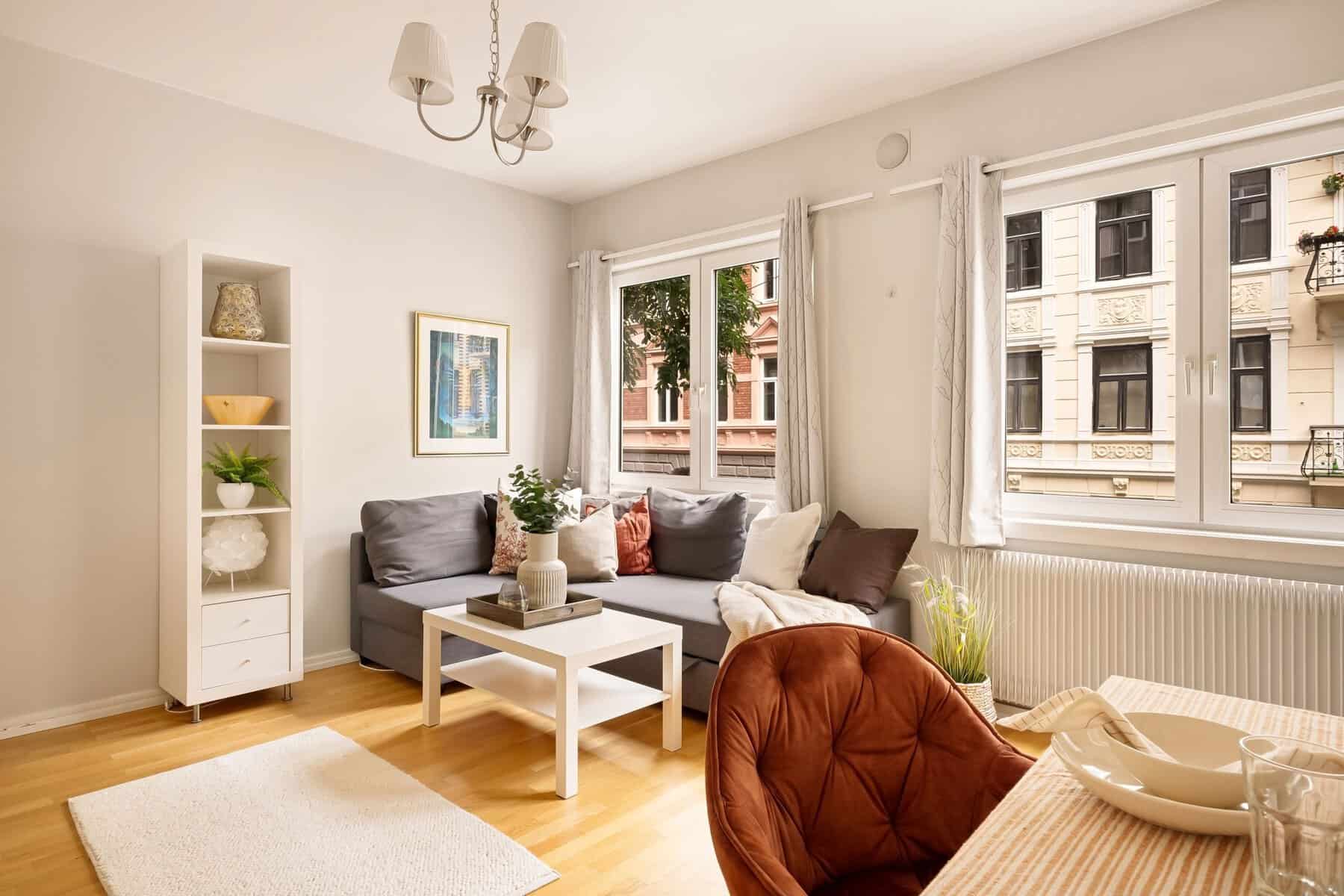
Selling a home is more than just tidying up before the open house. Today’s buyers often form their first impressions while scrolling through listing photos on their phones or laptops, long before they schedule a showing. That means even small mistakes in home staging can make your property seem smaller, less functional, and less appealing than it really is.
The good news? Most staging mistakes are easy to fix once you know what the buyer is looking for. Whether you’re preparing your San Diego, CA home yourself or hiring a professional for your Brooklyn, NY townhome, avoiding these common mistakes will help your listing stand out and encourage a stronger offer.
1. Staging for personal tastes, not target buyers
One of the biggest misconceptions is that staging is just about making your home look “nice.” In reality, effective staging is about making sure the right buyers can picture themselves living there.
Bryan Bittner, founder and CEO of Virtual Staging Solutions, says many sellers miss this distinction. “The most common mistake is decorating around the general idea of ‘nice’, rather than designing each room around the buyers who are most likely to buy based on local data.”
Rather than styling every spare bedroom as a guest room, think about who is most likely to buy your home. In areas popular with remote workers, it may be more appropriate to present the room as a home office. In a family-oriented community, it may make more sense to use it as a children’s room or homework space.
Virtual staging is also becoming more common, especially for properties that are vacant or have old furniture. This allows sellers to test different layouts and styles without the cost of physically moving furniture, while also allowing buyers to visualize how each room will function.
2. Arrange the furniture for the photo on behalf of the buyer
Professional listing photos are often the first thing buyers see, but staging solely for artistic purposes can backfire.
Paul Maynard, owner and operator of Colorful Virtual Tours in Denver, Colorado, has photographed thousands of homes and frequently sees furniture layouts that work well for the photographer but not the buyer. “One of the most common staging mistakes I see is arranging furniture for architectural style photo shoots rather than the way buyers shop online.”
“Putting furniture too far away from the walls, clustering everything in the center of the room, or shoving furniture awkwardly into corners can actually make a space appear smaller,” he explains.
Instead, focus on creating clear paths between rooms and arranging furniture so homebuyers can easily understand the flow of the home. Most buyers start their search online, so each photo should clearly convey the size, features, and layout of the room.
3. “You can’t see the house” when it comes to clutter.
When you’ve lived in the same home for years, it’s easy to overlook things that immediately stand out to visitors.
MLS Images photographer Jenny Edgerton calls this phenomenon “house blindness.” “Over time, we become completely immune to clutter, strange equipment, and out-of-place objects in our homes because we see them every day.”
The easiest way to overcome it is to look at your home from a different perspective. Even better, walk around as if you’re seeing it for the first time or take a photo with your phone. Photos often reveal distracting cords, overflowing shelves, mismatched decor, and crowded countertops that you’d barely notice in real life.
Edgerton also reminds sellers that listing photos require the same preparation as in-person showings. “Real estate photography is the most important photo of your home.” A little extra preparation before taking photos can dramatically improve how your home looks online.
4. Too much furniture
Many sellers believe that fully furnished rooms are more cosy. In fact, too much furniture can often have the opposite effect.
According to Jenny Edgerton, “Most homes have twice as much furniture as they need to present a space in its best light.” Oversized sectionals, extra accent chairs, bulky coffee tables, unnecessary cabinetry, and more can visually make a room smaller. Instead, consider temporarily storing large pieces while your home is on the market.
Edgerton recommends a few simple adjustments to make a room feel larger.
Remove large furniture that takes up most of the room. Keep walkways open and clear of obstructions. Avoid blocking windows so that natural light fills the space. By keeping the entrance open, you give the first impression of spaciousness.
These changes not only help you take better photos of the room, but they also make it easier for buyers to move comfortably through the home during viewings.
5. Think professional staging is too expensive
Another common home staging mistake is assuming that professional staging isn’t worth the investment.
Brad Fletcher, owner of Home Staging Pros in Orlando, says many homeowners only focus on the upfront cost, not the potential return. “One of the biggest mistakes homeowners make is viewing professional staging as an expense rather than an investment in the successful sale of their home.”
This is especially true for vacant properties. Empty rooms can feel smaller than they really are, and many buyers have a hard time visualizing where to place their furniture. As Fletcher explains, “Most buyers can’t naturally envision how an empty room will function or how furniture will fit into the space.”
Professional staging helps clarify the purpose of each room and creates a warm, welcoming atmosphere that encourages buyers to form an emotional connection. A stronger first impression can lead to more interest, fewer markdowns, and less time on the market.
6. Too much or too little organization.
Decluttering is essential before listing your home, but it needs to be balanced. Susan Atwell of AtWell Staged Home says buyers make emotional decisions first, so staging needs to support that emotional response without distractions. “People rely on their emotions and later justify it with logic.”
She warns against going to either extreme. “Don’t overwhelm buyers with too much stuff or a visually crowded space. Conversely, avoid overwhelming buyers by removing too many items, making the space feel abandoned, cold, and uninviting.”
Rather than leaving all surfaces bare, leave a few carefully chosen accessories that add warmth without clutter. A simple centerpiece, fresh towels, or tasteful artwork can give a room a sense of life while also allowing buyers to imagine making it their own.
7. Give your room too many different uses.
Flexibility may sound appealing, but buyers usually respond better when each room has a clear purpose. A room that is presented as an office, gym, craft room, and guest bedroom all at the same time can confuse rather than inspire.
Susan Atwell recommends keeping your vision simple. “Don’t give them too many options for how to use a room. Instead, understand your target buyer and create a consistent, cohesive look and feel throughout your home.”
If buyers can immediately see how a room fits into their lifestyle, they’re less likely to question whether the home’s layout is right for them.
Click here for details >> How to sell your home while living there
final thoughts
Avoiding these common home staging mistakes doesn’t necessarily require a big budget or a complete redesign. It’s often important to simplify a space, highlight its best features, and help buyers understand how they’ll live there.
In a market where buyers often decide which homes to tour within minutes of browsing listings online, effective staging can be one of the easiest ways to make your home stand out.
