


How to improve knowledge retention in corporate learning
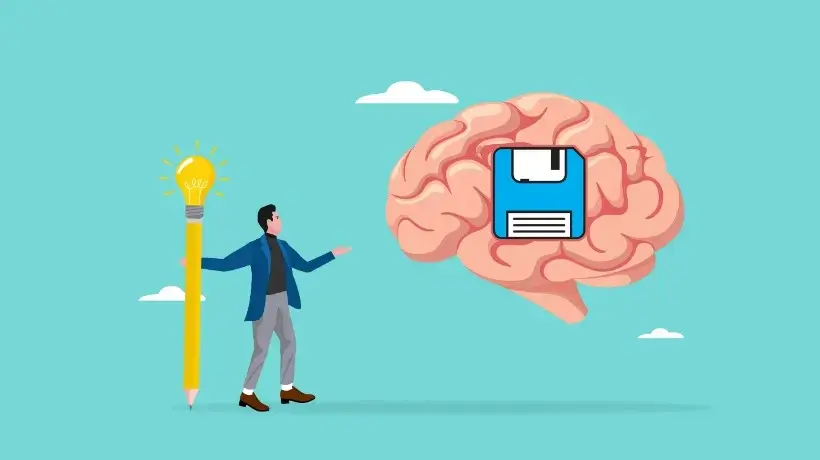
Organizations invest significant amounts in corporate training programs each year. Courses are created, learning platforms are implemented, and employees spend hours completing training modules. However, despite these efforts, the problem of employees forgetting much of what they learn continues to impact learning outcomes across industries.
This problem is more common than many organizations realize. Employees may successfully complete a course, but only a small portion of the information will be retained over time. As a result, training often fails to create lasting behavioral change or measurable impact on the business. The challenge is not just to provide training, but to make learning stick.
Why knowledge retention is important in corporate learning
Training only creates value if employees are able to remember and apply what they learn. Organizations face several problems if they forget information soon after the course ends.
Reduced training effectiveness. Reduced Return on Investment (ROI) Repeated mistakes and operational inefficiencies. Difficult to improve performance.
Too often, organizations focus on completion metrics and ignore retention rates. However, completing a course does not necessarily mean that meaningful learning occurred.
Why do employees forget training so quickly?
One of the main reasons employees forget training content is cognitive overload. Many corporate learning programs try to provide too much information at once. Long presentations, long videos, and dense content can overwhelm learners and make it difficult for the brain to retain information effectively.
Additionally, training is often disconnected from real-world applications. Employees passively consume content without the opportunity to practice or apply what they learn. Without reinforcement, information quickly disappears over time. Other common factors include:
Lack of engagement. General or irrelevant content. Limited interaction. There is no follow-up after the training ends.
When learning feels disconnected from daily tasks, memory naturally declines.
Moving from content delivery to learning experiences
One of the most effective ways to improve retention is to rethink how learning is designed. Many organizations focus on providing information rather than creating learning experiences. However, people retain information more effectively when they actively participate in the process.
This means that training needs to go beyond passive consumption and foster participation, interaction, and practical application. The goal is to create a memorable experience for your employees, not just complete training.
Reduce cognitive overload with microlearning
Microlearning has become one of the most effective strategies for improving retention. Rather than delivering large amounts of information in a single session, content is divided into small, focused modules. This approach helps learners process information more efficiently and reduce mental fatigue. Microlearning includes:
Short video lessons. A simple quiz. Interactive scenarios. Byte-sized content module.
Because the content is more accessible, learners are more likely to retain it over time.
Continuously reinforce learning
Learning doesn’t stop when you complete a course. Without reinforcement, knowledge naturally diminishes over time. This is a concept often associated with the “forgetting curve.” Organizations can improve retention by regularly reinforcing learning through:
Follow-up activities. Knowledge check. Do the exercises. Review content.
Even small reinforcement moments can significantly improve long-term retention.
Connect learning to daily work
Employees remember information more easily when they can relate it to a real-life situation. Training is more effective when it is directly related to the employee’s responsibilities and challenges. To increase relevance:
Use real-world scenarios. Include practical examples. Focus on role-specific situations.
When learners understand how training applies to their work, they are more likely to engage with and remember the content.
Encourage active participation
Passive learning is one of the biggest obstacles to retention. Watching long presentations or reading static content requires little cognitive engagement. Active learning, on the other hand, improves concentration and memory. Organizations can encourage participation by incorporating:
interactive activities. Scenario-based learning. Problem solving exercises. Discussion and reflection.
When learners actively interact with content, retention rates are significantly improved.
create emotional engagement
People tend to remember experiences that create an emotional connection. Training that feels repetitive or impersonal is easy to forget. Adding elements that increase emotional engagement can improve retention by:
storytelling. Real-life issues. Recognition and achievement. An interactive experience.
These elements make learning more memorable and meaningful.
Provide learners with a clear learning path
Employees are more likely to stay engaged when they understand their learning journey. Random or disjointed courses can reduce motivation and make learning feel fragmented. A structured learning path helps employees:
Understand progress. Build your knowledge gradually. Stay focused for long periods of time.
This creates a more powerful and organized learning experience.
Use data to identify retention gaps
Many organizations already collect learning data, but fail to use it strategically. Analyzing learner behavior can help you identify where retention issues are occurring. Some useful indicators include:
Drop-off points within the course. quiz performance. Repeated mistakes. engagement pattern.
These insights allow organizations to adjust their training strategies and continually improve learning outcomes.
Supporting learning beyond the LMS
Making learning part of daily work rather than a separate activity increases retention. Managers and team leaders play a key role in reinforcing post-training learning. Organizations can support retention by encouraging:
Discuss training topics with your team. Practical application in daily work. Ongoing feedback from managers.
When workplace learning is enhanced, it becomes more sustainable.
Build a learning culture
To improve retention, it’s not just about individual courses, but creating a culture that values continuous learning. Organizations with strong learning cultures tend to:
Increased engagement. Improves holding power. More consistent skill development.
This happens because learning becomes part of the organization’s mindset rather than a one-time requirement.
final thoughts
The challenge most organizations face is not so much training availability, but ensuring that employees remember and apply what they learn. Knowledge retention in corporate learning requires more than content delivery. It requires engagement, reinforcement, relevance, and continuous learning experiences.
By moving away from a passive training model to a more interactive, learner-centric strategy, organizations can significantly improve retention rates and maximize the effectiveness of their corporate learning initiatives. After all, effective learning is not measured by the amount of content provided, but by how much employees actually remember and use in their daily work.
Share with
