


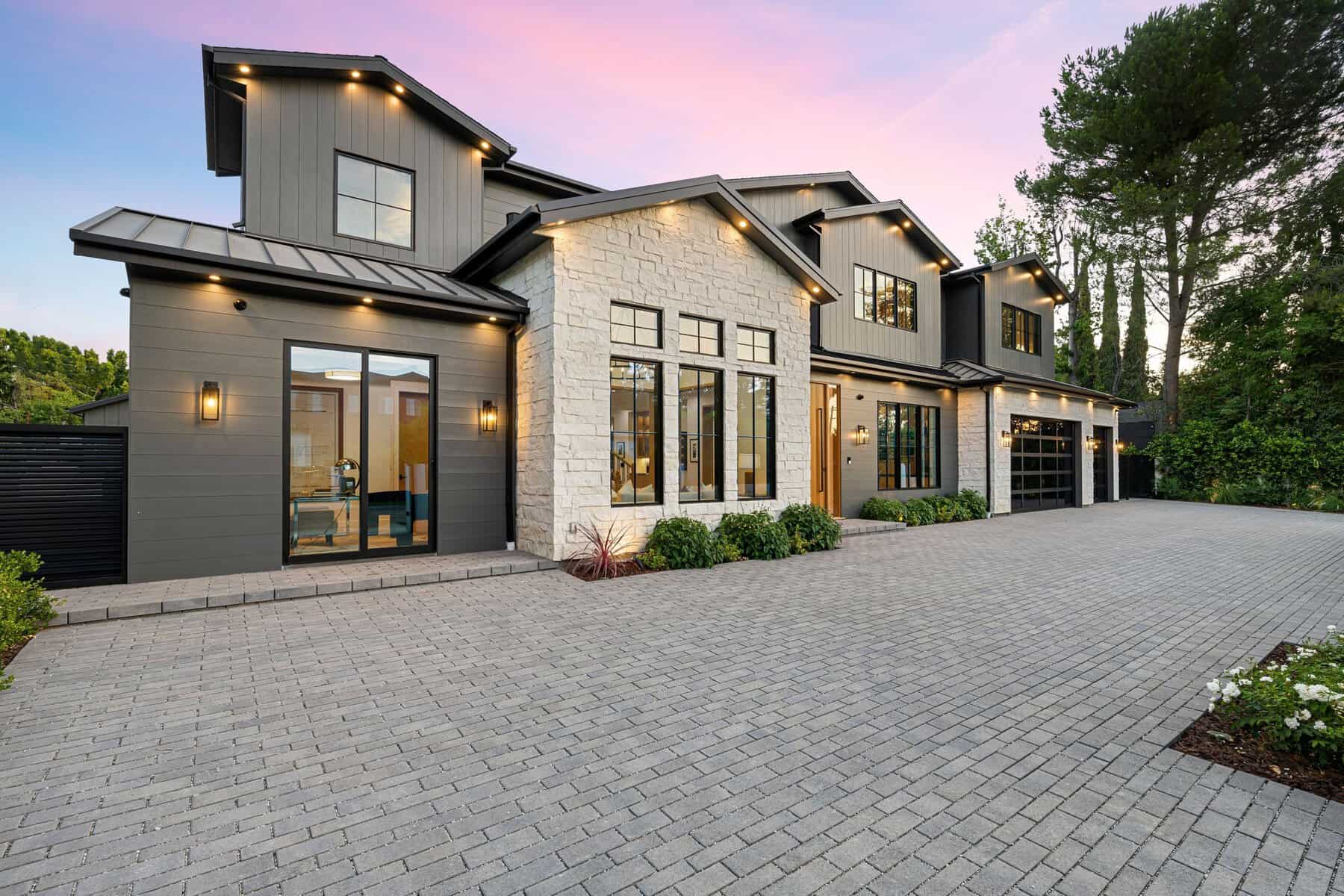
Your driveway is one of the first things people notice about your home, but there’s more to choosing the right materials than just curb appeal. Durability, maintenance requirements, climate, drainage, and budget will all influence the best option for your property.
To help narrow down your choices, we compared the most popular types of driveway materials and their characteristics. Whether you’re installing a new driveway in your Hartford, CT home or trying out a home project before selling your Chicago, IL home, these recommended materials will help you find the right fit for your home.
overview
To help you compare your options at a glance, here’s a breakdown of some popular driveway materials and how they stack up in terms of cost, durability, and maintenance.
Driveway Material Average Cost (per square foot) Durable Maintenance Concrete $6-$20 High Low Asphalt $7-15 High Medium Paving $10-$40 High Medium Permeable Paving $10-$45 High Medium Gravel $1-$3 Medium High Brick $10-$30 High Medium Stone $15-$40 High Medium
1.Concrete
Concrete is a durable driveway material made from a mixture of cement, water, sand, and gravel that hardens into a solid surface. It is one of the most widely used options due to its strength and versatility.
Strong Points
Long-lasting and durable Clean, versatile look suitable for most home styles Low-maintenance More budget-friendly than other driveway surfaces
Cons
Cracks may develop over time, especially in freeze-thaw climates Occasional sealing and maintenance is required
maintenance
Concrete driveways should be cleaned annually and resealed every few years to prevent stains and surface damage.
“Concrete is our preferred driveway material because it provides the durability, strength, and long-term performance that homeowners expect from quality new construction homes. While asphalt is a lower-cost option for long rural driveways, concrete is the standard we recommend for most residential applications because it provides a cleaner finished appearance, has long-term durability, and requires less ongoing maintenance when installed properly.” – James, Lexington, Kentucky Darin Durham, Vice President of Construction, Monroe Homes
2. Asphalt
Asphalt has a distinctive black appearance and is made from a mixture of sand, stone, and bitumen (a petroleum-based binder). It is often used for residential driveways because it is cost-effective and quick to install.
Strong Points
Has a more affordable initial cost than concrete or stone Can be installed quickly Ideal for cold regions and less prone to cracking
Cons
Shorter life span compared to concrete Requires regular sealing to prevent cracking and wear Extreme heat can soften and damage the surface over time
maintenance
Asphalt driveways should be sealed and kept free of debris every two to three years to prevent cracks, potholes, and surface deterioration.
3. Paved driveway
Paving driveways are made from individual units of concrete, brick, or natural stone placed in a pattern on a prepared foundation. Known for its durability, design flexibility, and ability to create custom, high-end looks.
Strong Points
Attractive and customizable appearance in a variety of colors and patterns Durable and crack-resistant Individual pavers can be replaced if damaged Can improve curb appeal and increase the value of your home
Cons
High installation costs Labor-intensive installation process Weeds can grow between joints if not properly maintained
maintenance
Pavements should be swept and cleaned regularly, and joint sand should be replenished as needed to stabilize the pavement and prevent weed growth.
4. Permeable paved driveway
Permeable paver driveways are made of pavers that are installed with gaps that allow rainwater to pass through and filter into the ground below. These have become popular in recent years and offer the look of a traditional paved driveway while improving drainage and reducing runoff.
Strong Points
Excellent drainage and rainwater management Eco-friendly alternative to solid surfaces Attractive appearance in a variety of styles and colors
Cons
Higher installation cost than other driveway materials Requires professional installation for proper performance Can clog if not regularly maintained
maintenance
Permeable paving driveways should be swept or vacuumed regularly to remove debris from the joints and maintain proper water penetration.
“One of the best options for modern homes is a permeable driveway. An inherently environmentally friendly solution, it allows rainwater to naturally filter and flow back into the ground, rather than creating massive runoff on hard surfaces. From a design and construction standpoint, we highly recommend it for urban applications, especially in D.C., where meeting strict permeability requirements is an important part of the permitting process.” – Nate Moore, Moore Construction Group LLC, Alexandria, VA
5. Gravel
Gravel driveways are made from crushed stone, gravel, or other small rock pieces. These are one of the most affordable and least complicated driveway options.
Strong Points
Budget-friendly compared to most other materials Easy to install and suitable for DIY Good drainage and permeability
Cons
Stones can move and require periodic resharpening. It has a less polished appearance than solid surfaces. It may be difficult to walk or shovel snow.
maintenance
Gravel driveways require regular raking and regrading to maintain an even surface, and occasional replenishment of gravel to maintain coverage and performance.
6. Brick
Brick driveways are made by placing fired clay bricks or pavers in a pattern over a prepared foundation to create a durable and decorative surface with a classic look. They are often chosen for their attractive appearance, durability, and ease of repair.
Strong Points
Luxurious look that enhances curb appeal Durable and long-lasting when installed properly Individual bricks can be replaced if damaged
Cons
Higher installation costs due to labor and materials Foundations can shift and settle over time if not properly maintained Weeds and moss can grow between joints
maintenance
Brick driveways should be cleaned regularly and refilled with grout as needed to stabilize the paving and prevent weed growth.
7. Stone
Stone driveways offer a sophisticated, natural look and come in a variety of styles including stone paving, cobblestone, flagstone, and crushed stone. It is often chosen for its durability and ability to increase curb appeal.
Strong Points
Beautiful, natural appearance Highly durable and long-lasting Good drainage when properly installed
Cons
Can be more expensive than other materials Generally requires more frequent maintenance Can generate dust and loose stones on the surface
maintenance
Stone driveways should be cleaned regularly and inspected for shifting or sinking. Depending on the type of stone, repolishing, replacing grout, or replenishing loose stones may be necessary from time to time to maintain the surface and appearance.
What to consider when choosing a driveway surface
The best material for your driveway will depend on several important factors, including:
restraint appeal
Driveway materials play an important role in your home’s curb appeal, with options like brick and stone offering a high-end look, while concrete and asphalt offer a clean, classic finish.
budget
Gravel is usually the most affordable option, while asphalt and concrete are usually in the mid-range price range, depending on installation and finish. Brick and limestone generally require a higher upfront investment due to material and labor costs.
climate
Choosing materials that can withstand the typical climate in your area will extend the lifespan of your driveway. Freeze-thaw conditions can cause some solid surfaces to crack, while heavy rain may require better drainage solutions.
Environmental impact and wastewater
Consider how the driveway material will handle water runoff and drainage. Permeable options such as gravel and certain paving systems allow rainwater to penetrate into the ground, while solid surfaces may require additional drainage solutions.
Which type of driveway material is right for you?
Choosing the right driveway material comes down to balancing durability, cost, maintenance, and curb appeal. While concrete and asphalt offer reliable, long-lasting performance, gravel offers an affordable and highly permeable option. For design-conscious homeowners, brick and stone offer a more decorative look. Overall, it’s best to choose one that fits your budget, climate, and how you use your driveway every day.
