


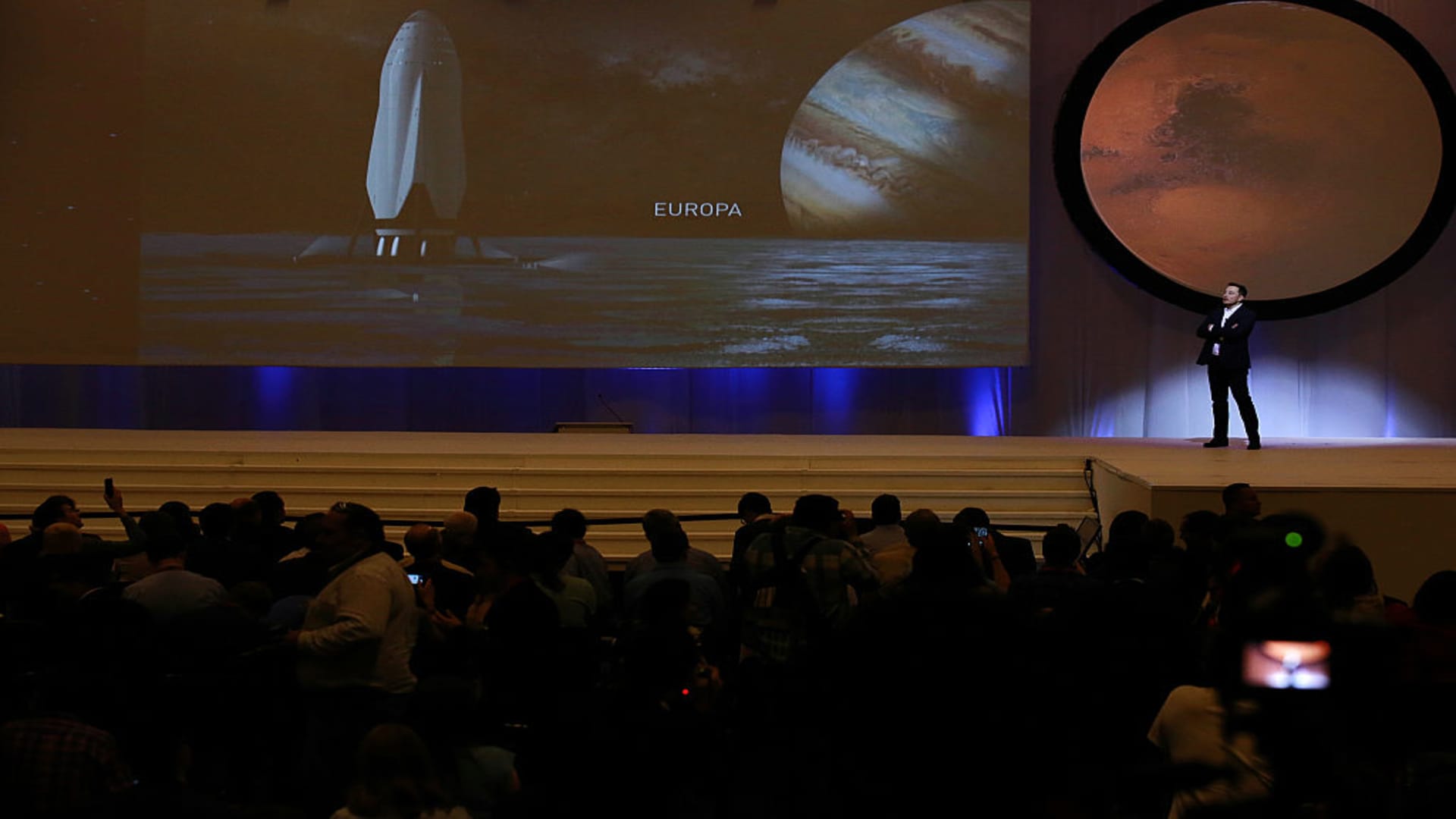
SpaceX’s long-awaited public debut could rank among the most important public offerings in history, according to Brett Winton, chief futurist at ARK Invest, who argues that the company’s satellite internet business alone could justify a valuation approaching $2 trillion. Elon Musk’s rocket and satellite company priced its IPO at $135 per share, valuing SpaceX at about $1.77 trillion ahead of its planned June 12 listing on the Nasdaq. “It’s no surprise that they’re targeting valuations above and near $2 trillion,” Winton said on CNBC’s “Squawk Box” Thursday. “The opportunity for AI is huge.” SpaceX announced it would sell 555.6 million shares, equating to a $75 billion financing. The underwriters have the option to purchase an additional 83.33 million shares at the IPO price for a total value of $11.2 billion. After the company goes public, Musk will hold more than 82% of the voting rights. Winton said SpaceX’s growth prospects go far beyond launch services and are closely tied to the rapid expansion of artificial intelligence. ARK estimates that companies that develop and operate foundational AI models could generate a total enterprise value of $15 trillion to $20 trillion by 2030. “I think we’ll probably look back on this historic moment as a critical technological turning point in human history,” Winton said. ARK already has significant exposure to SpaceX through its venture strategy. ARK Venture Fund’s largest holding was SpaceX private equity, accounting for about 11.4% of its assets. The fund is up about 15% this year and more than 70% over the past 12 months. ARKVX 1Y Mountain ARK Venture Fund 1 Year While investors often focus on SpaceX’s reusable rockets, Winton said the company’s Starlink satellite broadband network is a key driver of ARK’s valuation theory. Winton said Starlink currently operates a constellation that can provide about 500 terabits of bandwidth per second and generates about $13 billion in annual revenue. The upcoming Starship rocket could dramatically accelerate its growth by lowering launch costs and allowing SpaceX to deploy more satellites at a faster pace. “Each Starship rocket can launch 60 terabits per second,” Winton said. “With 10 launches, we can double our existing space capacity. Only 10 launches doesn’t eliminate the opportunity. We think hundreds of launches could generate hundreds of billions of dollars in Starlink revenue.”
