


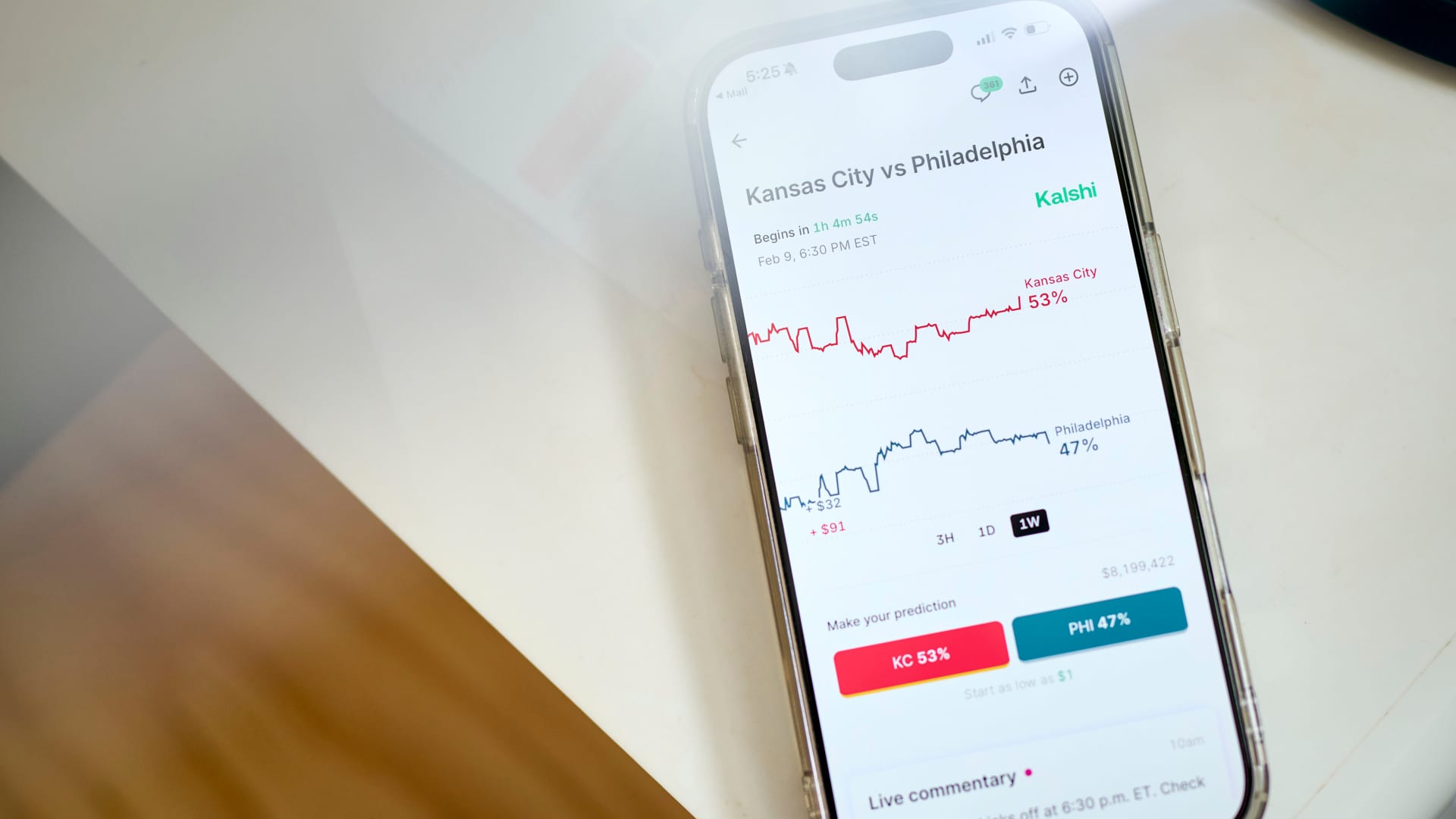
The American Gaming Association currently estimates that states are missing out on more than $1 billion in tax revenue due to the rise of prediction markets.
Bill Miller, president and CEO of the association, who appeared on CNBC’s “Squawk Box” to explain the details of the estimate, said the money lost will impact local communities because of the taxes the state collects on regulated gambling.
“This is an issue for states and tribes who are literally losing $1 billion in state and tribal revenue today that could be used to fund important community projects,” he said, noting the impact it also has on Native American casino revenue.
Miller, whose organization represents casino operators, manufacturers and employees, said prediction markets amount to “backdoor sports betting.” The only difference, in his view, is that they are not regulated in the same way as sportsbooks.
States have echoed Miller’s argument, arguing that prediction market sporting event contracts amount to sports betting and should be regulated within local frameworks. However, the Commodity Futures Trading Commission considers these contracts to be within its jurisdiction to regulate swaps and derivatives.
A billboard is seen outside the U.S. Commodity Futures Trading Commission (CFTC) in Washington, DC, USA on August 30, 2020.
Andrew Kelly Reuter
States have sued multiple prediction market platforms for violating state laws, but the CFTC has responded by suing states for interfering with its regulatory authority.
“We also believe the CFTC will play an important role in financial sectors such as commodities and precious metals,” Miller said. “What makes us so different is that we believe the CFTC is allowing these prediction markets to operate national sportsbooks with little or no regulatory oversight.”
President Donald Trump said in a post on Truth Social on Tuesday that it is important that the CFTC’s jurisdiction over prediction markets is maintained. The Office of Management and Budget is also considering proposals to the CFTC to regulate prediction markets.
Prediction market platforms claim they are not equivalent to sports betting. Both companies argue that it is not just a game, with economic utility through macroeconomic events and politically-related contracts.
But Miller believes the fact that the majority of prediction market volume comes from sports-related event contracts undermines that argument.
“These companies are individuals who market themselves as financial investment tools when, in fact, a large part of their business is sports betting,” he said.
Disclosure: CNBC and Kalsi have a commercial relationship that includes customer acquisition and minority ownership.
Make CNBC your preferred source on Google and never miss a moment from the most trusted names in business news.
Source link
