


Washington is inventing industrial-scale lies to justify its escalating collective punishment of Cuba as well as its latest power grab in Argentina.
Never go full Orwellian. At least that’s what someone should tell the US State Department. As the Trump administration tries to starve the 11 million people of Cuba into submission through a near-total siege of the island, the US Secretary of State Marco Rubio released a statement on Wednesday placing the entire blame for the island’s rapidly worsening humanitarian crisis on the shoulders of the Cuban government.
In a short video message addressed (in Spanish) to the Cuban people (though the real intended target, of course, was the US voting public), Rubio said:
“The reason you are forced to survive 22 hours a day without electricity is not because of an oil blockade by the United States…[but] because those who control your country have looted billions of dollars.”
This is political hypocrisy of an unusually high order, even by Washington’s standards. As the New York Times correspondent and former Obama administration foreign policy wonk Ben Rhodes points out, Rubio “works for a guy who has looted far more billions of dollars for himself and his cronies than even the most corrupt Cuban officials.”
Rubio now full Orwellian: the total blockade that we have put on your country after decades of an embargo has nothing to do with the scarcity in your lives or the fact that we are intentionally starving your children. https://t.co/OLLHJfyo3E
— Ben Rhodes (@brhodes) May 20, 2026
To save readers from wading through the rest of Rubio’s message, CODEPINK have provided a handy English-language translation and summation…
Translation:
After spending decades suffocating your economy, we’re offering you neoliberal privatization and billionaire colonization to destroy your hospitals, schools, and social services. Overthrow your government so we don’t have to. https://t.co/OW8ngmem4E
— CODEPINK (@codepink) May 20, 2026
The Trump administration’s official messaging on Cuba in recent days has been so Orwellian — in the sense of twisting the truth so much that that it ends up resembling the direct opposite of reality — that even NEWSMAX hosts apparently aren’t buying it.
NEWSMAX: This Cuba thing — people struggle with how this is America first when gas is $4.55 a gallon
COMER: Cuba has always been a security threat
NEWSMAX: Really?
COMER: If some country went in and loaded Cuba with the same drones Iran had, yes I think it could be a threat… pic.twitter.com/Q6dr50bOPi
— Aaron Rupar (@atrupar) May 21, 2026
Meanwhile, the cooked up charges against 95-year old former president Raul Castro, which are essentially a pretext for war, have served to shine a light on the shady role played by the network behind CIA-trained Brothers to the Rescue. That includes bringing down a Cuban civilian airliner in 1976 in which 73 people perished as well as carrying out bombings on other civilian targets.
As Max Blumenthal explains in his latest appearance on Judging Freedom, the Brothers to the Rescue deliberately and repeatedly violated Cuban airspace in 1996 before their two planes were eventially brought down by Cuban air defences.
The Trump admin indicts Raul Castro for deterring CIA-backed terror network@MaxBlumenthal reacts to the Department of Justice’s indictment of former Cuban President Raul Castro for shooting down a pair of planes from a CIA-backed network of Miami Cubans, Brothers to the Rescue,… pic.twitter.com/bX0Bi8lQRY
— The Grayzone (@TheGrayzoneNews) May 21, 2026
Worse still, Colonel Larry Wilkerson suggests in his weekly slot on Judging Freedom that the Brothers to the Rescue actually wanted the Cuban authorities to bring down the two planes:
The Brothers to the Rescue actually saw that their flights where they dropped arsenals of equipment and other things like bombs on Cuba periodically, they saw they weren’t having a whole lot of effect. And so they concluded that in order to get them to have the kind of effect they wanted, they needed something really awful to happen. And it needed to happen and be blamed on Cuba.
So they persisted in what they were doing and we know this pretty closely now — we being the people that actually worked with Cuba for some 10, 15 and in some cases 30 years. They actually encouraged one of the planes with neophytes in it to essentially go and challenge what they knew was going to be from Fidel’s very specific statements about what he was going to do to the next one, to have it done to them.
They actually got their own plane shot down and the people in it killed.
“The first act of terrorism I witnessed — because I took part — was a request to bring explosives into Cuba.” Behind the humanitarian image, Brothers to the Rescue was a CIA-trained exile operation built to sabotage infrastructure and arm unrest inside Cuba. pic.twitter.com/ZFsPWTWKhO
— COMBATE |🇵🇷 (@upholdreality) May 21, 2026
The problem for the Trump administration is that even before it decided to go full Orwellian on Cuba this week, a huge majority of the US’ war-wearied, economically challenged citizens are against any military action. Rubio’s bile is unlikely to change many minds. From CEPR:
A new poll by YouGov finds that 64 percent of Americans oppose the US going to war against Cuba, while 15 percent support it and 21 percent are not sure.
Among those who express a view, 81 percent are against a war.
“This should make President Trump think twice about another ‘war of choice,’” said Mark Weisbrot, Senior Economist and Co-Director of the Center for Economic and Policy Research (CEPR). “Almost all of the experts on Cuba would laugh at the idea that Cuba presents a security threat to the United States. And the war against Iran has already cost Trump and his party significant support.”
The YouGov poll, sponsored by CEPR, found that respondents agreed that the war in Iran has harmed Americans and the world, by a margin of 62 percent to 24 percent.
As Caitlin Johnstone notes in the tweet below, arguably the most dangerous turn of events for Cuba is a relaxation of tensions between the US and Iran — “the US never makes peace, it just moves the crosshairs… from nation to nation.”
If things cool down with Iran then it’s a safe bet they’re going in for the kill shot on Cuba.
The US empire never makes peace, it just moves the crosshairs of its war machinery from nation to nation.
Yay! The troops are leaving Afghanistan — oh, now it’s proxy war in Ukraine.…
— Caitlin Johnstone (@caitoz) May 21, 2026
Meanwhile, Aguaje Films, a Cuban media collective, has taken a leaf out of Iran’s Explosive Media’s playbook by producing a satirical Sesame Street-themed animated short that ridicules what it portrays as the modern US regime-change playbook. Like Explosive Media’s content, the video includes a catchy rap tune but with a particularly deep bassline. It also features a perfect representation of Rubio’s floppy hairstyle.
🎞️ 🇨🇺 A satirical animated short from Cuban media collective Aguaje Films mocks what it portrays as the modern U.S. regime-change playbook: cutting off fuel through sanctions, allowing blackouts and civilian suffering to deepen public anger, then reentering with “humanitarian… https://t.co/qdHySNBCnX pic.twitter.com/GJvOIvllMy
— Drop Site (@DropSiteNews) May 21, 2026
“Protecting the Global Commons” in the South Atlantic
It’s not just on the issue of Cuba that the Trump administration has been engaging in industrial-scale gaslighting. On Monday, the US Embassy in Argentina announced a controversial agreement between US Southern Command and Argentina’s Javier Milei government to patrol Argentina’s “maritime zone” for five years.
The official aim of the programme is to strengthen regional security and combat maritime threats, including illegal fishing and other illicit activities in the South Atlantic. The initiative will start small but the goal is for it to scale quickly, reports La Nación (machine translation):
The partnership begins with the “delivery of a specialized camera on board an aircraft dedicated to patrolling the Argentine maritime zone.”
This program will be expanded over the next five years with “advanced equipment, elite training and support to intercept and neutralize maritime threats,” the U.S. Embassy in Argentina said in the last few hours, in a message that was replicated by the Southern Command on social networks.
But it’s the name that was given to the programme, which will presumably be extended to other maritime territories in the Western hemisphere, that is most eye-catching: “Protecting the Global Commons”.
As titles for US government programs go, this one is way out there. Firstly because Argentina’s sovereign waters do not remotely belong to the global commons, they belong to the nation — and by extension, the people — of Argentina. Or at least they did before Milei invited the US forces in. This is a fact that has not been lost on certain opposition lawmakers who have raised objections to the prospect of US interference in maritime surveillance tasks.
There is also something particularly galling about the Trump administration claiming to seek to safeguard the global commons when it is actually seeking to plunder the Western hemisphere’s vast treasure trove of strategic minerals and other resources — for the benefit, of course, of US-aligned corporations. All that will be left behind are the usual externalities (water pollution, habitat destruction, and community displacement).
Washington doesn’t, and never has, given a fig about the global commons, and for decades has done everything it can to undermine public ownership of any common goods or services, both within and beyond its borders. Worse still, Wall Street firms are leading the global charge to financialise and tokenise nature itself, as Whitney Webb reported in her 2023 article, “Wall Street’s Takeover of Nature Advances with Launch of New Asset Class”.
Called a natural asset company, or NAC, the vehicle will allow for the formation of specialized corporations “that hold the rights to the ecosystem services produced on a given chunk of land, services like carbon sequestration or clean water.” These NACs will then maintain, manage and grow the natural assets they commodify, with the end goal of maximizing the aspects of that natural asset that are deemed by the company to be profitable…
[E]ven the creators of NACs admit that the ultimate goal is to extract near-infinite profits from the natural processes they seek to quantify and then monetize….
Framed with the lofty talk of “sustainability” and “conservation”, media reports on the move in outlets like Fortune couldn’t avoid noting that NACs open the doors to “a new form of sustainable investment” which “has enthralled the likes of BlackRock CEO Larry Fink over the past several years even though there remain big, unanswered questions about it.”
So, to recap, this has nothing to do with protecting the global commons (quelle surprise!) and everything to do with projecting US power, particularly over vital international sea routes. As we reported in January, the US is making big moves in Latin America’s Southern Cone:
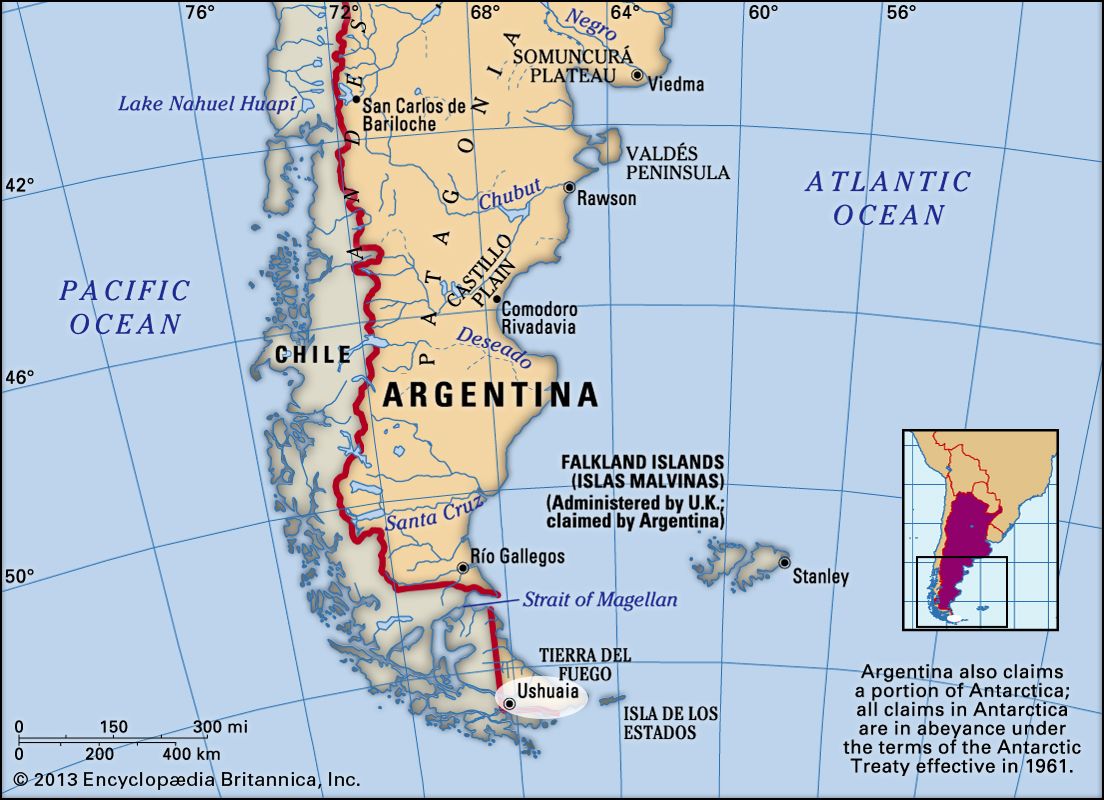
ON Sunday (Jan 25), a Boeing C-40 Clipper belonging to the US Air Force landed in Ushuaia, Argentina’s — and the world’s — southernmost city under a blanket of near-total secrecy. Argentina’s Ministry of Foreign Affairs was silent on the matter and the local Tierra del Fuego government, run by a self-declared opponent of Javier Milei’s, said it had been kept in the dark.
On the same day, at least two private flights departed from Buenos Aires’ San Fernando airport to Ushuaia. Again, no details were provided. The information blackout has local authorities on high alert, especially given the timing of the visit. Just two days earlier, the Milei government had formalised a 12-month administrative takeover of the port of Ushuaia, citing financial irregularities and the diversion of public funds.
As we discussed previously, Ushuaia’s location is of clear strategic value to the US:
On the one hand, it is on the doorstep to the Antarctic, with its vast stores of unexplored and unexploited resources, including the largest freshwater reserve on the planet… On the other hand, [it’s right next] to the Drake Passage, a wide waterway connecting the Atlantic and Pacific Oceans between Cape Horn (the southernmost point of South America) and the South Shetland Islands off Antarctica. If the US could control both the Drake Passage and the Panama Canal, it would control the two bi-oceanic passages on the American continent.
As an aside, it’s worth adding that control over Cuba would grant the US control over another key piece on the geopolitical chessboard: the Gulf of Mexico. As the Mexican politician José Cuauhtémoc Cervantes notes, Cuba is located right opposite one of the continent’s most important trade and oil routes. Whoever has total control over Cuba would have significant capacity to monitor and exert pressure on maritime traffic in the Gulf.
US Treasury Secretary Scott Bessent has described Argentina as a centrepiece for US strategy for Latin America. Since Milei came to power in December 2023, Ushuaia has been visited by two US SOUTHCOM commanders, Laura Richardson and Alvin Hosley. In 2024, Milei travelled 3,000 kilometres to meet up with General Richardson to announce the establishment of a joint naval base that would allow Argentina and the US to control this key entry point to Antarctica.
If the US is able to build a modernised military port with air, land, and naval capabilities near Antarctica, it “would enhance US control over key maritime routes and resources, thus compromising Argentina’s neutrality vis-a-vis Russia and China,” points out an article in MercoPress.
Under Milei, Argentina is moving forward in this direction of a strategic alignment with US military interests, particularly in controlling access to Antarctica and the Strait of Magellan…
Critics argue that a US base would strain relations with China and Russia while sidelining regional partners like Brazil and Chile. Additionally, concerns have been raised about bypassing constitutional requirements for congressional approval of foreign troop deployment, which could even include US submarines in Ushuaia.
It is not just Argentina’s southern tip that the US is keen to control. In its last days in office, the government of Alberto Fernández signed a controversial agreement with the US Army Corps of Engineers for the study and management of the Paraná river, upon which 80% of all Argentina’s exports travel. One of Milei’s first acts in government was to ratifiy that memorandum.
The Paraná is part of a vast river trade corridor that represents the main exit route for raw materials from the entire South American region. It crosses five countries (Brazil, Bolivia, Paraguay, Argentina and Uruguay) and is mainly structured on the Paraguay and Paraná rivers. In total, it comprises 3,400 kilometres of navigable waterways, the longest stretch of which is on Argentine territory.
Now, the Milei government is moving forward with a megaproject aimed at dredging and deepening the river, thus allowing larger vessels to navigate the waterway. Activists warn the project will have disastrous consequences for all the communities that depend on the Paraná, Paraguay and La Plata river basin, including Buenos Aires, and that it violates the Escazú Agreement, an international environmental signed by 24 Latin American and Caribbean nations.
But the project is key to the Milei government’s deeply extractivist economic model that seeks to exploit Argentina’s primary resources (oil, natural gas, lithium, industrial agriculture) to the max while allowing the country’s national industry to fall along the wayside. In the last two years Argentina has registered the worst industrial performance in the world, along with Hungary.
“The re-primarisation of the economy has as its counterpart the destruction of industry, the destruction of science, the destruction of education and a brutal environmental flexibility,” Enrique Viale, president of the Argentine Association of Environmental Lawyers tells El Salto.
But this is the inevitable endpoint of the Trump corollary, which is ultimately a reheated version of the Roosevelt corollary. If it succeeds in its goals, the only real function of the other 34 countries of the American continent — 35, if you include Greenland — will be to serve the material interests and needs of the US empire.
Which is why Washington is so interested in controlling the Paraguay-Paraná waterway, South America’s most important economic artery for bulk cargo (though obviously that is never the reason given; officially speaking, it is all about fighting the twin-bugbears of narco-terrorism and Islamist terrorism, primarily in the form of Hezbollah).
Right now, the future management of South America’s most important commercial waterway hangs in the balance. Two companies have tendered bids for a 25-year contract to dredge and operate Argentina’s Paraná River, both from Belgium: Jan del Nul, which managed the Paraná waterway for decades until 2019; and the Deme Group, whose consortium includes the New York-based investment firm KKR & Co and Great Lakes Dredge & Dock Corp, the largest provider of dredging services in the US.
The terms of the tender, which is in its final phase with a decision expected in the coming days, explicitly barred state-owned companies, preventing bids from Chinese firms. But US House Foreign Affairs Committee Chairman Rep. Brian Mast has warned Marco Rubio that China is attempting “to circumvent that choice through a private sector proxy.” From Reuters:
There is “serious concern” that Jan De Nul, a Belgian dredging company vying for the contract, “maintains deep and ongoing links to PRC state-owned entities” through Servimagnus, an Argentine firm that’s part of Jan De Nul’s consortium, the letter claimed…
The Trump administration, a close ally (NC: interesting choice of word) of Argentina’s President Javier Milei, has expressed concern about Chinese influence in Latin America, including Argentina, where Beijing in March was its second-largest trading partner.
Awarding the contract to Jan De Nul “would be unacceptable and damaging to Argentina’s national security, America’s national security and our bilateral relationship,” the letter said.
Jan De Nul, Servimagnus and China’s foreign ministry did not immediately respond to requests for comment.
In a statement last month, the companies said that they don’t maintain a commercial or contractual relationship with state-run companies and that allegations that the bid hides the participation of Chinese capital are “a malicious fallacy that seeks to hinder the normal development of the process.”…
Milei adviser Santiago Caputo [flew] last week to D.C. to meet with officials, including Mast, Michael Jensen, senior director for Western Hemisphere affairs on the National Security Council, and Alec Oxenford, Argentina’s ambassador to the U.S.
Caputo was told that the U.S. had “grave concerns” about Chinese involvement in the bid, according to a person familiar with the visit. The person said the concerns stemmed partly from allegations of frequent contact between the Chinese embassy and Servimagnus’ office in Argentina.
If Washington’s pressure pays off, it will mean the US will not only be “helping” to patrol Argentina’s sovereign waters in the South Atlantic but will also have huge sway over South America’s most important commercial waterway. All for the benefit, of course, of the global commons (/sarc).
Not everybody is happy about these developments. In a working meeting held in Argentina’s Chamber of Deputies, the secretary general of the Argentine Workers’ Central Union, Hugo Godoy, flagged the potential risks associated with the tender for the Paraná River Trunk Waterway as well as the plans to build a joint US military base in the Port of Ushuaia.
“Sovereignty and a good part of the interests of the nation are at stake. We do not differentiate between what we are discussing (i.e., US military patrols of Argentina’s maritime territory) and the Paraná trunk waterway, or what is happening in the [federal government’s] meddling of the port of Ushuaia, or US intentions of intervening in the heart of Buenos Aires province,” Godoy said, according to a statement cited by La Nación.
Godoy added that there are clear geopolitical designs behind the US’ plans not only to dominate Argentina’s territory but also to fragment — or otherwise put, balkanise — it. This is a similar observation to one I’ve heard from numerous Mexican commentators including the renowned geopolitical analyst, Alfredo Jalife: the US wants to dominate Mexico by splitting it into smaller pieces. But that will have to be a topic for another day.
