


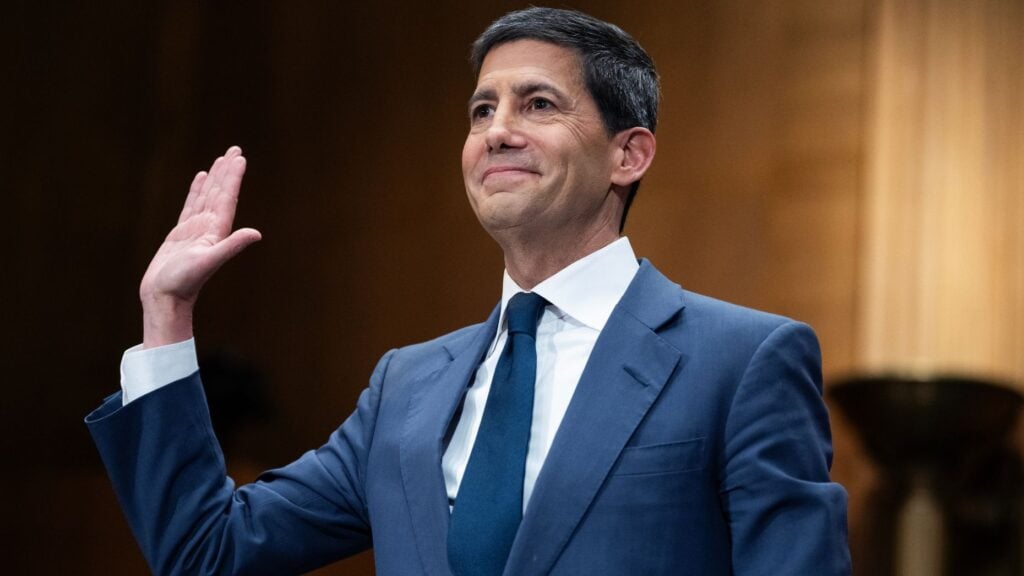
With Kevin Warsh confirmed as Federal Reserve Chairman, industry leaders are sharing how his monetary policy approach will impact interest rates and affordability.
The Federal Reserve has a new chairman, and the housing market is in the spotlight.
The Senate on Wednesday confirmed Kevin Warsh as the next Federal Reserve Chairman in a 54-45 vote, putting new leadership at the central bank as rising inflation complicates discussions of interest rate cuts, a move that has a direct impact on housing affordability and demand for mortgages.
Warsh replaces Jerome Powell, whose term as committee chair expires on Friday, May 15th. His first meeting as chairman of the Federal Open Market Committee is scheduled for June 16-17.
Following Mr Warsh’s confirmation, housing experts have suggested he may become dovish on interest rates, meaning he may support lowering rates to stimulate the economy. While lower interest rates are certainly welcome news for real estate professionals, the broader economic picture is complex and cheaper loans are not guaranteed.
Here’s what industry leaders are saying about what this confirmation means for the housing and mortgage markets.
Bob Bruksmit, president and CEO of the Mortgage Bankers Association, said the industry group looks forward to its involvement under a new president.
“The MBA congratulates Kevin Warsh on his appointment as Fed Chairman. His financial markets experience and thoughtful approach to monetary policy will serve the nation well at this pivotal time in our economy. We look forward to continued engagement with policies that affect the banking and housing finance systems, and we will continue to advocate for a more balanced, risk-adjusted approach to capital standards that affect mortgage lending and commercial real estate financing.”
Dr Thelma Hepp, chief economist at Kotality, said the impact on housing would depend less on interest rates today and more on how policy is communicated in the future.
“In general, a Warsh-led Fed could become somewhat dovish on interest rates, supported by productivity optimism while maintaining its hawkish credibility.On housing, the Fed could become a bit more dovish on interest rates, keeping policy and mortgage rate volatility in check and supporting household finances. The key will be whether he can build consensus across the Fed to prevent further declines in housing affordability.Warsh’s Fed is focused on housing, not because of current interest rate conditions, but because of how policy will be communicated. At the confirmation hearing, Warsh repeatedly emphasized discipline, independence, and the need for the Fed to “stay in its lane,” but when it comes to housing policy, there will likely be fewer sharp shifts in policy, but interest rates are uncertain. Some believe that this means that the real economy will remain in effect for a long time, and given his optimism about productivity, Warsh may become a bit more dovish over time, and that policy will not become too restrictive if inflation continues to cool. ”
Editor’s note: This article will be updated with additional comments from experts in response to Inman’s request for comment.
Email Jesse Healy
