


When President Donald Trump tried to overturn the 2020 election, the institutional guardrails of American democracy were barely in place.
If faced with a similar test today, most of the people guarding those guardrails and lines would be missing, a ProPublica investigation found.
At least 75 career employees who previously held election integrity and security positions at federal agencies have disappeared. They were replaced by 20 appointees, many of whom were active in efforts to reverse the 2020 vote, or who were allies of such people. And even once marginal actors now have access to enormous power.
As the midterm elections approach, current and former government officials and election security experts have expressed concern that Trump appointees, who have supported debunked conspiracy theories about voting, are in a position to control the narrative around voting integrity.
Derek Tisler, consultant and manager of elections and government programs at the Brennan Center for Justice, said it’s difficult to debunk false claims that have “the federal seal on them.” “I’m certainly concerned about how much damage that could do to voter confidence.”
Here are some important things to know about the Trump administration’s efforts to “take over” the midterm elections, as the president said. Read the full study here.
1. In 2020, institutional guardrails helped prevent President Trump from flipping the election.
After losing the 2020 election, Trump called on federal authorities to reveal evidence that he actually won the polls over Joe Biden. Election cybersecurity experts at the Department of Homeland Security have told Attorney General William Barr that the claims of election fraud they investigated are false. Barr then told the president what he didn’t want to hear. The election was not hacked.
Barr was one of many federal officials, most of them Trump appointees, who refused to bow to the president’s demands, which only intensified in the weeks leading up to January 6, 2021. Despite the violent riot that broke out at the Capitol that day, the election results remained strong.
2. Less than 18 months into his second term, Trump dismantled many of the same guardrails.
Since the start of his second term, Trump and his appointees have made major changes to the federal agencies tasked with protecting elections. ProPublica found that at least 75 career employees who played key roles in the election have retired, been fired or reassigned at DHS, the Justice Department and other agencies.
In their place are about two dozen people who President Trump has placed in positions that could influence the election. Ten of these people are actively working to overturn the 2020 vote, and the rest are allies of those people. A ProPublica investigation found that in some cases, staffers were hired by activist groups that are central to the anti-election movement.
3. Some of the first institutions Trump dismantled after returning to office were those that had repeatedly disproved claims of election theft.
Officials with DHS’ Cybersecurity and Infrastructure Security Agency had provided first-year President Trump with research disproving many theories that claimed the 2020 election was hacked. CISA also created a “Rumor Control” website to refute these claims and played an important role in publicly refuting these claims.
And, just weeks into President Trump’s second term, the Department of Homeland Security leadership has placed employees dedicated to countering disinformation and helping ensure election security on leave. It also froze other CISA election security operations, including assessing local election offices for physical and cybersecurity risks. In the end, all CISA employees specializing in elections were fired or transferred.
A DHS spokesperson told ProPublica that the changes to CISA are in response to “inflated budgets masking dangerous deviations from our statutory mission,” including “campaigning instead of protecting America’s critical infrastructure.”
4. Trump and his appointees dismantled federal law enforcement election teams.
FBI Director Kash Patel disbanded the agency’s public corruption team, which had been sent to monitor possible criminal activity on Election Day. The Foreign Influence Committee, which was designed to combat foreign influence in American politics, was also disbanded.
(An FBI spokesperson said the agency “remains committed to detecting and countering foreign influence efforts by hostile nations.”)
The Justice Department’s Civil Rights Division’s Voting Division enforced federal laws protecting the right to vote, especially the right to fight racial discrimination. But now, almost all of the division’s approximately 30 career lawyers have retired or transferred. Mr. Trump then filled the section with conservative lawyers, including at least four who had participated in challenges to the 2020 vote or worked with people who helped Mr. Trump try to overturn the 2020 election.
5. President Trump replaced ousted career professionals with “Team America.”
In the summer of 2025, after the Trump administration purged most career professionals, a small group of political appointees who once called themselves “Team America” began convening at the Department of Homeland Security headquarters, according to sources familiar with the matter, to explore whether they could use federal influence to implement Trump’s March 2025 executive order that sought to tighten federal control over aspects of voting.
The group’s core members included David Harvilich, the assistant secretary of the Department of Homeland Security, who is tasked with overseeing the security of election infrastructure, including voting machines, and three of his senior staff members. As ProPublica reported, Mr. Hurvilitz co-founded an AI company with the architect of Mr. Trump’s claims about election hacking in Michigan.
Heather Honey, who is serving in a newly created election-focused position under Hervilitz, is the source of the false claim that more votes were cast in Pennsylvania than there were voters in the 2020 presidential election, a claim that Trump cited on the morning of January 6, 2021.
At least 11 administration appointees, including Mr. Haney, have ties to the Election Integrity Network, a conservative grassroots organization led by attorney Cleta Mitchell that tried to help Mr. Trump flip the 2020 presidential election. Since joining the government, Hannity has maintained close ties to Mitchell’s organization, and she and at least two other federal officials have privately briefed its members.
6. Team America members are using powerful homeland security investigative tools to try to identify noncitizen voters.
The Justice Department is requiring states to hand over confidential voter rolls and is suing about 30 states over this data.
Meanwhile, DHS is encouraging states to upload their voter rolls to a tool called the Systematic Alien Verification for Entitlements system.
The goal of both efforts was to find noncitizens on voter rolls. But as ProPublica reported, the SAVE tool is inadequate and often identifies citizens as non-citizens, and authorities face other obstacles to its use.
Most recently, Team America has been working on leveraging more powerful tools used by another DHS division, Homeland Security Investigations, to increase its ability to hunt down and prosecute noncitizen voters, according to two people familiar with the matter.
In response to questions sent to DHS officials Havilich and Hannity, a DHS spokesperson countered that they were trying to use the department’s authority to favor Trump. “To address the diverse and evolving challenges facing the department, we hire professionals from diverse backgrounds who go through a rigorous vetting process,” a spokesperson said in response to questions about the department’s ties to the anti-election movement.
7. President Trump’s election security chief was involved in the FBI’s seizure of 2020 election ballots in Georgia.
Attorney Kurt Olsen previously worked to overturn President Trump’s 2020 loss in court, but was later sanctioned by a judge for making baseless claims about the Arizona election. He is currently President Trump’s director of election safety and integrity and was the person behind the attack on an election center in Fulton County, Georgia, in January.
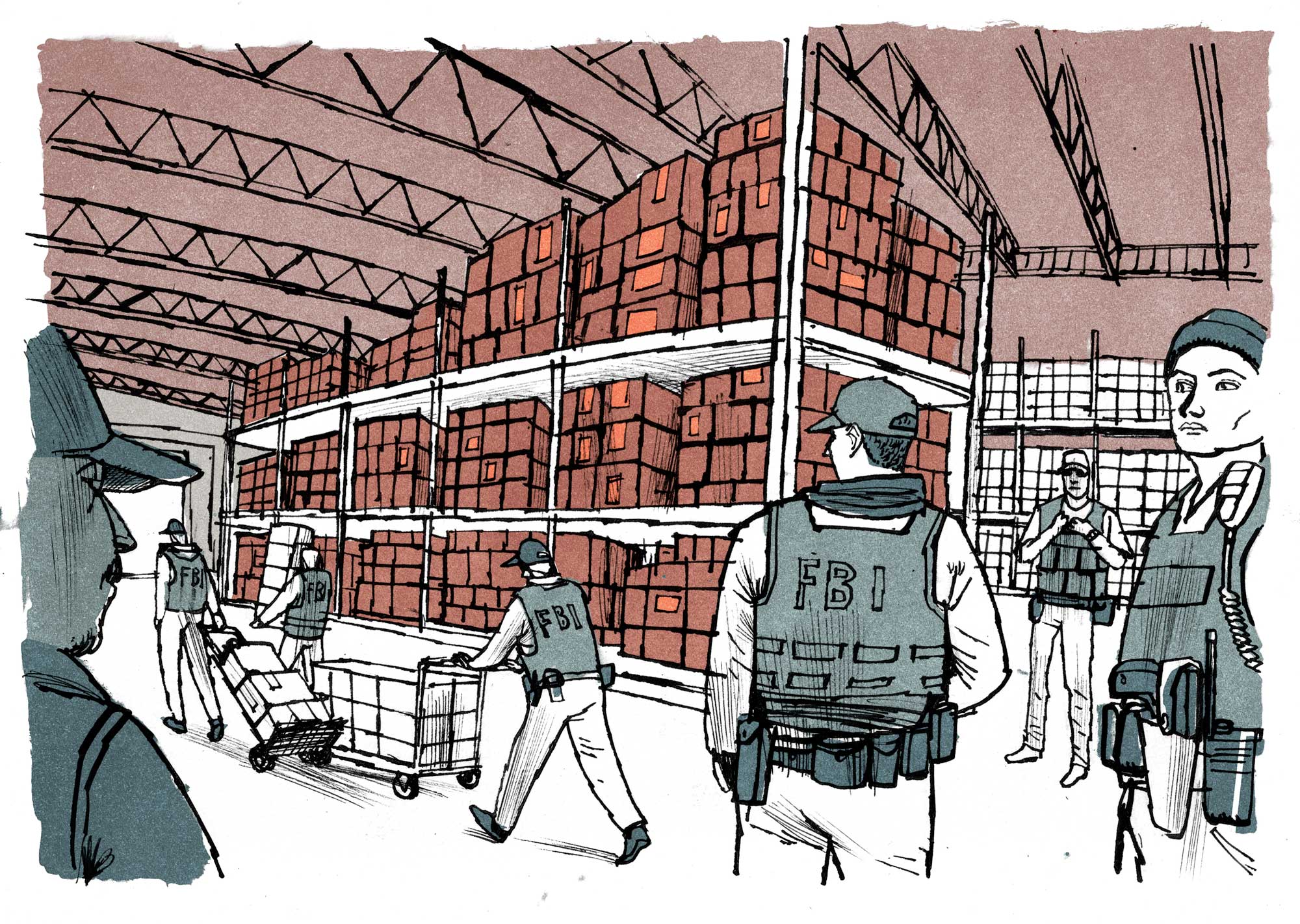
Mr. Olsen flew to Georgia in late 2025 to meet with Paul Brown, head of the FBI’s Atlanta field office, according to people familiar with the matter. Mr. Olsen asked the FBI to seize ballots from Democratic strongholds and gave Mr. Brown a report that he claimed justified the unusual action. Mr. Brown’s team submitted an affidavit to higher-ups at the Justice Department, but could not make a strong enough case to proceed with what Mr. Olsen wanted. Mr. Brown was then given the option of resigning or moving to a new office. Brown retired. The investigation proceeded under his replacement based on an affidavit that cited information from the report that Olsen provided to Brown.
Olsen did not respond to requests for comment.
An FBI spokesperson said Brown had “chosen to retire” and that his “activity in the election security field is fully consistent with the law.”
8. The Justice Department’s Public Integrity Division may have tried to block the administration’s investigation of Georgia voting.
In the months following Mr. Trump’s return to office, the Justice Department’s Public Integrity Division, which was responsible for ensuring that the department’s investigations were not unduly influenced by politics, was dismantled. Resignations, firings and transfers have reduced the 36-member section to two.
Multiple former attorneys for the department said they likely tried to block the Fulton County investigation because it lacked strong evidence, had clear political leanings and violated the department’s directive not to take actions “for the purpose of favoring or disadvantaging a candidate or political party.”
John Keller served as the department’s chief deputy chief from 2020 to 2025, and was acting chief when he resigned in early 2025. He is concerned that allegations of fraud in the upcoming election will be handled on a partisan basis.
“Without that review, without apolitical, objective and honest intermediaries involved in the process, there is a much greater risk of intentional manipulation or inadvertent interference,” Keller said.
