


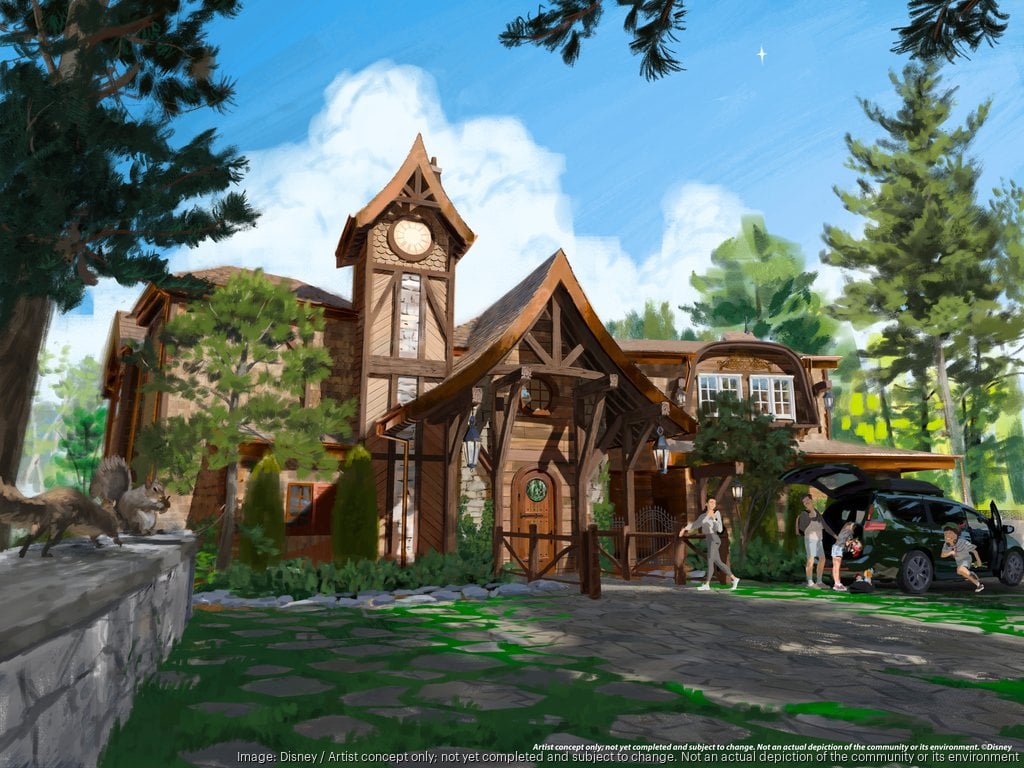
Dubbed “Asteria,” the 1,500-acre development will include a mix of single-family homes, condos, duplexes, and apartments.
As housing supply remains constrained across the United States, The Walt Disney Company is making further forays into residential real estate, revealing new details of a 4,000-unit residential community outside Raleigh.
The development, called Asteria, will span approximately 1,500 acres in Chatham County and include a mix of single-family homes, condos, duplexes and apartments. The plan also calls for housing for people 55 and older, increasing the proportion of age-targeted housing within large master-planned communities. Home sales are expected to begin in the fall of 2027, with occupancy expected to begin a year later, the company said.
The community will revolve around the ‘Second Star Club’, a large amenity hub planned as part of the first phase of the development. The name pays homage to the world of Peter Pan, and while the development isn’t built around Disney characters, the company incorporates some thematic touches from the franchise through design and programming. The club will include dining, wellness and event spaces organized around a central lawn, along with parks and trails.
Tim Smith and Bubba Roll, leaders of Preston Development Co., told Triangle Business Journal that Disney has already spent about $30 million on the project, which they estimate could exceed $100 million by 2028, mostly related to infrastructure and amenities.
Although not a traditional home builder, Disney is not new to housing development. The company built Celebration, Florida, as a master-planned community near Orlando in the 1990s, eventually growing to more than 10,000 residents. Its current push comes at a different time, defined by a persistent housing shortage and growing demand in fast-growing southern markets, including North Carolina’s Research Triangle.
Asteria is part of Disney’s Storyliving initiative and is being developed in collaboration with DMB Development and Preston Development. Disney focuses on design, amenities, and community programs, and third-party builders handle construction and home sales.
But for agents, the significance of the new development goes deeper than the Disney name. The project reflects a shift in non-traditional companies into housing as demand continues to outstrip supply, a trend that is also drawing in non-real estate companies such as Costco, which is considering developing residential properties tied to retail stores.
While Disney is not competing with large builders like DR Horton and Lennar, the 4,000-home Asteria is a meaningful addition to supply and a signal that branded, master-planned communities have a role to play in alleviating the nation’s well-documented housing shortage.
Email AJ LaTrace
