


Real estate professionals do more than just open doors, writes Lori Muller. They guide people through one of the most complex financial and legal transactions in life.
Almost every real estate professional has heard the same question in some form or another. “What exactly does an agent do? I can find a home online myself.”
It is usually not meant as an insult. In fact, most consumers truly believe it. After all, technology has changed the way people search for homes. Buyers can scroll through listings on their phones from the comfort of their couches. View photos, take virtual tours, track price changes, and research neighborhoods before talking to a professional.
From the outside looking in, it may appear that a real estate agent’s job is reduced to unlocking doors and filling out forms.
The logic seems very simple.
Why need an agent when you can find a home online? If you want to buy a home, why not just knock on the door? I want to sell my house, but is it not possible to list it myself?
State forms are available online. Negotiation tips are all over the internet. Download your contract with just a few clicks.
So why should we involve experts? That’s a fair question. But if it were really that easy, we would see a completely different real estate market.
My Realtor Still Matters
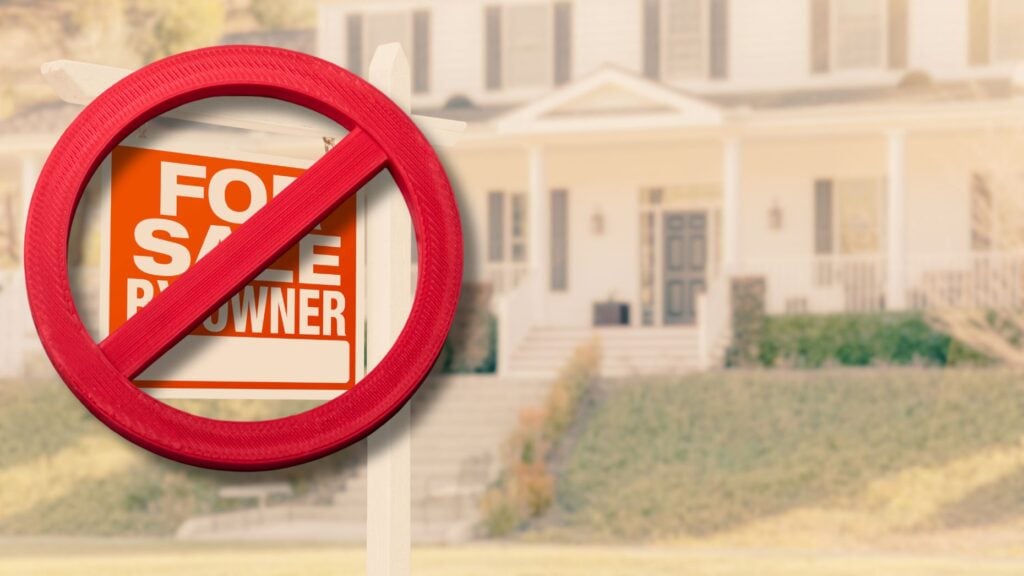
According to the National Association of Realtors’ 2025 Home Buyer and Seller Profile, only 5% of homes were sold as For Sale by Owner (FSBO) in the past year, an all-time low.
Let’s think about that for a moment. In an era where consumers have access to nearly unlimited information online, the percentage of people choosing to sell their home without professional representation has fallen to an all-time low.
If the Internet truly replaced the need for real estate professionals, FSBO transactions would explode. In fact, the opposite is happening. why? Because searching for a home online is the easiest part of the entire process. The real work begins after the buyer finds a property they like.
Suddenly you have contracts to interpret, disclosures to review, inspections to coordinate, funding schedules to manage, negotiations to manage, and legal obligations that vary from state to state. There are valuation issues, title concerns, repair requests, contingency deadlines, and emotional moments that require careful decisions that can cost hundreds of thousands or even millions of dollars.
Real estate professionals do more than just open doors. They guide people through one of the most complex financial and legal transactions in life. And the stakes are high.
Housing isn’t just an industry; it’s the foundation of America’s economy. According to research cited by the Fiduciary Trust, housing accounts for about 18% of the U.S. GDP and nearly one-third of household spending. It affects everything from consumer confidence to interest rates, construction work, lending activity and regional development.
In other words, housing does more than just move families. That drives the economy.
Economic effects of real estate
Every successful real estate transaction supports an array of professionals and industries, including lenders, title companies, inspectors, contractors, movers, insurance companies, and countless local businesses. The community grows. Neighborhoods become stable. Families build wealth.
And at the center of that process are experts who understand how to guide people through that process. However, many agents still downplay their role. If you ask a real estate professional, “What do you do for a living?”, you’ll often get a modest answer.
“I’m a real estate agent.” Or maybe “I sell houses.”
But that explanation just scratches the surface.
Real estate professionals can help first-time buyers achieve what they previously thought was impossible.
They guide families who migrate in search of new opportunities. They support individuals going through divorce, loss, or major life transitions. They help seniors downsize for their next chapter and investors build long-term wealth. They negotiate on behalf of clients who have never negotiated a real estate contract before. They solve problems before the client even realizes there is a problem. They protect, guide and defend.
In fact, real estate professionals do more than just sell homes. they change lives.
They help people achieve the American dream of homeownership. They help build stronger communities. They help revitalize one of the most important sectors of the American economy.
And they do it one relationship at a time.
That’s why it’s important for people in this profession to grow a little taller.
Please continue to educate yourself. Strengthen your expertise. Build confidence in the value you offer and the role you play in the marketplace.
Because when someone asks you “What is your occupation?”, you should not hesitate to answer.
It should be delivered with pride. You can truly call him a real estate professional. Or you can smile, listen and tell them the truth.
“I help people achieve the American dream of homeownership. I help develop economies, strengthen communities, and support families as they navigate one of the most important decisions of their lives.”
It’s more than just a job. It’s a profession worth growing taller for.
