


[This Iran war post is yet again launching before complete. I expect to be done by 8:00 AM EDT so early arrivals, please refresh this page and reskim then]
It is difficult to adequately describe the depth of denialism, not just among the addled, religiously possessed, diehard jingoistic and otherwise self-blinded decision-makers among the belligerents, but also interested parties with the power to check them, starting with investors and the Gulf States. They seem unable to process what is happening right before their eyes.
As we have discussed before, the influential are also so deeply accustomed to living in the symbol world of spreadsheets, PowerPoint, messaging and financial market that even those who recognize that there is no prospect for the end of the war in sight, which is a best case scenario, that almost to a person they underestimate what comes next, as in pervasive real world shortages. A continuing large reduction inn petroleum and gas and related products like urea, sulphur, plastics, are not just crises in and further catastrophic knock-ons, such as high food costs (and scarcity due to distribution issues) and shortages of medications that depend on on petrochemical inputs and/or cold chain transportation.1 At best, they seem unconsciously to rely on the faith that their money and their connections will spare them.
We’ll turn first to the kinetic conflict, which Trump has linked to his market-and-public manipulating negotiation fakery. He pretends that the war will end if Iran capitulates negotiates, which is simply not going to happen. Yet it is not just loyal mouthpieces like Fox that are uncritically repeating his barker’s patter. Pervasively, mainstream outlets are also taking up Trump’s messaging with far too little in the way of sanity checks. This is a marked contrast with his first term, when due to impeachments and Russiagate, his legitimacy was sufficiently in doubt that much of the media delighted in calling out his howlers. So much for journalistic integrity.
Why, for instance, does it take a not-widely followed independent site like indi.ca to call out the irretrievably decrepit state of US weaponry? Its critique goes beyond even the solid and very well documented ones by Brian Berletic, of how the US military is built for profit, not purpose, which is how we can spend such eye-watering amounts and yet have a country we like to depict as too economically second-tier (despite being a superpower) of being well ahead of the US in many critical weapons categories, from air defense to signal jamming to hypersonic missiles to drones, as well as having adapted to and extensively battle-tested how to wage war in the new world of ISR?
Consider the key points from America’s Military Is Never Coming Back From This:
‘America’ is a good military like Cristiano Ronaldo is a good footballer. They was, but their careers are over in Saudi Arabia. And whereas Ronaldo is still in good shape (but a bad person), America is in terrible shape (and bad people). Vital links in their kill chain (refuelers and control planes) are decades old and being put out of their misery by Iran…
People really do not understand how old and crustified the US military is. This is not your grandfather’s US Army, or more precisely it is, without many updates since. They’re still relying on primordial technology like the E-3 and KC-135 that have no modern replacements. Every new weapon these corruption engineers have come up with (like littoral combat ships or the F-35) have either failed or flailed in the field.
People talk about how Iran is a ‘second-tier military’ but they ain’t Iraq and this ain’t Desert Storm. This is Desert Shitstorm and Iran is not just a peer military to ‘America’s’, they are demonstrably superior. Just look at the scoreboard, which isn’t school massacres but military targets. Behold, then, ‘American’ airframes burning in the sun while Iran’s rockets are safe underground. The White Empire stood astride the Middle East like Colossus, but now they lie there in a wreck, colossal morons.
What I want you to understand is that the US military is never coming back from this. There are no modern replacements for these refuelers and control systems. The NGAS is a render and the E-7 Wedgetail was cancelled. They simply don’t make ‘em like they used to anymore. As the meme template goes, “My father is a builder. We were in [Prince Sultan Air Base] I asked him what it would cost to build [an E-3 Sentry] today. I will never forget his answer… ‘We can’t, we don’t know how to do it.’”
Taking these planes to a war of choice was like taking Grandpa’s ‘65 Mustang to a demolition derby and getting your nose out of joint. The White press keeps saying these planes are worth millions or billions which is missing the point. They cannot make these planes anymore, these assets are effectively priceless.…
People really do not appreciate how depreciated the US military is. To rust and dust and gone bust. Some of their vaunted aircraft carriers are supposed to be retired already, they just keep extending their retirement dates because they have no replacements. This moves stuff around on paper, but doesn’t make these lumbering beasts any more limber.
Please take a detour to read the rest of this wonderfully written and important article in full.
The Financial Times’s lead item was its interview with the American mad kingm. From Donald Trump says US could ‘take the oil in Iran’:
Donald Trump has said he wants to “take the oil in Iran” and could seize the export hub of Kharg Island, as the US sends thousands of troops to the Middle East.
The US president told the FT in an interview on Sunday that his “preference would be to take the oil”, comparing the potential move to Venezuela, where the US intends to control the oil industry “indefinitely” following its capture of strongman leader Nicolás Maduro in January….
Trump said: “To be honest with you, my favourite thing is to take the oil in Iran but some stupid people back in the US say: ‘why are you doing that?’ But they’re stupid people.”
Such a move would involve seizing Kharg Island, through which most of Iran’s oil is exported.
Trump has been beefing up US forces in the region, with the Pentagon ordering the deployment of 10,000 troops trained to seize and hold land. About 3,500 troops arrived in the region on Friday, including roughly 2,200 marines. Another 2,200 marines are en route, while thousands of troops from the 82nd Airborne Division have also been ordered to the region.
But an assault on the export hub would be risky, raising the chances of more US casualties and extending the cost and duration of the war.
“Maybe we take Kharg Island, maybe we don’t. We have a lot of options,” Trump told the FT. “It would also mean we had to be there [in Kharg Island] for a while.”
Asked about the state of Iranian defence on Kharg Island he said: “I don’t think they have any defence. We could take it very easily.”
The convention for interviews of Super Important People is not to savage them in the piece proper, and the pink paper fell in line, with only very tame interjections, such as oil prices being high. My beef is that pretty much all of the rest of the media has been treating these remarks with respect, as opposed to yet more evidence that Trump needs to be escorted from office in a straitjacket.
Now admittedly there are bizarre pretend meetings going on that are inaccurately depicted as negotiations or sometimes more accurately, diplomacy, among Pakistan, Saudi Arabia, Egypt, and Turkiye. Per an update from Aljazeera:
Pakistan says it is ready to host “meaningful” talks to end the United States-Israeli war on Iran after diplomats from Saudi Arabia, Egypt and Turkiye gathered in Islamabad in a bid to de-escalate the conflict.
The two-day talks in the Pakistani capital began on Sunday and are being led by Pakistani Foreign Minister Mohammad Ishaq Dar, who said after the meeting that they had covered possible ways to bring an early and permanent end to the war in the region as well as potential US-Iran talks in Islamabad.
Anyone who has been paying attention will quickly recognize this exercise as absurd, a Western Asia version of Emmanuel Macron acting as if he can help end the war in Ukraine. First, Iran has repeatedly said no way no how is it negotiating. Any meaningful talks, even if indirect, have to be with the belligerents. They have demonstrated themselves to be utterly untrustworthy so there is no point in talking. Iran knows it has to prevail militarily and break their will or alternatively, effect regime change, since this war was already unpopular in the US and will rapidly become more so as citizens don’t just suffer higher costs but business failures, job losses, and inability to get key medications.2 Unfortunately, none of these bad outcomes are set to kick in fast enough to pressure this Administration soon enough to limit the carnage.
A second reason these countries talking among themselves is silly is because Saudi Arabia is a belligerent. It is not only supporting the US but Western media reports say it along with the other Gulf States are looking at more overt and substantial backing of the US. Pakistan and Saudi Arabia also have entered into a mutual defense and security pact, so Pakistan can hardly be seen as independent. Turkiye hosts a massive and essential US air base at Incirlik. So who are we kidding? This looks like a show organized to assist Trump, one imagines at a minimum to con inattentive traders and investors that an end to the war might be in sight so as to keep them from bidding oil prices up to where they ought to be.
To return to reality, Larry Johnson’s Donald Trump’s Imaginary Iranian Friends, provides an update on how the US and Israel keep ignoring Iranian warning and put their hand on the escalatory hot stove, producing predictable damage:
Despite Trump’s insistence that Iran is eager to negotiate, he is lying…
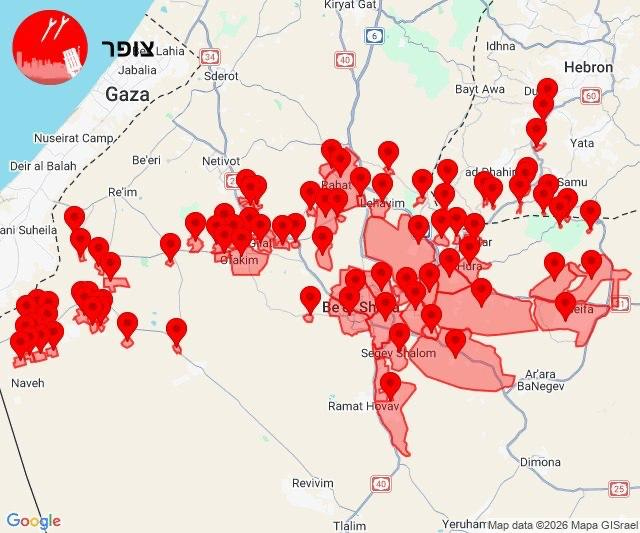
Trump’s claim that Iran is running out of missiles also is not true. As I am writing this, Iran has launched three waves of launches to the Negev in under an hour.
In response to Donald Trump’s various threats, a spokesperson for Iran’s Khatam al-Anbiya HQ recently said:
➡The U.S. president has threatened that if Iran doesn’t reopen the Strait of Hormuz, U.S. forces will target Iranian power plants.
➡Tehran insists the Strait is only restricted to hostile traffic and remains under Iran’s control; safe passage continues under strict rules.
➡If the U.S. strikes Iranian power plants, Iran will:
Fully close the Strait of Hormuz until damaged facilities are rebuilt.
Target all Israeli energy, ICT, and infrastructure assets.
Destroy regional companies with U.S. shareholders.
Target power plants in countries hosting U.S. bases.
➡Iran says it is ready for a major campaign to eliminate all U.S. economic interests in West Asia.
➡While Tehran did not start this conflict, any attack on Iranian infrastructure will trigger relentless retaliation against U.S. and allied energy, oil, and industrial targets in the region.
The US and Israel ignored Iran’s warning and attacked… and, as promised, Iran responded forcefully….Satellite data from NASA has reportedly detected an active fire at the Doha West Power and Water Desalination Station, the country’s largest combined power and water plant…..
The facility produces 2,400MW of power and around 110 million gallons of water per day, making up about 38.5% of Kuwait’s desalination output. With around 90% of Kuwait’s drinking water coming from desalination, this damage will quickly put pressure on the country’s water supply.
New satellite images also show damage following Iranian missile strikes on a US airbase in Sheikh Isa, Bahrain:
— US Army Air Base Radar Maintenance Shed Hit
— Destroying the spy plane hangars.
— Destruction of the drone hangar.
— Destruction of the equipment depot….
According to Haaretz, the success rate of Iranian missiles in Israel has reached 80%, and the missiles are not being intercepted.
Iran is not alone. Hezbollah also is fully engaged in fighting Israel. Hezbollah announced 70 operations on 29 March against Israeli forces, sites, settlements, and military infrastructure.
Hindustan Times suggests the latest ferocious warnings from Iran might have put Trump on the back foot, at least for now:
The entire video is worth a watch. It includes Trump claiming he achieved regime change, as well as a bizarre topic change to the state of ballroom develoment at 5:45. In Neuro Linguistic Programming, this is called a pattern interrupt (“Oh look at that bird!”) but here is just deranged. Trump finally does try to connect the dots by claiming he is ahead of schedule on both projects. And at 12:10, Trump says Iran agreed to most of the 15 points in the surrender document.
However, to counter the Hindustan Times headline claim, the press has provided a lot of coverage to how the US has moved forces and assets to the theater, with a repeatedly announced threat to launch a raid or ground operations. How could the US possibly climb down from that?3
A bit earlier, Professor Marandi and Glenn Diesen discussed where further escalation might go:
Because Marandi and Diesen cover some familiar ground, it’s easy to miss some important new observations from Marandi, such as:
So any US attack on the mainland or on the islands isn’t is going to lead to greater disaster because you’ll have further destruction, much greater destruction.
And that means that the oil crisis and the energy crisis and the uh petrochemical crisis and the fertilizer crisis will be permanent.
And later, on other escalation options if the US tries to invade:
We are still not very much uh up the escalation ladder. Yemen has joined but its targets are so far limited. Iraq has been involved for weeks now, but again, it can go much further. There’s talk that, for example, the Iraqis may take Kuwait. They could enter the Arabian Peninsula. Excuse me. Yemen, too, could enter Saudi Arabia and of course close the Red Sea for Saudi oil facilities.
And more are set to join the fray:
If you give us the order, millions of Pashtuns from the tribes are ready to wage jihad together with Iran against Israel. We will provide ourselves with weapons and food ourselves.”
Leaders of the Pakistani Pashtun tribes met with the Iranian ambassador and made him an offer. pic.twitter.com/JY0mYsroL4
— Sprinter Press (@SprinterPress) March 29, 2026
Investors outside Asia are starting to sober up a little bit. From the BBC in Oil rises above $115 and Asia shares slide as Iran war enters fifth week:
Global oil prices jumped and stocks fell sharply on Monday in Asia after the US-Israel war with Iran entered its fifth week.
The price of Brent crude rose by more than 3% to above $115 (£86.77) a barrel, while US-traded oil climbed to $101.62 after gaining almost 2%. It puts Brent on track for its biggest monthly gain on record.
Japan’s Nikkei 225 lost 2.8%, while the Kospi in South Korea closed almost 3% lower.
Sadly the BBC then dignifies the dopey Trump talk to the pink paper by quoting him, and a bit after that, adds:
Lars Jensen, a shipping expert and former director at Maersk, warned that, even if the Strait of Hormuz “magically were to open tomorrow”, there were still further price rises to come.
“We need to keep in mind that a lot of the oil that was loaded in the Persian gulf prior to this crisis is only now arriving in refineries,” he told the BBC.
Overall, Jensen said the impact of the US-Israeli war on Iran could be “substantially larger” than the oil crisis of the 1970s, which sparked economic chaos.
And Jensen, who now runs the shipping consultancy Vespucci Maritime, also warned of the impact of the conflict on food prices.
And some sobriety from Bloomberg. Its landing page as of 7:00 AM EDT:
And from one of the top articles The Strait of Hormuz Oil Shock Is Now Heading West:
Fuel crunches hitting Asia will soon start spreading west, they said. Europe is likely to face surging prices to secure cargoes and is at risk of diesel shortages in the coming weeks.
If the strait stays closed, the world will have to significantly reduce its oil and gas consumption — but not before prices spike to a level that forces consumers and businesses to fly, drive and spend much less. Already, demand has begun to drop, and some countries in Asia are hoarding and rationing fuel. US government officials and Wall Street analysts are starting to consider the prospect that oil prices might surge to an unprecedented $200 a barrel….
A simple back-of-the-envelope calculation suggests the closure of the strait is reducing global oil flows by some 11 million barrels a day, after accounting for the interventions so far aimed at offsetting the loss. When compared with pre-war demand levels, that leaves a roughly 9 million-barrel shortfall — a yawning gap that is more than the oil consumption of the UK, France, Germany, Spain and Italy combined. Lower demand, particularly in Asia, is already helping to force a closing of that gap. (The market also entered the war in a surplus.)
But for supply this may be as good as it gets. A massive emergency stockpile release and US waivers on Russian and Iranian oil sanctions have bought some time, but they are finite interventions. Once they’re exhausted, it’s not clear what further tools President Donald Trump has to keep global oil prices from surging in the near term – other than fully reopening the strait. ….
The situation is even more extreme in liquefied natural gas. The Strait of Hormuz typically accounts for about a fifth of global supply, with the final cargoes on the way from the Middle East now about to arrive at their destinations. Unlike in oil, there are no alternative routes to get the gas to market and very few strategic stockpiles to cushion the shortfall.
The US is the world’s biggest LNG exporter, and its domestic gas market is relatively insulated from the war due to its massive production.
But it’s not just fuel: petroleum is used to make plastics, which are used in just about everything….
Looking more broadly, with oil around $110 a barrel, Bloomberg Economics SHOK model projects a marked but manageable boost to prices and blow to growth. In the euro area, those numbers are about 1 percentage point on annual inflation and 0.6% off GDP.
But if the Strait of Hormuz stays closed too far into the second quarter, the risk is that oil prices move sharply higher. At $170 a barrel, the impact on inflation and growth roughly doubles — a stagflationary shock that could shift everything from the path ahead for central banks to the outcome of the US midterm elections.
How high will prices need to go to crush demand?
Recall that we took issue with an earlier Bloomberg story that depicted oil at $108 as a worst-case Iran war scenario.
Towards the end, it notes:
Now, some in the industry are warning that Europe is heading toward scarcity pricing — particularly highlighting diesel, the lifeblood of the global economy. Several traders and analysts said that the region faces supply shortages within the coming weeks if the Strait of Hormuz is not reopened, with similar pressures also expected in Latin America.
If the strait remains closed for a second month, traders and analysts say they expect global energy markets will quickly evolve into a fight for supplies, driving up prices and benefiting buyers and countries that are able to outbid others.
While this article is a step in the right direction, we only get a tiny bleat in its penultimate paragraph signaling that on opening of the Strait of Hormuz does not translate into a quick rebound:
Even when the strait opens, flows will take months to return to normal — even for those producers that haven’t sustained damage in the war.
As we and other have warned, it will take a long time to get back to a semblance of normal, even assuming no further damage to energy infrastructure and no cascading business failures that further damage supply chains.
Due to this post already being long, we’ll close with a couple of important videos. Janta Ka is always energetic and informative:
Hindustan Times interviewed a clearly exasperated Jeffrey Sachs. He gets into ground that we have been covering for years, as in not just Trump’s megalomania in combination with growing signs of cognitive impairment, but also the incompetence of leadership across most of the Western world.
If nothing else, be sure to watch at 40:50, where the interviewer brings up that Pakistan government owns Roosevelt Hotel, Witkoff announced US made a deal to jointly renovate, and suddenly Pakistan “gets seat at the high table”.
We’ll stop here. See you tomorrow!
____
1 Just for starters: what happens when styrofoam becomes scarce and costly? Or there aren’t enough plastic bags for garbage bins? You think New York City has a rat problem now, imagine that getting worse and vermin infestations becoming a new normal.
2 What happens if there are insulin shortages? Its typical 1-2 year expiration date after manufacture depends on cold storage. From Healthbeat:
Right now the biggest risk is cold-chain medicines, which he writes are “vaccines, insulin, biologics, and cancer therapies” with “short shelf lives” that have to move quickly and stay within a tight temperature range; largely “between 2°C and 8°C,” 35-46°F.
Most cold-chain medicines move by air cargo, [top health care supply chain expert Prashant] Yadav told me, and airlines cannot simply add new capacity overnight if those routes stay disrupted. Even over the medium term, “I don’t think European airlines, or the two major African ones that have stepped in, will enhance their cargo carrying capacity by buying new planes just because this may continue for a few more months,” he said.
When shipments of these drugs are held up, those medicines can spoil. And even when they don’t, delays multiply. As the article notes, cargo carriers “need a week and a half to catch up for every week that air shipments are suspended.”
An underlying story at ThinkGlobalHealth stresses that advanced economies have significant inventories.
3 Maybe it stages a pretend-raid someplace with credible-looking terrain, load a bunch of canisters on helicopters, says it captured Iran’s enriched uranium and begs Iran to play along? Among the many problems is that Israel would surely know better…
