


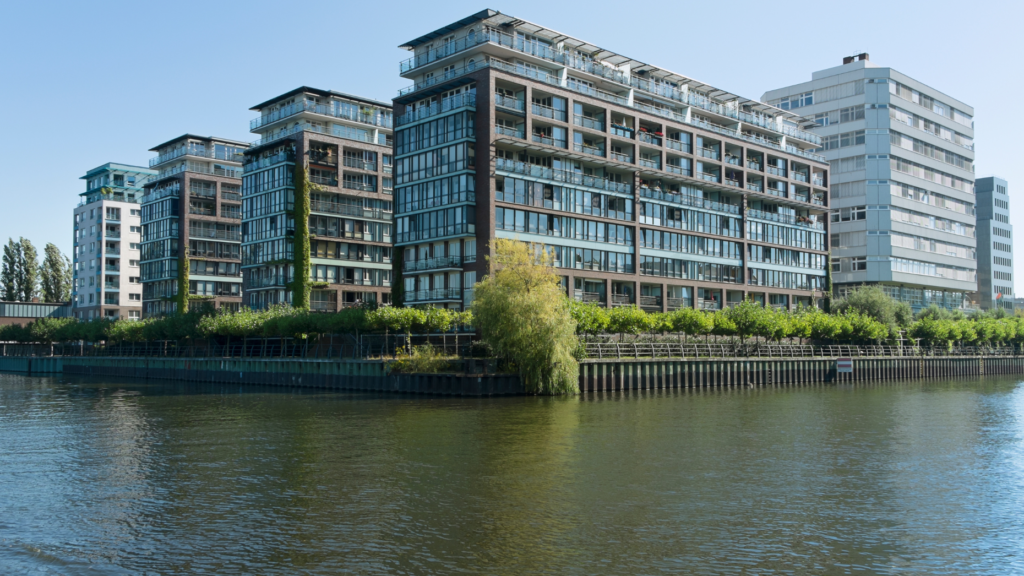

Years of unchecked growth in new multifamily development may be over, but the market is far from flat. Investors remain bullish on multifamily as a major asset class, outperforming other real estate sectors such as industrial real estate and office space. Remaining high home ownership costs, declining migration, and broad demographic trends position multifamily as a healthy market.
Of course, multifamily found a more regulated trajectory after the post-pandemic space race led to a glut of supply. The number of new real estate deliveries has fallen sharply, and demand has cooled in some markets as regional and national market trends change. As a result, while multifamily housing remains a sound investment in the long term, it is likely to evolve in the short term.
In 2026, the multifamily market will respond to easing supply and slowing absorption while testing capital for purchase opportunities in undersupplied markets. Headwinds aside, multifamily housing remains on solid footing.
Fundamentals of some apartment complexes are strong
The national occupancy rate remained relatively stable at 94.5 percent, down only 0.1 percent from January 2025. Demand for apartments will continue to be strong as homebuyers realize that barriers to market entry are not easing.
According to the National Association of Realtors, the average age of first-time homebuyers will reach 40 for the first time in 2025. Additionally, first-time homebuyers make up only 21% of the market. The number of long-term renters is increasing due to a chronic housing shortage, mortgage interest rates hovering at 6%, and insufficient down payments.
Other demographics are also driving demand. Young families are turning to single-family rental properties with private backyards and garages. Meanwhile, retirees are downsizing to rented homes closer to family, friends, cities and beaches. These populations should help the market maintain high occupancy rates.
The balance between demand and supply is changing
The recent huge supply wave of multifamily housing is subsiding, and new construction and deliveries are slowing. Multifamily housing starts will decline by more than 40% from 2023 to 2025, according to PwC, and will be further delayed by material costs, high borrowing rates and oversupply.
Yardi expects new deliveries to be approximately 450,000 in 2026, a 24% decrease from 2025. Additionally, Yardi expects completions to ease in 2027 and 2028, rebalancing supply and relieving vacancy pressures.
Although absorption has remained relatively stable, oversupply of the product exceeds demand in some markets. According to NAR, large metropolitan areas such as New York and Dallas-Fort Worth continue to show high absorption rates. Absorption rates are declining in high-supply markets, especially Houston. Meanwhile, low-supply markets like Chicago continue to see high occupancy and rent growth.
Until this high-supply market is resolved, rent growth nationwide will likely remain modest. Average rents rose 0.2% nationally in January and will continue to fall short of post-pandemic levels, according to Yardi.
Multifamily housing providers will likely respond by focusing on renewal. Blended rent growth provides a more complete picture of rent growth by accounting for new leases and renewals. This will be an important indicator to watch in 2026.
We expect occupancy to be a key strategy this year. While real rent growth is dependent on new leases, renewals minimize costs and provide stable income even during periods of slow growth.
Economic and political factors shape the multifamily market
The labor market will turn a yellow light on multifamily housing in 2026. Bureau of Labor Statistics employment data showed an extended unemployment rate of 4.3%, with the number of unemployed people anchored at 7.4 million. Long-term unemployment and labor force participation rates similarly stabilized.
But for multifamily to thrive, job growth is needed. As demand increases through job creation and immigration, business owners need to keep an eye out for signs that employment will ease. Widespread adoption of agent AI may also pose challenges to job growth.
Elsewhere, local rent control efforts will impact the multifamily market. The National Apartment Association reported that it tracked 131 active rent control bills across the country, as well as failed bills it hopes will be revived. The Washington State Legislature passed a rent control law in 2025, and cities like New York and Seattle have made rent control a priority.
“Unfortunately, policymakers continue to pursue failed policies that are shrinking housing supply amid a national housing shortage,” the NAA said.
Could Austin, Texas, lead the way?
Some Sunbelt markets, such as Dallas-Fort Worth and Phoenix, are struggling with oversupply and falling rents. Austin, Texas, was another market that flatlined after a surge in post-pandemic growth.
But Austin could turn a corner and light the way for a similar MSA. A recent Wall Street Journal article painted Austin as a rent growth market where oversupply is being eliminated and rents are rising.
This article translated Austin’s surge to other Sunbelt cities. Similar supply constraints are easing in Phoenix and Nashville, the WSJ reports, which could lead to higher rents and new supply. The article calls Austin a “vanguard” for the Sunbelt future of multifamily housing in 2026 and beyond.
As a result, investors may find buying opportunities, especially in areas with low supply. While commercial real estate investors will face the wrath of lenders concerned about loan defaults, multifamily investors will find borrowing opportunities. No real estate sector is better suited to delivering long-term risk-adjusted returns than multifamily.
The multifamily market is adept at responding to political, economic, and social changes. Its resilience makes it an attractive investment for those seeking long-term income and diversification. Even in slow growth years, which could be the case in 2026, multifamily housing remains a consistent long-term opportunity.
Michael H. Zaransky is the founder and managing principal of MZ Capital Partners in Northbrook, Illinois.
