


A liquefied natural gas (LNG) tanker is shown on a digital screen at the Qatar Economic Forum (QEF) on Tuesday, May 20, 2025 in Doha, Qatar.
Christopher Pike Bloomberg | Getty Images
Oil prices soared on Monday as traffic in the Strait of Hormuz came to a near standstill, but the long-term effects of the strait closure could be more severe for liquefied natural gas markets. Part of the reason is that it is harder to move than crude oil and LNG production is more concentrated.
About 20% of the world’s LNG passes through the strait, much of it exported from Qatar, where global gas prices have soared after the country suspended production last week following an Iranian drone attack.
European natural gas rose 63% last week, the biggest gain since March 2022 in the wake of Russia’s invasion of Ukraine. Given that most of Qatar’s LNG flows to Asia, prices there are even higher, trading at $23.40 per mmbtu on Monday morning. Asian countries are trying to make up for lost cargo, and as the spread between European and Asian gas widens, some LNG ships originally bound for Europe are making U-turns and heading to Asia instead.
While some of Saudi Arabia and the UAE’s crude oil is being rerouted through pipelines, the same infrastructure does not exist for gas. In other words, ships are needed to transport goods over long distances.
And while many countries in the Middle East produce oil, gas production is concentrated in one industrial park in Qatar, making the market even more vulnerable going forward, said Alex Manton, director of global gas and LNG research at Rapidan Energy.
Mr Manton said the real risk was how difficult it would be to restart LNG production at Ras Laffan in Qatar once traffic in the strait resumed. Given the complexity of cooling gas, which is essentially an industrial process, restarting it will take much longer than oil production.
Mr Rapidan predicted that LNG exports from the region would not resume until there was 100% confidence that it was safe for ships to pass through the strait. Insurance is one factor, and LNG tankers cost $250 million, but the complexity of the process means that operations cannot be increased or decreased based on perceived escalations or de-escalations. The company also said it expects it will take weeks, not days, to fully restart operations, adding that it has never shut down an entire plant.
“In the first few days of this conflict, and we’re only a week in, I don’t think we’ll realize how long Qatar will be offline and the impact that will have on global supplies and global markets,” Manton told CNBC.
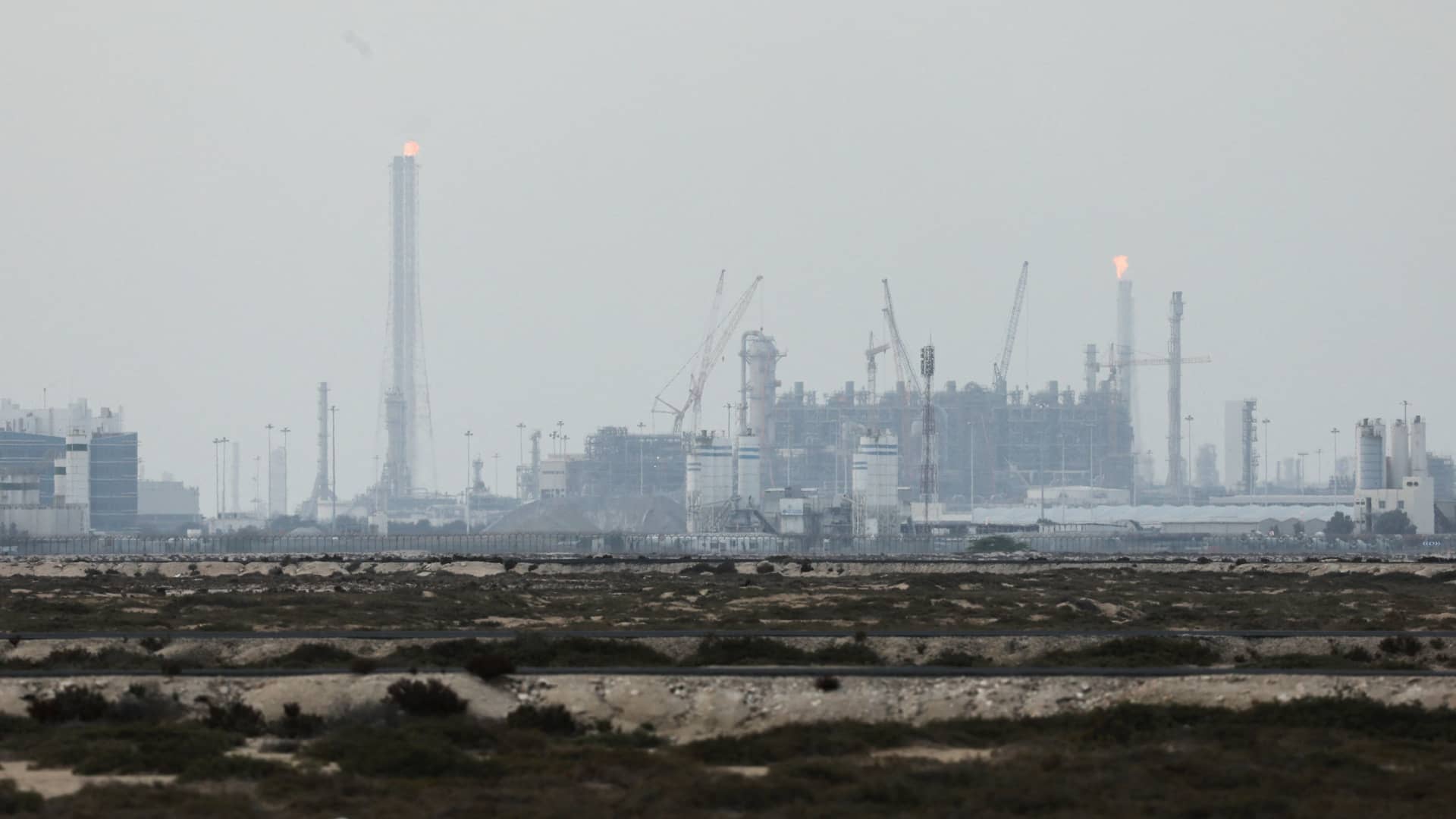
Qatar Energy’s liquefied natural gas (LNG) production facility in Ras Laffan Industrial City, Qatar, on March 2, 2026, amid the US-Israel-Iran conflict.
Stringer | Reuters
The United States is the world’s largest LNG exporter, but production is essentially operating at maximum capacity. And with little additional production available around the world, demand destruction could eventually balance the market. This could include, for example, switching from gas to cheaper coal.
But Manton said escalating hostilities, including further attacks on Qatar’s LNG infrastructure, could have larger long-term consequences. Lapidan’s view is that Iran’s previous attacks on Ras Laffan were “warning shots, not real.”
“It’s a sitting duck,” Manton said of the industrial park. “If Iran wants to significantly damage Qatar’s LNG production capacity, it can do so…If Iran is serious about damaging the plant, there is no way to fully defend against an Iranian attack.”
“One node can’t cover all of the Middle East’s oil production, because there are too many fields, too many countries, too many plants and facilities… But with LNG, it’s one facility. It’s a huge complex, but it’s just one facility.”
According to Bloomberg, Qatar Energy is currently delaying the expansion of its gas facilities until 2027.
Make CNBC your preferred source on Google and never miss a moment from the most trusted names in business news.
Source link
