


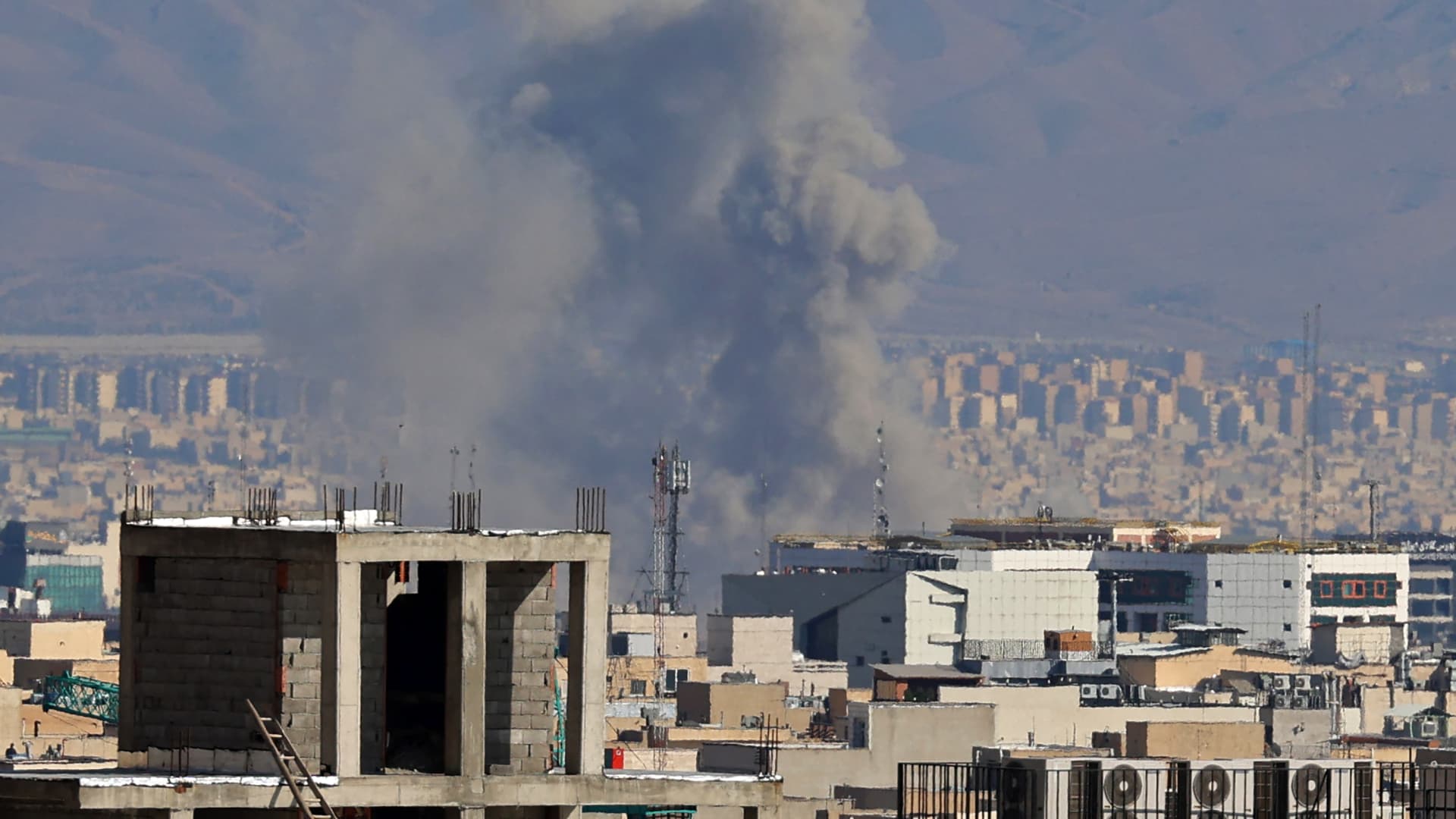
Investors have been pouring money into emerging markets in recent years as the search for big stock gains has shifted overseas and they seek diversification beyond the concentrated S&P 500 index. However, the US-Iran military conflict reframes the concentration issue and highlights the level of risk in emerging markets in that profits are dependent on a few stocks, many of which are linked to the AI boom.
The iShares MSCI Emerging Markets ETF (EEM) has performed well over the past few years and into 2026, gaining 29% in 2025 and maintaining modest gains this year. However, the company’s holdings are still largely biased toward Asia, with significant exposure to China, South Korea, India, and Taiwan, which together account for more than three-quarters of the index weight, and many of the top stocks, such as Taiwan Semiconductor and Samsung, are high-tech-related.
“If you look at the indexes within emerging markets, it’s still about 80% Asian,” Malcolm Dawson, senior emerging markets portfolio manager and senior vice president of the active investing team at ETF firm GlobalX, told CNBC’s “ETF Edge” earlier this week. “It poses a huge risk to concentration,” he said.
Overall, the emerging market index is weighted more than 30% in the tech sector.
Korean stocks experienced extreme volatility this week. Markets posted their worst single-day performance on Wednesday as escalating wars in the Middle East raised concerns about energy supplies to Asia, where top stocks in the memory sector rely on energy-intensive processes to fuel an AI boom. South Korea’s stock index rebounded on Thursday after its worst day on record, posting its best day since 2008. The iShares MSCI Korea ETF (EWY) is still down nearly 13% this week.
Part of the high volatility in Korean stocks has to do with how well the stocks have performed recently and how many retail investors have made big profits by owning them. SK Hynix, a top holding in the broad emerging market index, rose 274% last year, while Samsung rose 125%.
Stock chart iconStock chart icon
iShares MSCI Korea ETF performance over the past year.
Since the outbreak of the military conflict, oil prices have skyrocketed, causing turmoil in global markets. Brent crude oil futures topped $90 on Friday, with U.S. West Texas Intermediate crude oil futures up more than 30% this week and closing in on that range, while Brent crude oil futures rose nearly 26%.
The energy crunch in Asian countries was evidenced by China’s reported decision this week to instruct domestic oil refiners to stop exporting fuel, and more Asian countries may make similar moves to preserve energy reserves, energy market experts say.
ETF investment strategists say it’s not time to abandon emerging markets and that some macroeconomic factors could sustain their outperformance over the long term. But Dawson said a “barbell approach” to investment strategy could be wise, balancing exposure across different types of emerging markets rather than relying on one region. Thinking this way, he says, investors who want to maintain international exposure will look to Latin America as a counterbalance to Asian markets.
“I think we need both,” Dawson said.
Countries such as Argentina, Brazil and Colombia are highly connected to energy and commodity markets, and higher oil prices could provide further tailwinds for these economies, he said. “I think 25 to 33 percent of the story should be the appeal of touching the product,” he said. He added that there are also political reform efforts in Latin American countries, which could provide further tailwinds to the economy. “Attention is now focused on political changes that could drive fiscal reform,” he said, adding that this could benefit financial services sector stocks across the region.
Stocks in several Latin American markets also trade at significant discounts to U.S. stocks, with many having price-to-earnings ratios about half that of the S&P 500. For example, Vanguard’s S&P 500 ETF, VOO, currently trades at a P/E of 28, while its emerging markets ETF, VWO, trades at a P/E of 18.
Beyond the Livestream Sign up for our weekly newsletter for an in-depth look at the trends and numbers shaping the ETF market.
Disclaimer
