


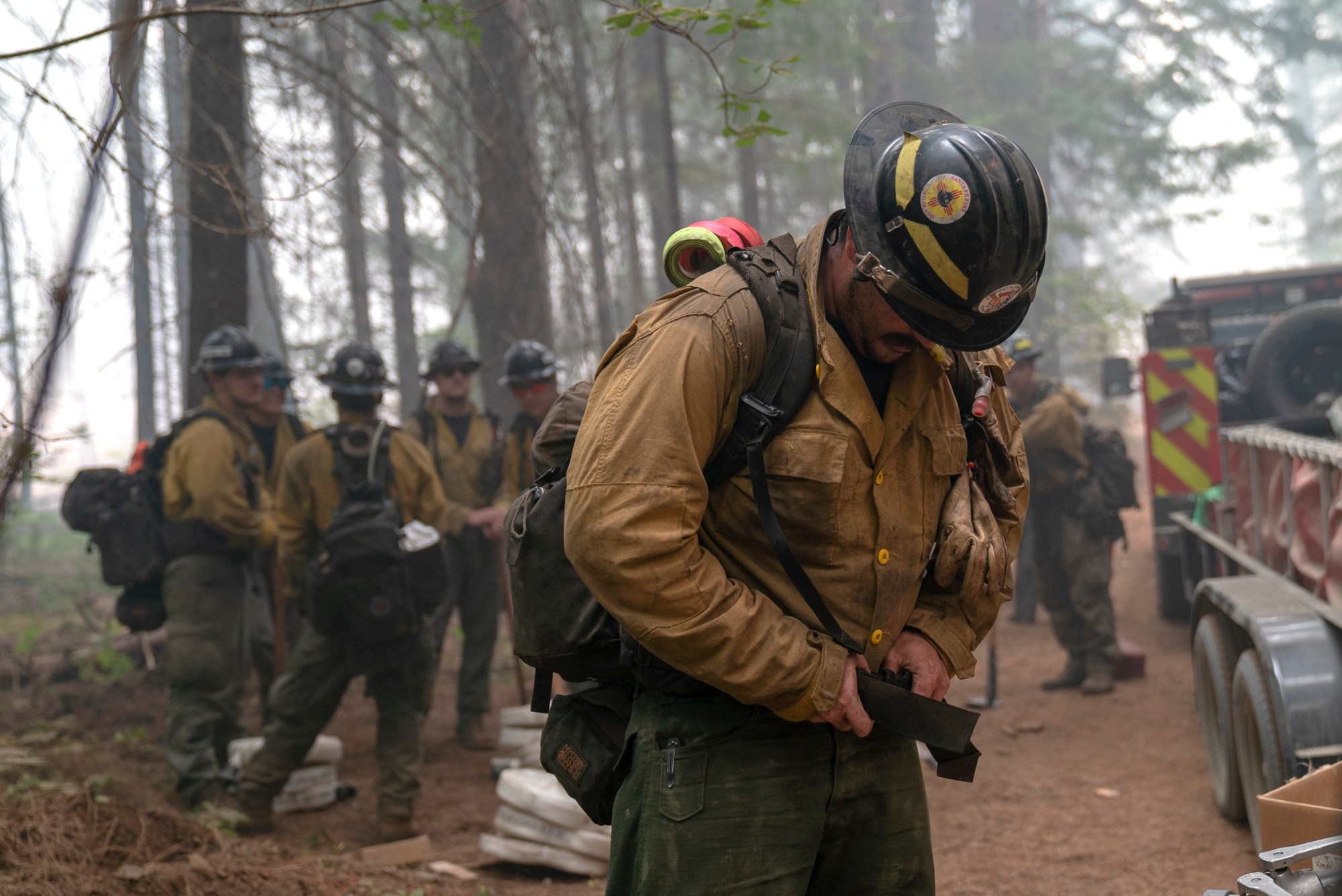
Following a ProPublica article revealing that the U.S. Forest Service had been issuing clothing to wildland firefighters for years that it knew contained potentially dangerous “permanent chemicals,” the agency stopped distributing the clothing. The government will also instruct equipment manufacturers to avoid using PFAS in the future.
This month, ProPublica reported that one of the Forest Service’s suppliers, TenCate, had been using finishing products made with PFAS compounds in its Kevlar-blend pant fabrics until at least 2023. According to an email from the supplier, the finish was used to repel gasoline and water. Even though Forest Service officials knew about the use of PFAS, they had not previously informed wildland firefighters about it.
Per- and polyfluoroalkyl substances (PFAS) have long been used in protective equipment that repels substances such as fuel. But as researchers uncover health risks associated with the chemicals, many local fire departments have moved away from them. Firefighters in several states have filed class action lawsuits against manufacturers alleging PFAS damage in the equipment they were wearing. Research specific to wildland firefighters has been slow, and wildland fire agencies have been slow to address the issue publicly.
On February 11, the day after ProPublica published the story, a Forest Service cache manager (the official who oversees gear storage) wrote in an email that he asked to be widely distributed to his colleagues that he “received notice late last night from the cache management staff in the Washington office that we are suspending the issuance of pants.” However, authorities did not immediately provide further information. A wildland firefighter, who spoke on condition of anonymity to protect his employment, said last week that his incident management team had sought advice from authorities about the pants. “At this point, the logistics personnel have not received any guidance from higher-ups,” the firefighter said.
On Friday, the Forest Service issued a statement to ProPublica saying, “PFAS in protective gear is a complex industry-wide issue, and any suggestion that the Forest Service is trying to hide information does not reflect its broader efforts to expand testing and improve long-term occupational health protection for firefighters. Firefighter pants made with PFAS water-repellent fabric treatments have been removed from inventory in the National Interagency Support Cache.”
TenCate did not respond to repeated inquiries, but in an email reviewed by ProPublica it told the Forest Service that PFAS-free finishes will be available in January 2023. On Friday, the Forest Service sent an email to staff saying the supplier had switched to PFAS-free finishes in the same year. In the same email, the Forest Service wrote that people wearing old pants “should stop using them and replace them.” The agency also said it is updating requirements to “specify that fabric processing and fabrics are free of PFAS.”
Fire departments typically adhere to safety standards set by the National Fire Protection Association. The National Fire Protection Association is a nonprofit organization that gathers input from an expert panel that includes representatives of firefighters and companies that supply firefighting equipment. The association is not a certification body, but its standards are used by government agencies such as the Forest Service. Last year, the NFPA Technical Committee updated standards for municipal firefighters to limit levels of certain PFAS chemicals in protective equipment. However, the organization has not yet updated its standards for wildland firefighters in parallel.
NFPA committee member Rick Swan said the delay reflects a long deliberative process to develop the standard, but added that restrictions on PFAS chemicals in wildlife gear are all but inevitable. “I think it’s a no-brainer,” Swan said. An NFPA spokesperson wrote in an email that the commission that oversees wildland firefighting standards “will likely revisit this issue.”
Experts agree that it is impossible to say for sure what risk PFAS in equipment poses to the health of wildland firefighters, and more research is needed. Jeff Burgess, a professor and researcher at the University of Arizona who is leading a series of long-term studies on firefighter health, said smoke inhalation and soot buildup on equipment are the main reasons wildland firefighters encounter carcinogens. Our understanding of wildland firefighters’ exposure to PFAS lags behind that of municipal fire departments. Historically, researchers have had less contact with wildlife investigators, so in recent years they have focused more on studying smoke-related risks.
