


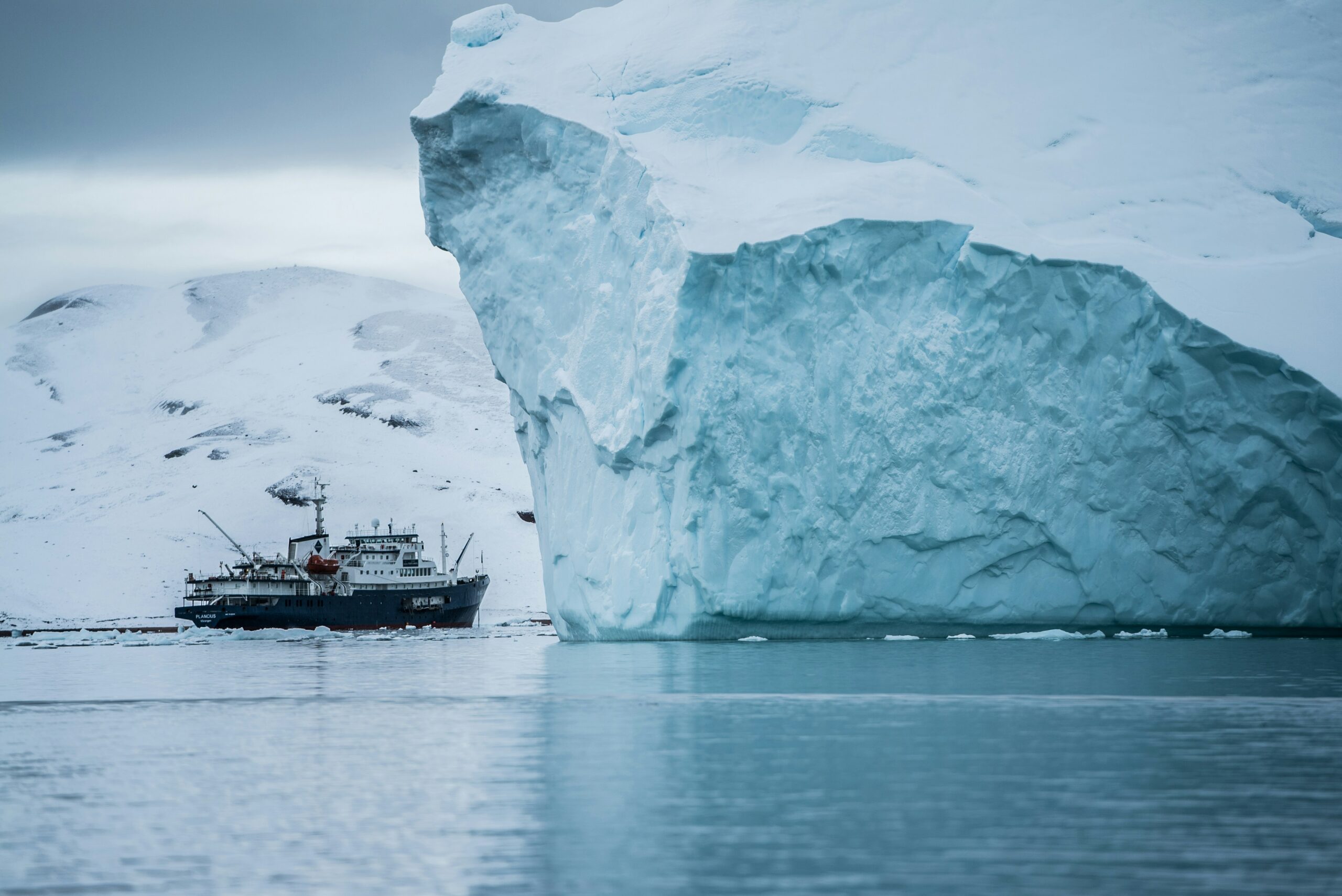
In recent years, the Arctic has once again become the focus of public attention. Renewed interest in Greenland, the gradual opening up of sea routes due to melting ice, and claims to areas like Svalbard are clear signs that Arctic policy will continue to attract public attention.
Regarding the Svalbard archipelago, located in northern Norway, Eyvind Vado Pettersson, Norway’s deputy foreign minister, summarized it in the New York Times as follows:
“For too long Svalbard has been seen by other countries as a kind of Wild West, where anyone can come and do pretty much anything they want. That’s not the case. This is Norwegian sovereign territory. So we’re making that a little more clear.”
Norway recently restricted land sales to foreigners and claimed hundreds of thousands of seas around the archipelago, a concrete sign of its intention to clarify rights and boundaries.
These profound developments in the Arctic are evident in new contestations for resources and strategic locations, and are naturally subject to multiple interpretations. Analysts might bring to the fore military great power competition, climate change security, international legal disputes, or economic opportunities.
I propose to apply a theoretical lens that is often overlooked in public debate: Harold Demsetz’s theory of property rights. According to Demsetz, property rights are not immutable factors, but institutions that emerge, are defined, and are strengthened when the value of a resource increases enough that the benefits of exclusivity outweigh the costs of definition and enforcement. If the resource has little value or the cost of exclusion is prohibitive, an open access regime may be more efficient. However, as expectations increase for technological, market, or environmental reasons, there is an incentive to manage resources in an orderly manner and invest in rules, oversight, and sanctions to reap the benefits.
The historical examples that Demsetz uses to illustrate this dynamic are eloquent and persuasive. Some indigenous tribes in North America practiced beaver hunting under open access regimes. The arrival of outside traders increased the demand for fur, driving up prices and spurring intensive hunting that threatened to decimate the species. To avoid resource collapse, some communities introduced exclusive territorial rights. Property became a tool for internalizing the benefits of conservation. Those who could exclude other animals had an incentive to count and monitor their numbers, and to limit hunting if their numbers declined too much. Further evidence for this theory is that private property did not take hold where terrain made it difficult to delimit and enforce rights, or where commercial value was low.
“Demsetz’s logic is not bound by the absence or weakness of formal institutions. It provides a logic of incentives, a trade-off between value and exclusion costs, that remains valid whenever benefits and costs change…”
Clearly, Demsetz’s empirical case concerns societies with informal institutions, but the contemporary Arctic is not an undifferentiated ‘commons’. Sovereignty over land is largely defined, and the legal framework governing exclusive economic zones, continental shelves, and maritime routes is clearly defined. However, Demsetz’s logic is not bound by the absence or weakness of formal institutions. This provides an incentive logic that is valid whenever benefits and costs change, i.e., a trade-off between value and exclusion costs. That is, even in highly institutionalized situations, states, businesses, and communities react.
Demsetz’s central insight, that the emergence or strengthening of property rights responds to changes in the benefits and costs of monopoly rights, also applies to international regimes, mineral rights, fishing rights, and territorial disputes. A concrete example is the introduction of transferable quotas in fisheries. Technological advances in hydraulic fracturing (“fracking”) are unlocking new oil and gas reserves. Renegotiation of mining rights. and the extension of the continental shelf. These are all institutional responses to increasing resource values and increasing technological capacity to exclude and monitor.
The connection to this historical case is simply that external changes (such as global warming or the emergence of new economic actors) increase the value of previously marginal resources, create pressure on existing rights, and encourage actors to strengthen, expand, and reinterpret their claims. In this sense, in the Arctic we are not witnessing the birth of entirely new rights, but rather the restructuring of rights with stricter enforcement.
However, this institutional consolidation raises questions of legitimacy, justice, and sustainability that cannot be ignored.
The first knot is political and distributive. Who sets the rules and who benefits from new opportunities? In the case of Greenland, rights emerge from a complex interplay of international norms, Danish law, and Inuit protection. If decision-making processes marginalize local communities, redefining rights risks leading to wealth dispossession and social conflict.
The second risk, and perhaps more serious, is environmental. The Arctic is a fragile ecosystem that is critical to global climate balance. Increased mining and maritime traffic come with tangible risks such as pollution, habitat loss and overfishing, the effects of which are difficult or impossible to reverse. It’s hard to miss this painful irony. The melting of the Arctic due to global warming is creating new opportunities for the very people who challenge its causes.
Demsetz’s framework remains enlightening as it sharpens our understanding of the situations in which property rights result in peaceful management rather than conflict. This theory posits that clearly defined property rights can promote sustainable management, but only if two strict conditions are met:
Rights holders must prioritize conservation over short-term profits and operate with a long-term perspective. And there must be strong, transparent institutions to fairly enforce the rules and limit predatory behavior.
In the Arctic context, this means a critical need for governance mechanisms that are legible, legal, and have reliable monitoring and response capabilities.
Without such a strong regulatory framework, based on scientific oversight, clear lines of responsibility, and fair benefit sharing with indigenous peoples and local communities, the emergence of resource value may simply accelerate competition for claims and exploitation. The result will be enormous external costs to the Arctic’s fragile environment and its inhabitants through pollution, habitat destruction, and erosion of traditional ways of life.
Another irony is at work. The very mechanisms designed to bring about order (the establishment of exclusive rights) run the risk of enabling the tragedy of the commons, where enclosure leads to careless extraction rather than consideration.
“To contribute to peace and sustainability, it must be built equitably, through an inclusive process that prioritizes environmental resilience and upholds the rights of those most directly affected.”
Therefore, while there is geopolitical truth in the old adage that “good fences make good neighbors” and clear boundaries and rules can reduce friction between states, the nature of these institutional “fences” is of paramount importance. To contribute to peace and sustainability, it must be built justly, through an inclusive process that prioritizes environmental resilience and upholds the rights of those most directly affected. Otherwise, they risk becoming tools of exclusion and geopolitical predation, reinforcing inequalities and sacrificing conflict. In the worst-case scenario, they become legal and territorial fault lines along which conflicts erupt.
Viewed through this lens, we can see that the heightened rhetoric and hegemonic posturing of great powers in the Arctic is not harmless theater, but a harbinger of a system headed toward instability or bad equilibrium. These reveal a geopolitical situation in which the soaring valuation of inaccessible 11 resources outpaces the development of reliable shared institutions. Plans to address these challenges through the transfer of cash for territorial sovereignty to a single decision-maker, rather than through existing institutions or negotiations, represent an expression of a worldview that treats territory, alliances, and even security as commodities. In Demsetsi-esque terms, plans to meet this challenge by treating the right to make such decisions as salable reflects an attempt to unilaterally redefine rights through evaluation and power rather than the social arrangements that legitimize the property system.
This idea extends to broader geopolitical patronage systems, and the message to allies is that security must be bought through political loyalty, tariffs, basing rights, strategic concessions, etc. Such actions disrupt the conditions of cooperation that Demsetz considered essential for the efficient development of rights, replacing them with forced redistribution that increases transaction costs and undermines trust. This approach destroys multilateral frameworks, reduces them to bargaining chips in zero-sum negotiations, and accelerates the erosion of shared governance. It stimulates contestation in which power, rather than law or ecology, is the determining currency.
For more information on these topics, see:
The rise in nationalism surrounding Arctic claims is therefore not just a symptom of instability, but a product of a great power mentality that treats rules as disposable. Without a collective recommitment to fair and environmentally based governance, the logic of property rights distorted by transactional and justice-enhancing philosophies will not only risk conflict, but will lead the region into sustained conflict.
