


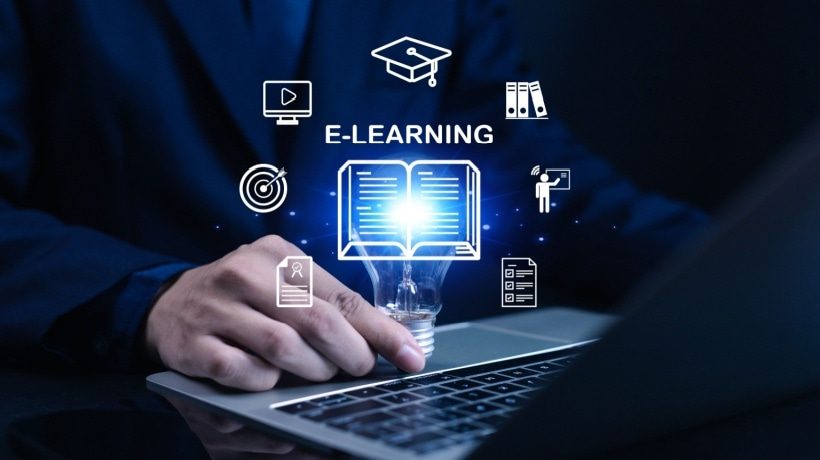
Empowering Tomorrow’s Workforce
The workplace of 2026 will look very different than it did just a few years ago. Rapid technology advances, remote work culture, and evolving customer expectations are reshaping the way organizations operate. In this environment, companies can no longer rely on outdated training methods. To remain competitive, you must continually improve the skills of your employees. This is where a modern e-learning platform becomes essential.
Organizations today do more than just hire people. They are investing in long-term capacity building. A future-ready workforce is one that can adapt quickly, continuously learn, and perform confidently in changing conditions. A well-designed e-learning platform can support this transformation by making learning accessible, flexible, and measurable.
Transition to continuous learning
Traditional training programs were often conducted once or twice a year in a physical classroom. Although effective in certain cases, these sessions were limited by time, location, and cost. Modern businesses require training that evolves with industry trends and internal growth.
Modern e-learning platforms allow organizations to deliver ongoing training rather than one-off sessions. Employees can update their knowledge whenever needed. Whether you’re learning new software tools, understanding the latest in compliance, or improving your leadership skills, our digital learning platform provides instant access to relevant content. Continuous learning is no longer optional. That’s a strategic advantage.
Flexibility for the modern workforce
Today’s workforce is spread across cities and even countries. Hybrid and remote work models are common. Such a scenario makes classroom-based training difficult to manage.
Modern e-learning platforms remove geographic barriers. Employees can learn at their own pace using smartphones, tablets, and laptops. This flexibility increases participation and reduces disruption to daily work schedules. When learning fits into an employee’s routine rather than disrupting it, engagement naturally increases.
Flexibility also accommodates different learning speeds. Some employees understand concepts quickly, while others require repetition. Digital platforms accommodate both.
Personalized learning experience
Future-ready organizations understand that every employee has unique strengths and skill gaps. Our modern e-learning platform enables learning paths tailored to your role, department, and experience level.
For example, sales representatives may require product training and communication skills, while technical team members may focus on advanced systems knowledge. Rather than providing the same generic content to everyone, organizations can offer targeted modules that fit specific needs.
Personalized learning makes it more relevant. When employees find value in training, they are more likely to complete the course and apply that knowledge to real-world scenarios.
Increase engagement with interactive content
Engagement is one of the biggest challenges in corporate training. Long lectures and thick text-based material often fail to capture attention. Modern digital platforms solve this problem by incorporating interactive elements such as short videos, quizzes, simulations, and scenario-based exercises.
A well-structured e-learning platform encourages active participation rather than passive listening. Employees can test their knowledge, receive instant feedback, and track their progress. This interactive approach improves memory and makes learning more fun.
In 2026, engagement will be directly linked to effectiveness. Organizations that prioritize interactive learning see improved performance.
Data-driven decision making
Another major benefit of using a modern eLearning platform is access to analytical and performance data. Training managers can monitor course completion rates, assessment scores, time spent on modules, and learner engagement levels.
These insights help organizations identify skills gaps and improve training strategies. Instead of relying on assumptions, decision makers can use real data to improve content and measure return on investment. Data-driven training ensures that learning efforts are aligned with business goals.
Faster onboarding and skill development
Building a future-ready workforce starts with effective onboarding. New employees need structured guidance to quickly increase productivity. Modern eLearning platforms simplify onboarding by centralizing all training materials in one place.
From company policies to role-specific instructions, new hires can access everything through a single digital interface. This reduces reliance on repeated face-to-face sessions and ensures consistent information delivery across locations. Faster onboarding leads to increased productivity, which directly impacts business performance.
Cost efficiency and scalability
Budget constraints are a reality for most organizations. Traditional training often involves travel, venue fees, and printed materials. In contrast, modern e-learning platforms significantly reduce these costs.
Once you develop your content, you can reuse and update it with minimal cost. Additionally, digital platforms can easily scale as your organization grows. Whether your company has 100 or 10,000 employees, the platform can scale without major changes to your infrastructure. Scalability makes digital learning a sustainable long-term investment.
Support a culture of innovation
A future-ready workforce is not only skilled but also innovative. When employees have access to continuous learning, they stay informed about industry trends and new technologies. This awareness fosters creativity and problem solving.
Modern e-learning platforms encourage employees to explore new ideas and build new capabilities. Over time, this learning culture strengthens the organization’s resilience and adaptability. Innovation begins with knowledge.
conclusion
Building a future-ready workforce requires more than occasional training sessions. It requires continuous learning, flexibility, personalization, and measurable impact. Modern e-learning platforms provide all of these elements in a scalable and cost-effective manner.
In 2026 and beyond, organizations that invest in digital learning solutions will be better equipped to adapt, compete, and grow. Empowered employees drive higher performance and a strong learning foundation builds lasting success.
