


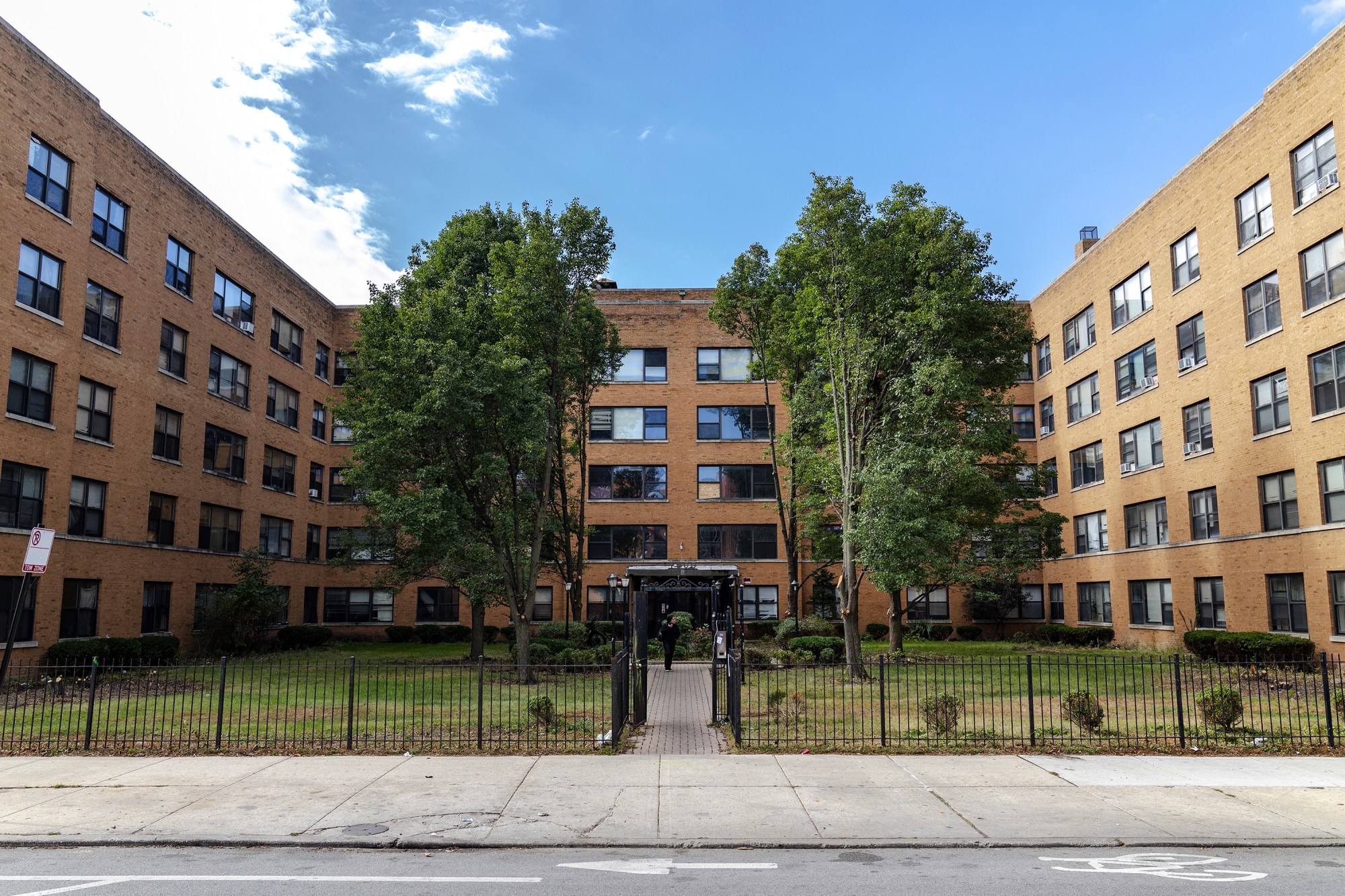
For months, the Trump administration has justified a dramatic midnight raid on a Chicago apartment complex by claiming it had received information that the violent Venezuelan gang Torren de Aragua had taken over the building. However, authorities have not provided any evidence to support this claim.
Now, new documents confirm, in the government’s own words, that the impetus for the raid was more pedestrian in nature: that immigrants were illegally occupying the complex. And the landlord had given permission to search the building to federal authorities who had already targeted immigrants in Chicago.
The arrest records of two of the 37 immigrants detained that September night, included in a motion filed Tuesday in connection with an ongoing federal consent decree, provide the clearest picture yet of what led to the controversial and aggressive operation in which operatives descended from Black Hawk helicopters, broke down doors and zip-tied American citizens and immigrants.
Records show that investigators entered and searched the complex with “the verbal and written consent of the owner/manager.” Investigators wrote that they launched the operation “based on information that there were illegal aliens illegally occupying the apartment.” They said their search focused on properties that were “not legally rented or leased at the time.” This story appears word for word in the arrest reports of both the Venezuelan and Mexican men.
“This was an egregious lie to the American people,” said Mark Fleming, an attorney with the National Immigration Justice Center and co-counsel on the case against the government that led to the consent decree. “This is actually about immigrants who are allegedly occupying apartments illegally, which is fundamentally different from the story they told.”
The U.S. Department of Homeland Security makes no mention of Torren de Aragua’s records, even though authorities have repeatedly cited the presence of gangs in the building as a motive for the attack. Officials paraded the migrants in front of cameras and claimed their arrests were a victory against terrorism. The government also claimed that two of those arrested were gang members, but provided no evidence.
The federal raid was motivated by suspicions that immigrants were illegally occupying the complex, according to new documents obtained by ProPublica. Retrieved from ProPublica
ProPublica previously reported that there was little evidence to support the government’s claims, based on interviews and records. Four months after the raid, federal prosecutors have not filed criminal charges against anyone arrested.
Over the past few months, ProPublica has interviewed 15 of the immigrants who were detained that night. All denied being gang members. They and others who lived in the building acknowledged that there had been criminal activity there, including the murder of a Venezuelan man last summer, but no one knew there were gang members there.
Their arrest records were filed in federal court as part of an ongoing lawsuit over whether the government violated a 2022 consent decree that limits warrantless arrests during a months-long deportation campaign in Chicago. The consent decree is still in effect and continues to be challenged by the government.
Government lawyers have previously acknowledged in court that hundreds of migrants detained last year may have been wrongly arrested.
Following a court order, DHS is now providing administrative arrest records to attorneys seeking the release of some immigrants from detention or the lifting of restrictions on immigrants who have already left the country. These include a Venezuelan man and a Mexican man who were taken during the attack.
In a motion filed Tuesday night, immigrant rights lawyers said that to justify warrantless arrests across Chicago, the government portrayed immigrants as flight risks when that was not the case. Some of the factors DHS used in making its decision about the South Shore men, including their “deliberate disregard for the personal property of others” and “attempted flight from law enforcement,” were unfounded and contradicted by their arrest accounts, the attorneys wrote.
Lawyers say many more of the 37 people arrested that night may have violated consent decrees, but the cases under consideration focus on those who remain in the U.S. As the weeks and months passed, most of the immigrants detained in the South Shore raids were deported or gave up their efforts to remain in the United States.
The property’s owner, Wisconsin-based real estate investor Trinity Flood, and its management company at the time of the raid, Strength in Management, did not immediately respond to requests for comment Wednesday morning. Flood and management company owner Corey Oliver have repeatedly declined interview requests and have denied any involvement in the operation.
A DHS spokesperson did not respond to questions Wednesday morning, but reiterated an earlier statement that the raid was lawful. “Given that two individuals associated with a foreign terrorist organization were arrested in a building known to be frequented, the further information we can provide is limited,” the spokesperson said.
From the beginning, there were questions about whether Flood and her property manager had tipped off the government to remove squatters from her building, which had repeatedly failed city inspections in the two years before the raid.
Last month, state officials opened a housing discrimination investigation into allegations that Flood and Strength in Management used federal agents to illegally evict black and Hispanic tenants from a 130-unit building in Chicago’s South Shore neighborhood.
“By blaming the Venezuelan tenants for their failure to provide necessary locks, security services, and other necessary maintenance and repairs, the building managers perpetuated stereotypes about Venezuelan gang members and sent the message that tenants born outside the United States are considered gang associates, even if they are law-abiding,” state officials said in the complaint.
Within hours of the attack, management company employees were trashing the tenants’ belongings and cleaning out the apartments, according to the complaint.
State officials said they could not provide additional information about the ongoing investigation but expected a response from Flood and Strength in Management.
Several Venezuelan immigrants who were detained that night said they were angered to learn that the building’s owner and property manager had facilitated access for federal agents. “We were paying rent and doing things the right way, and then all of a sudden, boom, the government comes in and kicks us out. I don’t understand,” said Jean Carlos Antonio Colmenares Pérez, 39.
Colmenares spent more than two months in federal custody before being deported in December.
“They took us out like we were dogs. Like we were criminals,” said his cousin, Daniel Jose Enriquez Rojas, 43.
Enriquez was detained for about two months before being deported. Federal agents also took his wife and then-6-year-old son that night and then transported them to a facility in Texas, where they were held for about a month. The family is now back in Venezuela.
Johandry Jose Andrade Jimenez, 23, had moved into the South Shore complex with his wife and three young daughters just two days before the attack. Andrade was deported in December. His wife was released on an ankle monitor in Chicago and now struggles to support their daughters alone.
“They separated me from my family,” Andrade said. “I feel terrible.”
The complex housed dozens of mostly African American and Venezuelan tenants. Some said they had stopped paying rent because of the dangerous and dilapidated conditions, but more than a dozen Venezuelans, including Colmenares, Enriquez and Andrade, said they were paying rent to people they believed worked for the management company.
But in some cases, the money went to other tenants who claimed to be managers. ProPublica interviewed one American who said they moved Venezuelan families into spare rooms, charged what they thought were fair amounts, and pocketed the money. “We started making them pay rent,” the man said.
Ms. Flood, who is facing a foreclosure lawsuit, said in court records last fall that her company had invested millions of dollars in repairs and maintenance of the building and in eviction litigation costs. Weeks before the raid, the company obtained a court order to evict the squatters.
The building continued to deteriorate even after the attack. Oliver testified in court that he hired a security guard for a short period of time but fired him because he didn’t do his job. In November, a county judge ordered another company to take over management of the building and asked the remaining residents to leave.
