


There were rumors that President Turkiye was planning to host talks between the United States and Iran as part of broader regional talks, but Tehran does not appear to be participating. This makes sense even though Ankara is reportedly one of the regional countries calling on the US to exercise restraint. What do you think Turkiye realized?
Egypt, along with Turkiye, Saudi Arabia, Qatar, and Oman, played an impressive role behind the scenes to avert this war. This is unfair. They recognize that the escalation will spiral out of control, or that war will spread instability and refugee flows across the region. … https://t.co/YSnf46opBk
— Trita Parsi (@tparsi) February 1, 2026
I don’t know. This reminds me of the situation in Syria. It was known that the ouster of former Syrian President Bashar al-Assad would strengthen Israel. Years before Assad’s fall, Turkiye publicly abandoned efforts to overthrow the Damascus regime. Russia held the hands of Erdoğan and Assad to mend relations after Turkiye’s key role in the dirty war. Meanwhile, the Turkish government was still colluding with Washington, Tel Aviv and Syrian helicopters on its next move.
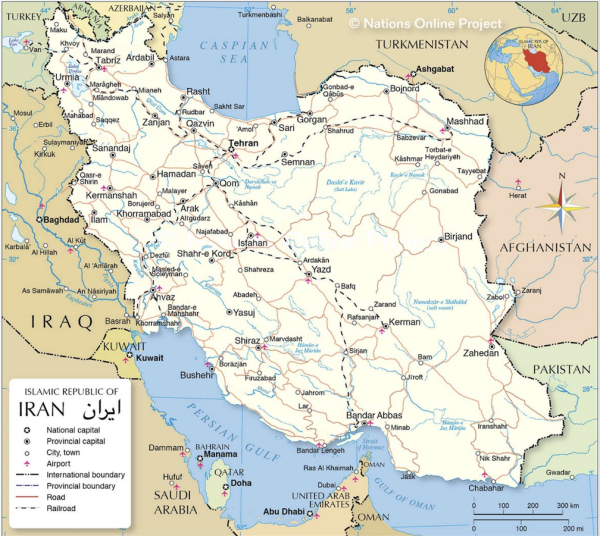
Prime Minister Turkiye is now reportedly prepared to establish a “buffer zone” with Iran to prevent an unwanted influx of refugees from Iran in the event of a conflict, with Middle East Eye reporting that this zone is within Iranian territory.
Of course, Turkiye did the same in Syria. If you want to stick to the comparison with Syria, recent Iranian protests over economic distress (mainly caused by the US-led economic war) hijacked by hostile intelligence services share similarities with the early days of the Arab Spring in Syria. Initial protests in the latter helped lay the groundwork for subsequent waves and further destabilization campaigns.
There are many reasons why Iran is not Syria, but the strategies used by the United States, Israel, Turkiye, and other countries interested in bringing down the Tehran government are similar.
For now, President Turkiye wants to actively participate in talks with Tehran in pursuit of a “reconstructed security architecture” in the region. What does Ankara mean?
Following a meeting in late November between Turkish Foreign Minister Hakan Fidan and Iranian Foreign Minister Abbas Araghchi and President Massoud Pezeshkian, the Turkish side publicly agreed with the Iranian side on a full range of issues, including:
Israel’s regional expansion plans are the “greatest security threat” to the region. Economic sanctions against Iran are illegal. To resolve differences, diplomatic solutions based on international law should be pursued.
But let’s take a look at what Turkiye actually does. Back in October, President Turkiye froze the assets of individuals and entities in Iran following US sanctions against Iran.
All talk of Turkiye and Israel being in conflict ignores cooperation between the two. Despite his fiery rhetoric, President Turkiye continues to transport Azerbaijani oil and other vital supplies to incite Israeli genocide. Turkiye and Israel are Azerbaijan’s two biggest allies on Iran’s side.
At some point, if the Ankara government truly believed that Israel was such a threat, it would make sense to actually take some concrete action. For now, it’s just words.
Public opinion in Turkiye is overwhelmingly opposed to Israel’s actions and has called on the government to obscure such cooperation with fiery rhetoric.
Although there is a future scenario in which Turkiye and Israel come into conflict, for now there is strong cooperation between the CIA, Mossad, and Milli Istibarat Teshkiratu.
Although Turkiye and Israel had a brief confrontation in Syria, what happened there also shows the cooperation between the two countries. The United States, Israel, and Turkiye reached an agreement at the Paris conference in January that threw the Kurds under the bus. From the cradle:
Turkish Foreign Minister Hakan Fidan attended Paris and played an active role in the negotiations. The request was clear. US support for the SDF must end and the so-called “David Corridor” must be closed. In return, Turkiye will not interfere with Israeli operations in southern Syria.
This was a transactional adjustment and it worked.
It’s worked fine so far. All three parties are unable to reach an agreement, but as long as they are united in their desire to see regime change in Iran, a deal-making partnership could be maintained.
And no one knows how long there will be enough spoils from expansionary ambitions. Tom Barrack, a private equity real estate investor and viceroy of the Middle East, seems to think the answer will take a long time.
It has been several years since President Erdoğan last invoked Misaki Milli, but lest we be fooled into thinking that President Turkiye has abandoned his expansionist ambitions.
But certainly the tension between Erdogan and Netanyahu is purely theatrical. https://t.co/ztSZadkcGE pic.twitter.com/gFrzrNzH4U
— Lindsey Snell (@LindseySnell) February 1, 2026
The Turks certainly appear to be benefiting from the Trump administration’s more transactional approach.
Kurdistan Workers’ Party (PKK) fighters are now in Iraq, not in Turkiye. Syrian Kurds will also join them. These are two of Ankara’s biggest goals and were left off the list.
And for Turkiye, the Trump Route of International Peace and Prosperity (TRIPP) opened the door to Central Asia through the Caucasus. As we wrote at the time, Ankara emerged as the biggest winner, despite many question marks regarding the corridor. Emir Avdaliani, a researcher at the Turan Research Center and a professor of international relations at the European University in Tbilisi, Georgia, said:
US involvement in the South Caucasus means Washington will increase its dependence on Turkiye to ensure the long-term survival of the corridor through Armenia. TRIPP not only attracts a direct American economic and business presence in the South Caucasus, but also expands Turkiye’s role in the region. The TRIPP agreement will advance Ankara’s commercial and political interests in the South Caucasus and sideline Iran and, to some extent, Russia. The agreement also paves the way for the restoration of relations between Ankara and Yerevan.
…Russia and Iran have few tools to reverse the development of TRIPP. Neither Tehran nor Moscow can afford to worsen relations with Turkiye, Armenia, and Azerbaijan at a time when the Islamic Republic and Russia have other pressing geopolitical issues to deal with.
I’ll explore this last point in more detail in next week’s post, but it’s safe to say that both are already applying pressure behind the scenes. While Moscow has become more flexible toward TRIPP, Iran has repeatedly made its position clear.
The Foreign Minister of the Islamic Republic of Iran today clearly stated that Iran will not accept any changes to Armenia’s southern borders and will not tolerate any foreign forces there. pic.twitter.com/6HjlRYHiKB
— Syed Mohammad Marandi (@s_m_marandi) November 6, 2025
This brings us back to Turquier’s talk about a “reimagined security architecture.”
The Turkish government is seeking to inflict some damage on regional connectivity, transport and logistics to Tehran in exchange for accepting what is effectively a NATO corridor along Iran’s northern border. As an example, the Turkish government outlined a gas exchange agreement between Iran and Turkmenistan, in which 1.3 billion cubic meters of Turkmen gas would be sent from Iran via the existing Iran-Turkiye gas pipeline, while Turkmenistan would deliver a slightly larger amount of gas to northwest Iran via the existing pipeline. But it is unclear whether the deal will come back online without the US and EU loosening some sanctions, and if that means tacitly allowing Tehran to develop a NATO corridor, it may do so for some time. For obvious reasons, Iran is unlikely to agree.
And the Iranian government no longer seems interested in such games that would lead to the country being further besieged by hostile forces. This creeping danger is likely a more serious danger than President Trump’s “fleet.”
It is well established that the United States and Israel are likely to lose a conflict with Iran. It is highly unlikely that missiles attacking the country would have any effect on overthrowing the Tehran government, more likely to consolidate support, and a serious closure of the Strait of Hormuz would cause the United States and Israel to face devastating losses to bases, naval assets, and critical infrastructure, as well as economic damage. This is probably why no strikes have taken place yet, even though Israel is reportedly anxious for a US attack.
There is also the possibility that the Armada will serve as a distraction and use it as a bargaining chip. There are rumors that the Iranian government wants to remove U.S. military assets from the border before talks resume. Is it just official US military assets?
But the real threat lies elsewhere. Rather, any hopes that the United States, Israel, and other regional allies have in achieving their goals in Iran depend on economic warfare and mayhem waged by actors on Iran’s borders, such as Azeris, Kurds, Baloch separatists, and ISIS, supported by Washington and Tel Aviv.
Iraq is likely to be the next battlefield as the Zionists seek to field more hostile forces. ISIS has been transferred to Iraq because it is Kurdish, and the US and Israel will no doubt try to encourage them to continue their bizarre quest for a state that includes parts of Iran.
Meanwhile, Israel continues its massacres in Gaza, the West Bank, and Lebanon.
Turkiye, in conjunction with his brother Azerbaijan, continues to expand into Central Asia with support from the West. Baku is strengthening its ties with NATO. Turkiye is increasing its influence in the Central Asian republics with the support of TRIPP and Western sanctions. Azerbaijan’s President Ilham Aliyev said at Davos:
Addressing transport and logistics, Azerbaijan’s President Ilham Aliyev said that Azerbaijan is the only safe transport route between Europe and Central Asia and is not at risk of sanctions.
Moscow and Tehran seem to believe they can rely on common sense economic carrots to keep the Caucasus countries in line, but the situation is not cooperative.
It is clear that the Persian Gulf despots and Aliyev are collaborating with the Zionist overlords against the Iranian people.
If war breaks out, these regimes will be fully complicit. Iran and the Axis of Resistance will surely pay the ultimate price. https://t.co/3UnNpIFm9Q
— Syed Mohammad Marandi (@s_m_marandi) February 1, 2026
Regardless of whether the United States and Israel go to war, Iran and Russia will need a stronger response in the Caucasus region at some point in the not-too-distant future. Otherwise, you will risk turning the problem from a headache into a serious problem.
