


Stable housing is a foundation for almost everything else in life. However, rising costs and limited supply have made that goal feel out of reach. Housing assistance programs exist to bridge this gap, offering support ranging from long-term paths to homeownership to immediate emergency shelter.
Redfin teamed up with Caroline Pinal, co-founder of real estate philanthropic network, Giveback Homes to help you understand how these programs can help you on your homeownership journey. Whether you’re seeking short-term rent help in an apartment in New York, NY or helping a loved one in Los Angeles, CA, these programs are designed to meet different needs.
Homeownership assistance programs
Homeownership is a major milestone, but saving for a down payment, covering closing costs, and qualifying for a mortgage can be significant hurdles. These programs aim to reduce these barriers.
Down payment and closing cost assistance
Many state and local housing agencies, nonprofits, and banks offer grants or forgivable loans to help buyers cover upfront costs.
How it works:
Funds may be offered as grants, low-interest loans, or deferred loans that only come due when the home is refinanced or sold.
Eligibility often includes income limits, completing a homebuyer education course, living in a specific city or county, and first-time buyer requirements (In most cases, a first-time buyer is someone who has never purchased a home or hasn’t owned one in the past three years).
Programs often consider factors like credit score, income, and debt-to-income ratio (DTI). A minimum credit score of 620 is common, along with income limits and qualifying for a 30-year fixed-rate mortgage. However, requirements vary by program.
First-time homebuyer programs
Federal, state, and local programs help first-time buyers access affordable financing.
Examples include:
FHA loans: Low down payments and flexible credit requirements.
VA loans: Zero-down loans for eligible veterans and service members.
USDA loans: No-down-payment mortgages for rural and some suburban areas.
How it works: First-time homebuyer programs are offered through approved lenders. Buyers apply by submitting financial documents, meeting income limits or location-based criteria, and confirming the home will be their primary residence. Once approved, the assistance—whether a grant, forgivable loan, or low-interest second loan—can be applied toward the down payment or closing costs at the time of purchase.
Photo courtesy of Giveback Homes
Who these programs help
These programs help broaden access to homeownership for people who may otherwise be priced out. Homeownership assistance programs often support:
First-time homebuyers
Low- to moderate-income households
Renters in high-cost areas
Buyers with good credit but limited savings
Veterans and service members
Rural homebuyers who qualify for USDA-backed options
Essential workers such as teachers, nurses, and first responders
Households needing flexible credit or income requirements
Examples from Giveback Homes
Real-world projects from Giveback Homes show how homeownership-focused housing assistance programs can create long-term stability for families and strengthen entire communities.
Nationwide Impact
Through partnerships with real estate organizations, Giveback Homes has helped build hundreds of homes for veterans, teachers, nurses, first responders, and families with disabilities. The Agency Gives program alone has supported more than 50 home builds in the past decade.
Miami Townhome Development
One partnered build contributed to a 150-unit affordable townhome community. Qualified buyers included a teacher, a veteran, a retail worker, and a nonprofit employee. A single mother of two described the experience as a true community effort.
Veteran Homeownership Support
Working with Habitat for Humanity, Giveback Homes helps veterans facing high housing cost burdens. These programs offer affordable home prices, about a 1% down payment, no mortgage insurance, and below-market rates. One veteran, after years in temporary housing, was finally able to move his family into a stable home.
Austin Affordable Housing
In Austin, Giveback Homes and Luxury Presence supported a development adding more than 180 apartments and 12 affordable townhomes for lower-income and first-time buyers. Typical qualifying incomes range from roughly $49,000 to $93,000.
Read>> How to Use Down Payment Assistance to Buy a Home
Rental assistance
Rental assistance helps households secure affordable housing, avoid eviction, or stabilize during financial hardships.
Housing Choice Vouchers (Section 8)
This federally funded program allows low-income families to rent housing in the private market.
How it works:
Income-based rent contributions: Voucher holders pay a set portion of their rent based on income, while the program pays the remaining amount directly to the landlord.
Housing must meet program standards: Participants choose housing in the private market, but it must pass inspections and fall within the program’s payment limits
High demand and waitlists: Because availability is limited, many applicants experience long wait times before receiving a voucher.
Project-based rental assistance
Instead of the assistance following the tenant, it is tied to specific properties.
How it works:
Apply directly to subsidized properties: Tenants submit applications to specific buildings that offer units with project-based assistance.
Income-based rent: Rent is limited to a set percentage of the household’s income, keeping monthly costs affordable. Rent is capped at a percentage of the household’s income.
Assistance stays with the unit: If a tenant moves out, the subsidy remains with the property and becomes available to the next eligible household.
State and local rental support
Short-term rental relief programs—often funded by state budgets or local initiatives—help households cover rent or utility costs. This type of assistance is frequently used for:
Temporary financial crises: Short-term income disruptions such as medical emergencies, reduced work hours, or unexpected expenses can quickly put households at risk. Temporary assistance helps bridge the gap until stability is restored.
Preventing eviction: Even one missed rent payment can trigger eviction proceedings and stay on your rental history. Emergency rental support helps tenants catch up on arrears and avoid displacement.
Utility shut-off prevention: Programs may cover overdue utility bills to prevent electricity, heat, or water shut-offs, helping households maintain safe and livable conditions.
Who these programs help
Rental assistance supports people who may not yet be ready or able to pursue homeownership, including:
Low-income households
Older adults on fixed incomes
Individuals with disabilities
People facing job loss or medical hardship
Renters in high-cost areas where wages lag behind rent
Households needing temporary stability before pursuing long-term housing options
Transitional housing
Some families face unsafe or unstable living environments that require more long-term support than emergency shelter can provide. Transitional housing programs offer structured, temporary housing paired with services that help individuals and families rebuild stability.
Supportive transitional housing
These programs give residents a safe place to stay while receiving services designed to help them regain independence.
How it works:
Longer-term temporary stays: Residents typically remain in transitional housing for several months to two years while working toward stability.
Access to support services: Programs offer services like case management, employment assistance, counseling, and financial coaching to help residents regain independence.
Goal-setting and active participation: Residents are usually required to set personal goals and engage regularly in the support services offered to stay on track.
Bridge housing for families and veterans
Bridge programs help people move from homelessness or unstable living situations into permanent housing.
How it works:
Temporary housing while permanent units are secured: Residents stay in safe short-term housing while staff work to identify and prepare a permanent home.
Rental navigation and relocation support: Programs help residents search for housing, communicate with landlords, and handle applications, deposits, and moving logistics.
Specialized services for veterans: Veterans often receive additional benefits such as job training or healthcare coordination.
Who these programs help
Transitional housing is designed for people emerging from crisis, including:
People experiencing homelessness
Survivors of domestic violence
Veterans reentering civilian life
Youth aging out of foster care
Individuals fleeing overcrowded or unsafe living conditions
People recovering from medical or economic hardship
Photo courtesy of Giveback Homes
Examples from Giveback Homes
Giveback Homes frequently partners on home builds for people transitioning out of temporary or unsafe living situations, supporting the final step in their move toward long-term stability.
Colorado Springs family transition
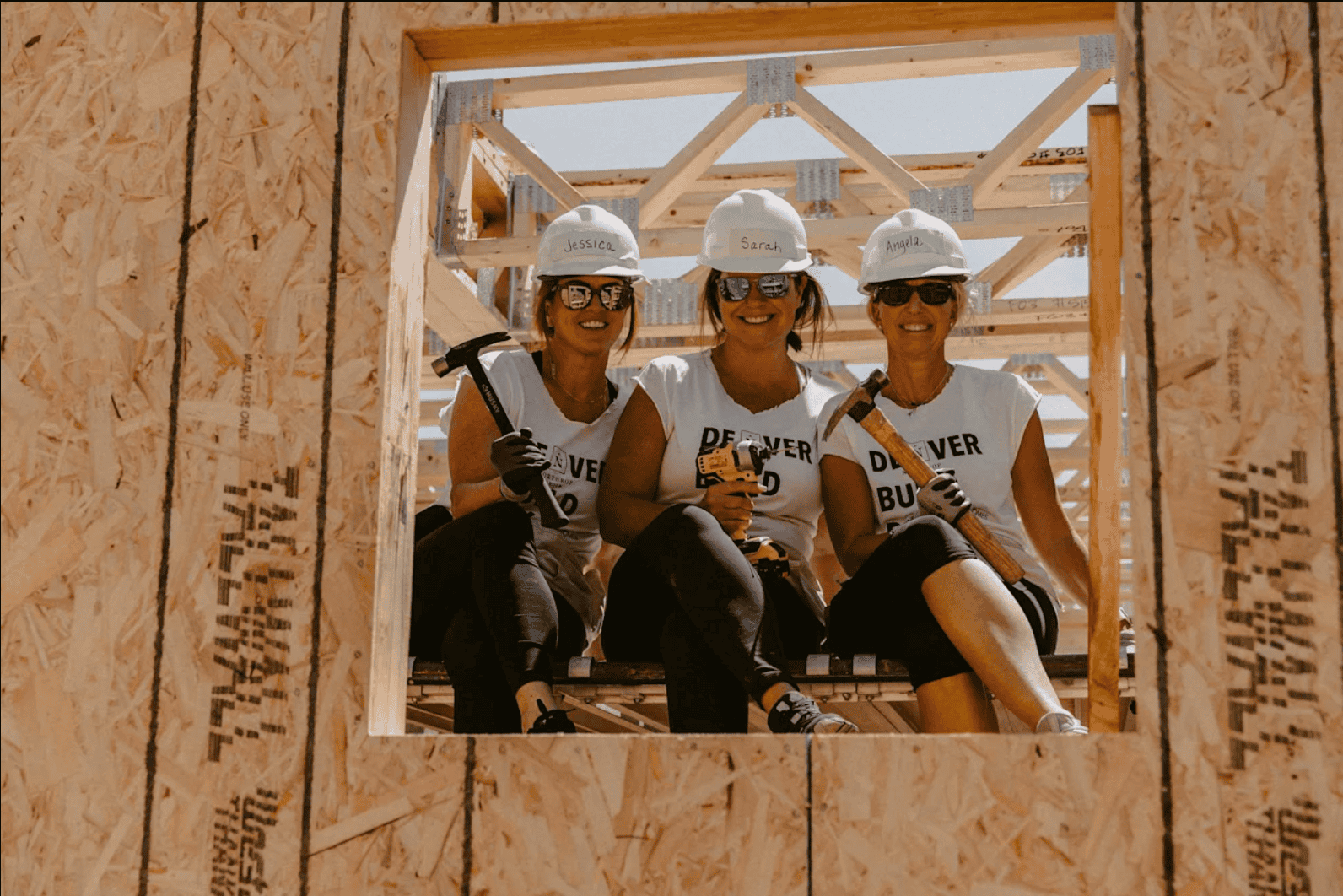
Giveback Homes partnered with The Northrop Group on a build for a family living in an overcrowded home with extended relatives. The space had severe mold issues that worsened one child’s asthma, creating serious health and safety risks.
After attending a local informational meeting and completing the application process, the family was approved for one of the last remaining homes in the development. Volunteers helped complete the build, making it possible for the family to transition directly from unsafe conditions into a permanent, healthy home.
Veteran transitions into permanent housing
Giveback Homes also supports veteran-oriented programs through Habitat for Humanity and other partners. Veterans—many of whom face high housing cost burdens—often move through transitional phases such as temporary rentals, shared housing, or short-term accommodations.
One veteran supported through these programs spent several years in temporary housing after a service-related injury. With support from a Habitat partnership backed by Giveback Homes volunteers, he and his family moved into a permanent home, illustrating how transitional support and community-based programs work together to restore housing stability.
Emergency housing
When people face sudden or life-threatening housing situations, emergency housing programs provide immediate shelter and safety. These programs focus on urgent stabilization before long-term planning begins.
Crisis and disaster housing
These programs support individuals and families displaced by natural disasters, domestic violence, sudden loss of housing, or unsafe environmental conditions.
How it works:
Provides short-term stays in shelters, hotels, or temporary facilities.
Support may include meals, counseling, legal aid, and case management.
People receive help identifying next steps, whether transitional or permanent housing.
Emergency housing for unsafe or extreme conditions
In cases of severe overcrowding or hazardous living environments, programs help remove people from immediate danger.
How it works:
Rapid relocation into safe temporary housing: Quickly relocate to secure, short-term housing. This immediate relocation helps stabilize the situation while longer-term solutions are arranged.
Health and safety assessments: Trained professionals assess the household’s previous living environment—as well as any ongoing health or safety risks—to determine what support is needed. These assessments guide next steps, including medical referrals, environmental hazard remediation, or additional protective services.
Connections to long-term housing programs: Once the household is safe, case managers connect their clients with sustainable housing options. This may include rental assistance, supportive housing services, or pathways to affordable homeownership. The goal is to help people transition from temporary shelter into a stable, long-term home.
Photo courtesy of Giveback Homes
Who these programs help
Emergency housing programs primarily serve:
Families fleeing unsafe or abusive environments
People living in extreme poverty
Disaster survivors
Individuals facing sudden displacement
Households exposed to environmental hazards such as mold or structural damage
Examples from Giveback Homes
Emergency housing efforts often focus on people experiencing unsafe living conditions or extreme poverty. Giveback Homes participates in both U.S. and international projects that provide immediate, life-changing housing improvements.
International Emergency Relief builds
Through the Key for Key Giving Program with Concierge Auctions, Giveback Homes has helped build over 300 homes in Latin America for families living in extreme poverty. Many of these families previously lived in makeshift structures built from scrap metal, tarps, and dirt floors.
These unsafe environments exposed families to:
Chronic flooding
Severe respiratory issues
Waterborne diseases
Insect exposure
Lack of secure shelter
By constructing durable homes with solid walls, roofs, and locking doors, these projects provide instant safety. Families report improved sleep, safer food storage, reduced illness, and the ability to start small home-based businesses—changes that have lasting economic and health benefits.
Colorado Springs unsafe housing response
In addition to transitional support examples, some Giveback Homes builds qualify as emergency housing responses. The Colorado Springs family living in mold-infested, overcrowded conditions faced immediate health risks. Volunteers helped accelerate the completion of their home, quickly removing the family from a hazardous environment.
Final thoughts
Each housing support program addresses a distinct need and serves a different stage of the housing journey. Giveback Homes complements this ecosystem by supporting the construction and development of safe, affordable housing across multiple categories—primarily through volunteer mobilization and partnerships that reduce building costs and expand access.
As more organizations and communities work together across this full spectrum, more families and individuals are able to move from crisis to stability and eventually achieve the long-term security that comes with having a place to call home.
