


A Milwaukee judge on Thursday accepted plea deals for two men criminally charged with involvement in the murder of his teenage son, ending a grieving father’s 13-year search for justice.
Robert W. Bellinger and Jesse R. Cole pleaded guilty to felony murder under a deferred prosecution agreement that allows them to avoid prison time and be publicly accountable for their actions that led to the death of Corey Stingley in 2012. The men assisted in detaining a 16-year-old boy inside a convenience store after an attempted shoplifting incident involving $12 worth of alcohol.
“What happened to Corey Stingley should never have happened. His death was unnecessary, brutal and devastating,” Dane County District Attorney Ismael Ozanne told the judge in a letter filed in court.
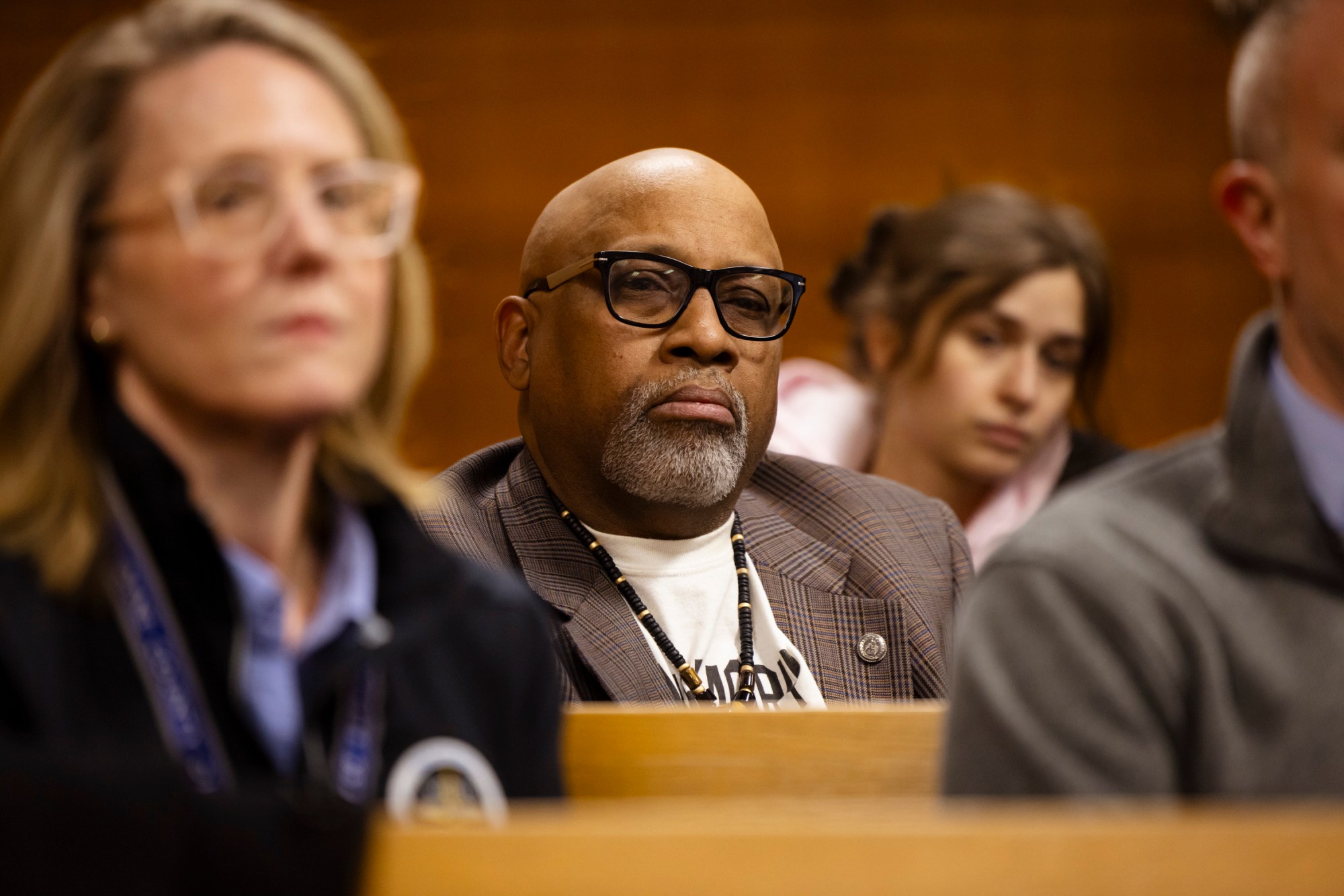
Stingley’s parents spoke directly to the judge during an hour-long hearing in a courtroom filled with family members, community activists, spiritual leaders and the teen’s former classmates.
“Cory was my baby, and no mother should bury her child,” Alicia Stingley told the judge. She spoke of the grace of forgiveness and hugged Bellinger after the hearing. The Stingleys’ surviving son, Cameron, shook hands with both men.
The agreement requires Cole and Bellinger to each make a one-time donation of $500 to a charity of the Stingley family’s choice in Corey’s honor. After six months, if the two comply with the terms and do not commit a crime, prosecutors will dismiss the case, according to documents filed in court.
In a 2023 article, ProPublica reviewed the case, the legal presumption, the men’s backgrounds, and Stingley’s father’s relentless legal efforts to bring the men to court. The three had previously defended their actions when they detained Stingley while they waited for police to arrive, saying their actions were justified and necessary to deal with the emergency situation.
Ozanne, who was appointed to review the case in 2022, recommended the agreement after the two and the Stingley family engaged in an extensive restorative justice process in which they sat across from each other and shared each other’s thoughts and feelings under the supervision of a retired judge. Ozanne said in the letter that the process “seems to be therapeutic for all involved.”
Milwaukee County Circuit Judge Laura Crivello said from the court that she found the agreement fair and just and praised the efforts of all parties to reach a resolution.
“Maybe this will help others see the similarities rather than the differences,” she says. “Maybe this will get them thinking about restorative justice and how we can come together. And maybe this is part of the catalyst that will lead to reducing violence in our communities and finding avenues for those circles to sit down and interact and have conversations. So maybe some good can come from that.”
Corey’s father, Craig Stingley, told the hearing that Corey’s 13-year struggle “turned into a victory.”
Earlier, the Stingley family submitted a statement to the court expressing support for the agreement and the restorative justice process.
“What we sought was not revenge, but recognition of Corey’s life, his humanity, and the depth of our loss,” it reads. “We believe this agreement honors Corey’s memory and provides a model for how people can come together in search of understanding and healing, even after deep hurt.”
The family remembered Stingley as a “spirited and loving son, brother, and friend” and recognized that restorative dialogue brought “truth, understanding, and a degree of healing that could not be obtained through traditional court proceedings.”
“This has been a long time, 13 years, and during that time he has been investigated and investigated many times. I think everyone is very happy that this day has come and that there is some closure to this whole situation,” Cole’s attorney, Jonathan Lavoie, told reporters after the hearing.
In a joint written statement submitted to the court, Mr Bellinger and Mr Cole said they had come to recognize the “significant ramifications” of the incident and its connection to Stingley’s death. They expressed sadness that Stingley’s “time on earth ended too soon.”
The lawsuit comes after years of efforts by Craig Stingley to have his son seen by the justice system as a crime victim whose life was wrongfully ended by Mr. Bellinger, Mr. Cole, and another store patron, Mario Roman, who died in 2022.
Prosecutors at the time declined to press charges, saying the men did not intend to kill Corey Stingley when they tackled him and pinned him to the floor of VJ’s Food Mart in West Allis, Wisconsin. Police had taken a young man into custody after he tried to steal a bottle of Smirnoff Ice. Surveillance video shows Roman putting Stingley in a chokehold and two others helping restrain him. Witnesses told police Roman was “extremely milking” the teen.
The Milwaukee County Coroner’s Office determined that Stingley died of brain damage caused by asphyxiation after a “violent struggle with multiple individuals.” The death was ruled a homicide.
Under Wisconsin law, a person can be charged with felony murder if someone dies during the commission of another alleged crime (in this case, false imprisonment).
Ozanne wrote to the court that his analysis leaves “no doubt that Cole, Bellinger, and Roman caused the death of Corey Stingley.”
All three detained Stingley “intentionally and without his consent” and had no legal authority to “arrest” him, he wrote. “Simply put, teenager Corey was tackled and pinned to the ground by three adult males on suspicion of shoplifting,” Ozanne wrote. “They killed him with his body piled on top of his, waiting for the police.”
But he noted there is no evidence that Bellinger or Cole knew Stingley was in medical distress during the incident. He described their detention as a “rudimentary detention technique.”
Ozanne concluded that Roman was the one who “strangled Corey Stingley to death.” Ozanne wrote that surveillance video shows Roman’s arm around Mr. Stingley’s neck for several minutes as he “became unconscious.”
Ozanne said in court that if Roman were still alive, prosecutors likely would have sought a longer prison sentence.
Defendant Jesse Cole sits in court Thursday before a hearing in his case. Taylor Glasscock for ProPublica Defendant Robert Bellinger enters a Milwaukee County courtroom. ProPublica’s Taylor Glasscock
Stingley died in 2013, the same year Trayvon Martin, a black Florida teenager, was acquitted in the shooting death of a volunteer neighborhood watchman. Martin’s case attracted national attention and led to the formation of the Black Lives Matter movement. However, Stingley’s death while being restrained by three white men did not receive widespread attention outside of Wisconsin.
Craig Stingley unsuccessfully advocated for years for the men to be prosecuted. Two prosecutors investigated the case but came up with no results.
He then discovered an obscure “John Doe” law dating back to the days of the Wisconsin Territory. The law allows private citizens to ask a judge to consider whether a crime was committed and, if so, by whom if the district attorney cannot or will not do so.
Stingley filed such a petition in late 2020. As a result, Mr. Ozanne was appointed as special prosecutor to re-examine the matter. In 2024, Ozanne informs the Stingley family that his office has found evidence of a crime, but a guilty verdict is not guaranteed for the remaining two.
This began efforts to achieve healing and accountability through restorative justice processes. Restorative justice programs bring together survivors and offenders in a dialogue led by trained facilitators to work toward understanding, healing, and how best to make amends. Last year, Stingley and his family met with both Cole and Bellinger on separate occasions through the Andrews Restorative Justice Center, part of Marquette University School of Law in Milwaukee.
As a result of discussions, an agreement was reached to postpone the prosecution.
Anthony Neff, a longtime friend of Craig Stingley, recalled in an interview the moment he watched Corey Stingley meet his final moments in a hospital bed with tubes and a ventilator. Corey Stingley was a running back on his high school football team. Neff said all of the show’s cast members attended the funeral.
“The coaches. The ball boys. The cheerleaders. I mean, they all stand in solidarity with Craig and his family,” he said.
Since then, his and Craig Stingley’s golf buddies have provided moral support in his quest. Mr. Neff called it “a civics lesson, a civics master lesson.”
