


AI: The catalyst that makes learning easier and more important
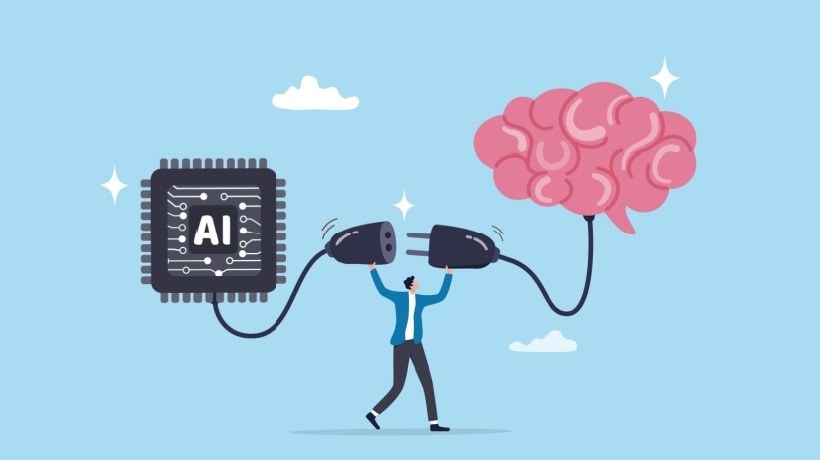
The rapid advancement of powerful artificial intelligence (AI) is creating a fundamental contradiction in the world of professional development. Meanwhile, AI has emerged as an innovative tool that can provide personalized, on-demand education that makes the process of acquiring new knowledge simpler and more efficient than ever before. On the one hand, it is a highly disruptive economic force, reshaping industries and automating tasks at such a pace that continuous skill acquisition becomes a matter of occupational survival. The debate is no longer whether we should engage in lifelong learning, but whether AI is primarily a tool to facilitate this journey, or the very catalyst that makes it non-negotiable.
This article explores both sides of AI’s dual impact on professional growth. First, we’ll look at a compelling case for how AI can make learning ‘easy’ by acting as an infinitely patient and personalized tutor for every individual. We then focus on the argument that AI will make learning ‘more essential’ by accelerating skill obsolescence and fundamentally changing the landscape of work. By integrating these perspectives, we can develop positive strategies that can help professionals navigate this new era, allowing them to become active participants in their own evolution rather than as passive observers. The central question is: How does this technology make learning systems more accessible and effective? To answer this question, we will look at the “Centaur” model.
In this article:
For “easier”: AI as a personalized, on-demand tutor
The role of AI as a powerful enabler in education is strategically transformative. For decades, educators have understood the tremendous impact of one-on-one instruction, a concept embodied in Benjamin Bloom’s 1984 “Two Sigma Problem.” Bloom demonstrated that students receiving private tutoring outperformed their peers in traditional classrooms by two standard deviations, a significant improvement. However, the challenge has always been that it is not economically and logistically possible to scale this model. AI-driven tools are now poised to solve this problem, democratizing access to personalized instruction and making the learning process radically easier and more effective.
Personalization and efficiency with AI
By analyzing learner performance, behavior, and preferences in real time, AI can create customized learning paths that adapt to individual needs. It goes beyond the one-size-fits-all model of traditional education and provides a customized experience that maximizes both understanding and efficiency. The quantitative advantages of this approach are significant.
Improved performance
A quasi-experimental study found that an AI-based learning system improved student performance by 25% compared to a control group using traditional methods. Accelerate learning
The same study revealed that students using AI systems were able to complete tasks 25% faster. Additionally, studies have shown that intelligent tutoring systems can reduce the time required to study by up to one-third to one-half. Increased engagement
AI has been shown to increase student engagement by 15% by providing appropriately challenging and relevant content.
Revolutionize your learning experience
Beyond quantitative metrics, AI is transforming the qualitative nature of learning. Tools like Khan Academy’s Khanmigo aren’t just designed to provide answers. They act as Socratic tutors who lead learners to discoveries. For example, if a student uses distributiveness incorrectly in an algebra problem, the AI won’t completely correct it. Instead, notice the mistake, encourage students to explain why, and allow students to identify the misconception on their own.
This makes the learning process more interactive and dynamic. Students can now “converse” with historical figures and literary characters like Jay Gatsby to better understand their motivations, and develop their storytelling skills by co-writing creative stories with an AI partner. Once the stuff of science fiction, these experiences bring the subject matter to life and provide a deeper, more intuitive understanding of complex topics. While AI is clearly making learning more accessible and engaging, its widespread impact on professional fields poses other, more pressing challenges.
The case for “more important things”: AI as a catalyst for the skills revolution
Beyond its role as an educational tool, AI is a powerful economic force that is actively reshaping global labor markets. This confusion is a key reason why lifelong learning is rapidly moving from a professional virtue to an economic necessity. The same technology that can teach us algebra can also automate analytical tasks, creating strong demand for new skills while making certain skills obsolete. This ongoing transformation makes continuous learning essential to career relevance and resilience.
The ever-changing landscape of work
The scale of AI’s impact on the workforce is unprecedented. Key economic analyzes highlight a clear picture of a labor market in flux, where existing skills are devalued and the risks of automation are widespread. According to Goldman Sachs, about two-thirds of today’s jobs are subject to some level of AI automation. The majority of professionals will have to see their roles change and either adapt to working alongside AI or transition to new capabilities entirely, with up to a quarter of their current jobs potentially being replaced by generative AI.
A significant portion of tasks are vulnerable to automation, especially those related to information processing and content generation. The OECD reports that 27% of jobs are in occupations at high risk of automation. More than a quarter of employees are in roles where core functions are highly likely to be replaced by automated technology. Today’s valuable skills have a rapidly shortening shelf life, so staying competitive requires a continuous cycle of upskilling and reskilling.
The data paint a clear picture. As AI encompasses mundane analytical and generative tasks, the market is placing new value on skills that AI cannot easily replicate. The decline in demand for rote knowledge work is directly stimulating an increased demand for creative thinking, leadership and resilience – the ability to go beyond just processing information to guiding strategy and managing complexity.
New skill essentials
As AI automates routine cognitive tasks, demand is shifting towards capabilities that are uniquely human or complementary to AI. The focus is no longer simply on possessing information, but on applying it using creativity, critical thinking, and social intelligence. The pressure to acquire these new capabilities is immense, creating a high-stakes environment where professionals always feel like they are falling behind. This dynamic has normalized a state of occupational insecurity, and some may wonder whether their feelings of inadequacy are a symptom of this rapid technological displacement or a personal problem due to impostor syndrome.
Skills that will grow the most by 2030
The skills predicted to be most in demand are those that combine technical ability with advanced human-centered abilities.
AI and Big Data Networks and Cybersecurity Technology Literacy Creative Thinking Resilience, Flexibility and Agility Curiosity and Lifelong Learning Leadership and Social Influence Talent Management Analytical Thinking Environmental Management
The dual nature of AI is not contradictory: it simplifies the learning process, it also disrupts the job market. Rather, it represents a new integrated model for professional development in which learning and work are closely linked.
The “Centaur” Model: Learning in the Flow of a Transformed Workplace
The debate over whether AI makes learning “easier” or “more essential” presents a false dichotomy. In reality, there are powerful synergies. AI is making the learning process easier and more accessible, as the impact on the economy makes continuous learning more important than ever. The modern workforce is guided by the “Centaur” model, a concept born from the world of chess. After the AI defeated Grandmaster Garry Kasparov, a new form of the game emerged in which human-AI teams, or “centaurs”, consistently outperformed both the AI alone and the human alone. This paradigm (Humans + AI > AI alone) is the key to achieving future professional growth.
From full-scale training to comprehensive learning
The urgency of this new skill calls for a shift from traditional event-based training to a more fluid and integrated approach. Coined by analyst Josh Bersin, “learning in the workflow” refers to a model in which knowledge and training are delivered directly at the moment of need, within an employee’s existing workflow. This approach addresses the main sources of corporate inefficiency.
Data shows that employees spend an average of 9.3 hours a week just searching for information. Additionally, 57% of employees report that their current software actually reduces their productivity, highlighting the friction caused by disconnected systems. Learning in the flow of work eliminates this friction by embedding knowledge where it’s most relevant.
AI as co-pilot of growth using the “Centaur” model
In this model, AI acts as a “co-pilot” rather than a replacement. It automates routine tasks and empowers humans by providing data-driven insights, freeing up professionals to focus on higher-level strategy, creativity, and collaboration. The chess “centaur” analogy perfectly describes this dynamic. Humans provide strategic intuition and experience, while AI provides flawless tactical calculations and detailed data analysis.
The practical benefits of this integrated approach are significant. Uber reduced onboarding time by 13% and increased productivity by 8% by embedding training videos and guidance directly into the driver platform. This shows that when learning can be applied seamlessly and immediately in context, it delivers tangible business results. The goal is not to take employees away from work to make them learn, but to make learning an essential part of the way they work. However, successfully implementing this new model will require overcoming significant challenges and maintaining critical perspectives.
Navigate the AI learning environment
AI holds immense potential in education, but realizing its benefits requires a balanced approach that avoids over-reliance. A successful strategy is to leverage AI as a tool without inhibiting true intellectual growth.
Strategies for effective learning using the “Centaur” model
active involvement
The main risk of AI is intellectual passivity. Authentic learning requires cognitive effort, so AI should act as an intelligent “sparring partner” rather than a shortcut to circumvent the learning process. human-centered skills
As AI manages analytical and repetitive tasks, professional value will shift to “soft skills” where humans excel, such as leadership, emotional intelligence, and strategic thinking. social connections
Learning is a social process. Research shows that social and emotional learning (SEL) programs significantly improve academic performance and mental health. AI cannot replace the empathy, motivation, and connection that a human teacher provides.
major challenges
Integrating AI into the “Centaur” model will require addressing data privacy and algorithmic bias to prevent widening social inequality. Furthermore, the digital divide threatens to widen the gap between those who have access to advanced AI tools and those who do not. Human oversight remains essential to ensure ethical use and provide the nuanced judgment that algorithms lack.
conclusion
AI has a powerful duality. This means that while we facilitate learning through personalization, continuous learning becomes essential for professional survival. The future does not belong to those who will be replaced by AI, but to those who embrace the “Centaur” model – professionals who treat AI as their cognitive co-pilot and use it to make themselves more intelligent and adaptive in a changing world.
