


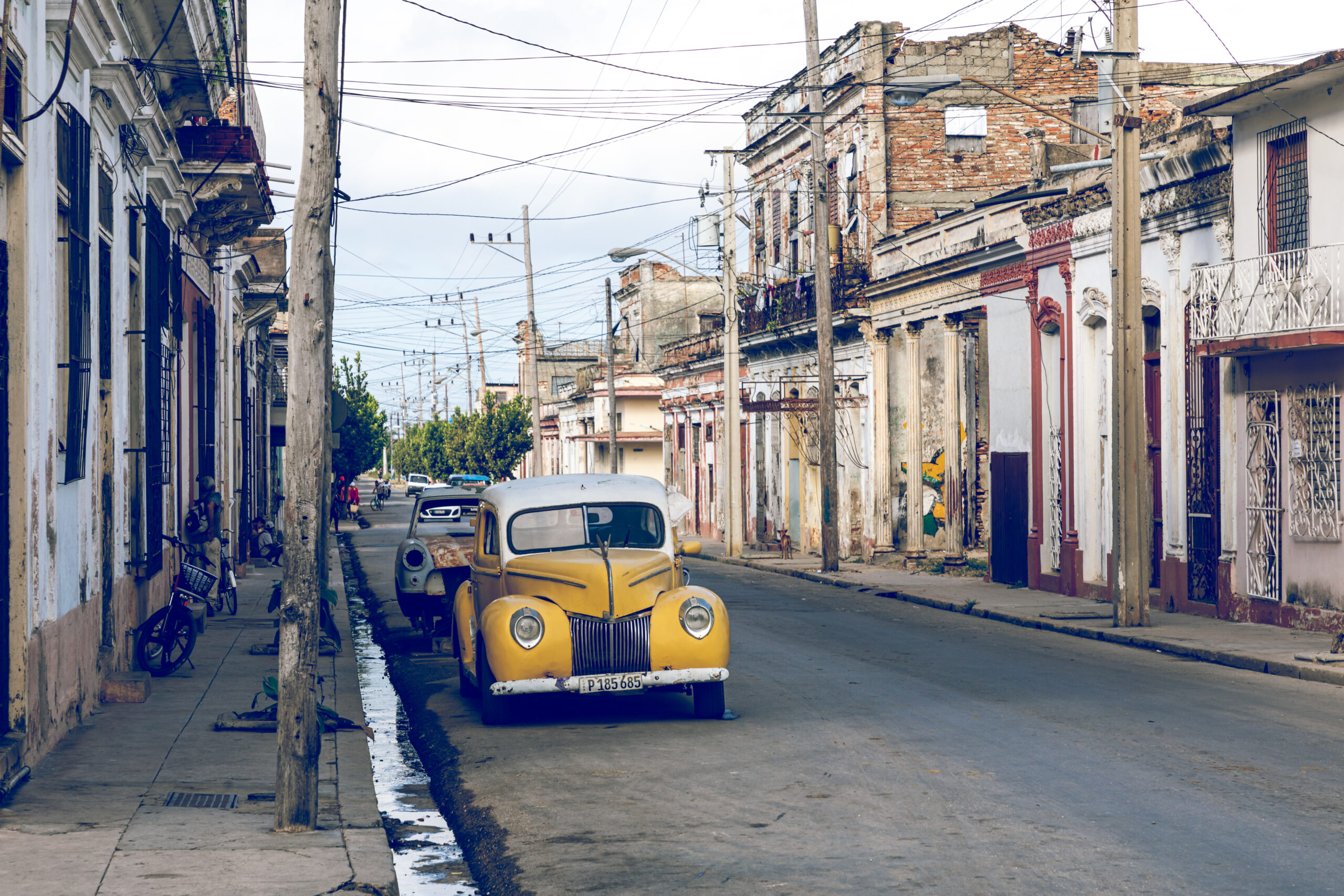
On January 1, 1959, Fidel Castro and his bearded revolutionaries marched into Havana. Church bells rang throughout the island during Batista’s exile.
January 1st of this year marks the 67th anniversary of that revolution. A system built on 67 years of deception, imposed by violence, and sustained by oppression. But now, for the first time since Mr. Castro’s march on Havana, real change seems inevitable.
Throughout the 1950s, Castro repeatedly insisted that he was not a communist. He promised free elections, a free press, and the restoration of the 1940 Constitution. By April 1961, just two years after the march on Havana, Castro declared a socialist revolution. Commanders such as Huber Matos and the American William Morgan believed in his earlier promises and opposed this communistization, paying them well. Matos was convicted and spent 20 years in prison, while Morgan was tried for treason and executed.
What happened next was swift and complete. From 1959 to 1968, the regime nationalized all sectors of the Cuban economy.
Share of state-owned economy (%)
Source: Carmelo Mesa-Lago, Socialist Cuba’s Economy: A Twenty Year Review, p. 15.
By 1963, about 95% of the industry was in state hands. By 1968, private enterprise was virtually eliminated. Research by Marianne Ward and John Devereux shows that in the 1950s (before Castro’s takeover), Cuba had the highest standard of living in Latin America, with per capita income levels comparable to countries such as Italy. However, the pre-revolutionary economy based on markets and private property was replaced by Soviet-style central planning, with serious social consequences. Some estimates suggest that between 35,000 and 141,000 Cubans died under the regime between 1959 and 1981. Opposition was suppressed, newspapers were nationalized, and the repression was particularly brutal against those most openly opposed to the government.
For decades, the Castro regime in place seemed unchallenged. But on July 11, 2021, something unprecedented happened. Thousands of young Cubans flooded the streets of cities across the island in search of freedom. “Freedom!” they cried. “Homeland and life!” Fatherland and life, a direct rebuke to the revolutionary slogan “Love is forever”.
The regime responded with brutal repression. According to Prisoners Defenders, Cuba currently holds approximately 1,187 political prisoners, many of them young people simply demanding basic rights. This time, however, the crackdown backfired. Rather than suppressing opposition, it sparked the largest wave of immigration in Cuban history.
From 2022 to 2023, Cuba will lose about 20% of its population to immigration. That number is extraordinary. Entire neighborhoods in Havana were empty. Doctors, engineers, teachers, and skilled workers of all kinds fled. A few weeks ago, The Economist published a scathing assessment: “Most of the active Cubans have upped and left, leaving a talent shortage in the heart of Cuba’s economy.”
The economic situation is exacerbating the crisis. Inflation rates are estimated to be between 20% and 100%. A recent survey reported that 89% of Cubans currently live in extreme poverty. One 52-year-old Cuban told The Economist: “This system is messed up and beyond repair. All we can do is get rid of it and start over.”
As a result of strong pressure to deregulate the import sector, the administration implemented several reforms. However, these are not true market reforms. Access remains dependent on state discretion rather than predictable rules, free access, and protected property rights. This limited liberalization therefore encourages rent-seeking behavior, with companies operating primarily to please party officials rather than competing in the open market.
But there are concrete reasons to think change is coming. A recent poll by CubaData reveals a notable ideological shift. Currently, 21.7% of Cubans identify as “liberal or pro-market.” This is seven times more than the 3% who still consider themselves “die-hard socialists.” Sixty-five percent of these pro-market Cubans believe the government needs to implement serious structural reforms. The broader numbers are even more striking. Seventy-nine percent of all Cubans believe that socialism is in decline, and 78.8% believe that the principles of the revolution are no longer relevant.
Even Cuban economists largely agree that the island’s problems stem from the Cuban regime’s own policies, not the U.S. embargo. Moreover, a recent study by João Pedro Bastos, Jamie Bologna Pavlik, and Vincent Geroso found that the embargo only explained between 3 and 10 percent of Cuba’s economic decline. The real culprit was nationalization, the destruction of private property and markets, and their replacement with centralized economic planning. By 1989, even before Soviet support collapsed, these policies had already made Cuba about 55% poorer than it would have been otherwise.
This is important because it means the Cuban problem is solvable. These are the result of specific institutional choices and can be reversed.
The administration now faces a perfect storm. Mass migration has led to the loss of people and, with it, the human resources needed to maintain basic services. It has lost its ideological legitimacy. We have lost the ability to blame external forces.
I believe we will witness the collapse of this regime in the coming years. When that moment arrives, Cuba could follow the path of Estonia and Poland, which have dramatically improved living standards through market reforms. This transformation requires intellectuals, political leaders, and groups who can implement market reforms, property rights, and the rule of law.
Paradoxically, large-scale immigration may help provide this human capital. As Cubans assimilate into foreign market economies, they acquire the skills and institutional knowledge that Cuba needs. Exile communities are already building an infrastructure to educate new generations about the atrocities of communism and what Cuba was like before the revolution. With experience in functioning democracy and a desire to help their homeland, these Cubans are likely to play a key role in Cuba’s reconstruction.
Sixty-seven years ago, Castro marched into Havana, promising freedom and imposing tyranny. Now his system is losing its power. Cubans who risked everything to demand freedom in 2021, who rejected submission through exile and turned their backs on socialism, are writing Cuba’s next chapter. The question is no longer whether the government will fail. What matters is whether the Cuban people seize the opportunity to build a free and prosperous country of their own will.
