


Connor here: Despite the best efforts of the following article to highlight discrimination against Chinese agricultural investors, the larger story appears to be another case of MAGA not really working. Politicians and regulators remain unwilling or unable to take on financial interests, even in the name of securing the nation’s food supply.
By Juan Vassallo, who covers Oklahoma’s agribusiness and meat industry for Investigate Midwest. The first edition was published by Investigate Midwest.
Oklahoma legislation has passed measures restricting foreign ownership of farmland in response to concerns about Chinese nationals and businesses purchasing farmland in the state.
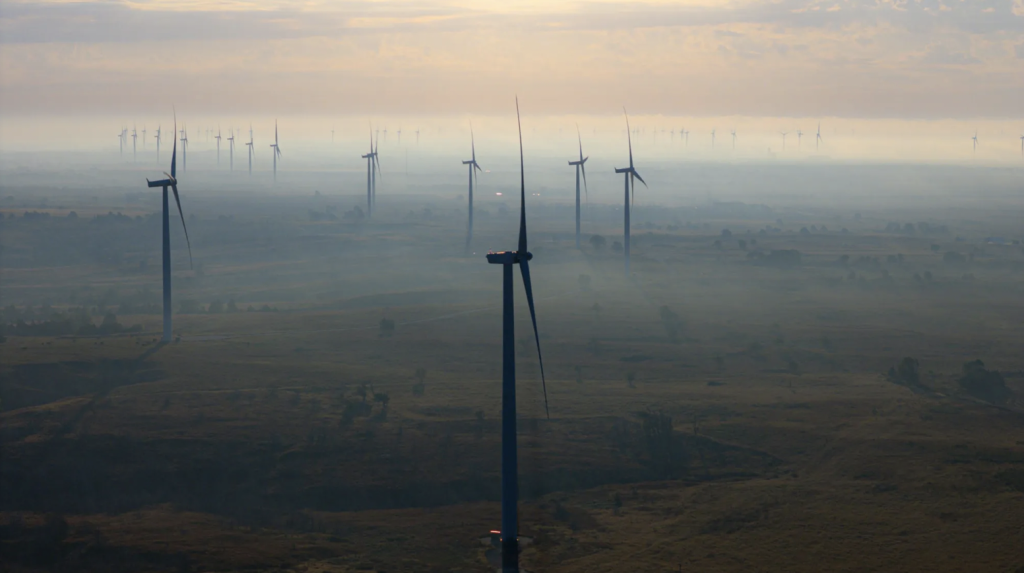
About 4.3% of Oklahoma’s farmland is foreign-owned, but most of it is owned by Canadian and European companies for renewable energy projects, according to USDA’s latest filings. Less than 1% of that share is Chinese.
Still, anti-China rhetoric is largely driving the bill, with recent polls showing Republicans across the country are concerned about China’s ownership of U.S. farmland. Despite those concerns, the new state law includes exemptions for Chinese-owned food supply companies.
The carve-out specifically exempted Smithfield Foods, the only Chinese-owned company with farmland in Oklahoma. Smithfield Foods, owned by China’s WH Group, is not affected by the regulations and continues to raise hogs on about 2,575 acres in northwest Oklahoma.
Oklahoma’s regulations reflect a broader national movement in the largely Republican state to curb foreign ownership of farmland due to security concerns about countries the government considers “hostile.” But unlike states like Arkansas, Oklahoma’s law shows little interest in forcing Chinese companies already operating in the state to sell or limit their ability to expand.
In 2023, Arkansas Attorney General Tim Griffin ordered Syngenta, an agrochemical company owned by Chinese conglomerate ChemChina, to sell a 160-acre research facility and fined the company $280,000. The move follows a new state law restricting foreign investment from certain countries.
Arkansas Gov. Sarah Huckabee Sanders touted the decision during a press conference announcing the Trump administration’s National Agricultural Security Action Plan. The plan is a 12-page outline aimed at “addressing challenges essential to America’s agricultural security.”
“I’m very proud of the fact that Arkansas was the first state in the nation to drive Chinese-owned companies off our farmland and out of our state,” Sanders said at a press conference in July. “And we made them pay for it. Very Trump-like.”
At the same press conference, President Trump’s trade adviser Peter Navarro singled out Smithfield Foods, noting that after its acquisition by WH Group, the company “now essentially controls one-eighth of the world’s pork supply.” The counties where Smithfield operates in Oklahoma (Beaver, Harper, Ellis) are also highlighted on the map included in President Trump’s plan. Neither the plan nor anyone involved in its development specified any steps that might be taken to force the sale of Smithfield.
smithfield exception
Oklahoma Senate Bill 212 expanded existing restrictions on foreign ownership of agricultural land.
The law goes into effect in November 2023, around the same time that Arkansas ordered the sale to Syngenta, and could affect Smithfield Foods’ operations in Oklahoma. However, the following year’s law added an exception to the rule that land ownership restrictions do not apply to foreign companies that have agreements with the Committee on Foreign Investment in the United States (CFIUS).
CFIUS is an interagency committee that reviews whether foreign investment in U.S. businesses or real estate poses a national security risk. We can approve, block, or require changes to transactions to protect U.S. interests.
WH Group’s 2013 acquisition of Smithfield was cleared by CFIUS, effectively shielding it from Oklahoma’s foreign ownership restrictions.
“We respect the constitution of international corporations that are subject to federal scrutiny,” said Oklahoma State Sen. Brent Howard, a Republican from Altus who introduced the bill to protect Smithfield.
Smithfield Foods has repeatedly denied claims of “infiltration” of the U.S. pork industry by the Chinese Communist Party, stressing that the industry is run by U.S. executives. “We currently own approximately 85,000 acres of farmland. [in the U.S.]”The farmland we own poses no national security risk and is less than one-hundredth of one percent of all U.S. farmland.”
Enforcement remains selective
At a September hearing at the Oklahoma State Capitol, a handful of lawmakers and state officials agreed to discuss the perceived Chinese Communist Party threat in the state. Guest speakers at the hearing included Jan Jekielek, a journalist and editor for far-right media outlet Epoch Times, and Tom Rawlings, policy director for State Shield, both outspoken anti-China organizations.
Although the guest speakers did not provide specific examples of Chinese interference in state affairs, they advocated state-level foreign agent registration laws that would require those acting on behalf of foreign governments to disclose their relationships.
Brad Clark, general counsel for the Oklahoma Attorney General’s Office, moved the discussion to farmland during his presentation. Clark explained how the new law could increase the state’s crackdown on illegal marijuana businesses, some of which are run by Chinese nationals.
Since Oklahoma legalized medical marijuana in 2018, the industry has seen an influx of out-of-state growers. With its growth, there have also been reports of labor exploitation and illegally run farms, some of which are linked to Chinese organized crime.
Clark said the attorney general’s office currently has 150 pending cases related to illegal marijuana farms. But in an interview with Investigate Midwest, he declined to say whether Chinese nationals or illegally owned farmland were involved in the incidents, citing ongoing investigations.
The office says it has not resolved any cases related to illegal land use.
Smithfield Foods, the only Chinese-owned company that owns farmland in Oklahoma but has lobbied state officials across the country, was absent from the discussion.
During the 2024 and 2025 elections, Mr. Smithfield spent at least $1.58 million on lobbying and more than $90,000 in political contributions. The company serves on the board of the Oklahoma Pork Council, an industry group with registered lobbyists.
During the hearing, Mr. Howard asked Mr. Clark whether SB 212 forced foreign companies in Oklahoma to sell.
“We received merger and acquisition questions early on from companies that were going through the merger and acquisition process and realized that SB 212 was going to take effect soon,” Clark responded. “[They] That’s very likely, as its mergers and acquisitions will need to be restructured. [divestment] “You’ve been involved, haven’t you?”
The attorney general’s office declined to answer Investigate Midwest’s questions about which companies had changed or abandoned their merger and acquisition plans, and also declined to answer specific questions about Smithfield Foods or the potential sale.
“The Attorney General opposes and will fight against any individual or entity that exploits Oklahoma jobs to foreign nationalists and non-Oklahomans,” Clark said. “That would certainly include foreign adversaries like China.”
Clark also noted that no one in the Trump administration has yet contacted the attorney general’s office to work on the National Farm Safety Action Plan, a government report focused on counties where Smithfield Foods operates in the state.
Oklahoma Gov. Kevin Stitt and other Republican lawmakers have been vocal about the threat from China and the need to limit foreign ownership of farmland. Last year, Stitt issued an executive order aimed at reducing Oklahoma’s exposure to the Chinese Communist Party.
Most of Oklahoma’s foreign-owned land is held by Canadian and European companies for renewable energy projects, like this wind farm in northwestern Oklahoma. Photo: Zach Lucero, provided by Investigate Midwest
At the federal level, Oklahoma Sen. James Lankford introduced the bipartisan International Land Tenure Security and Oversight (SOIL) Act of 2025, calling for mandatory CFIUS review of foreign farmland purchases. U.S. Representative Frank Lucas of Oklahoma introduced the Agriculture Risk Review Act of 2025, which would make the Secretary of Agriculture a permanent member of CFIUS.
Mr. Stitt’s executive order directs state retirement systems to divest from hostile countries such as China, but makes no mention of Smithfield Foods or a possible sale, and a bill introduced by Mr. Lankford and Mr. Lucas earlier this year is pending in Congress.
Mr. Stitt, Mr. Lankford and Mr. Lucas did not respond to requests for comment.
President Trump’s National Agricultural Security Action Plan emphasizes protecting the nation’s farmland, but also calls for efforts to “strengthen domestic agricultural productivity.”
Smithfield Foods controls an estimated 23% of the U.S. pork market, while Brazilian conglomerate JBS holds a similar share of the U.S. beef supply — a fact noted by Kansas Sen. Roger Marshall at the plan’s launch.
Both JBS and Smithfield went public this year, a move that could help both companies expand and further solidify their presence in the U.S. food system.
Despite introducing laws across the country restricting foreign ownership of farmland, lawmakers appear unwilling to target companies like JBS and Smithfield or bring more of the food supply chain under domestic control.
The Michigan State University study analyzed 143 bills introduced in 34 states aimed at restricting foreign ownership of farmland and the actions of more than 6,700 state legislators. Despite China’s nominal share of total farmland in the state and across the United States, the researchers found that fear and skepticism about Chinese influence in the United States continues to drive the bill.
“Less than 1% of all foreign-owned farmland is owned by Chinese companies,” said Dr. David Ortega, a professor of food economics and policy at Michigan State University and one of the study authors. “We are targeting the interests of specific countries, which could lead to increased xenophobia and discrimination.”
