


Eve, here. This interesting and informative study examines how China’s major strategic competitors, the United States, Japan, and the United Kingdom, have responded to China’s Belt and Road investments. Interestingly, the US has increased its investments in BRI countries, perhaps for defense strategic reasons, but also potentially due to improved profit opportunities.
Yasuyuki Todo, Professor, Faculty of Political Science and Economics, Waseda University; Shuhei Nishitateno, Professor, Kwansei Gakuin University; Sean Brown, Researcher, Research Institute of Economy, Trade and Industry (RIETI). Originally published on VoxEU
China’s Belt and Road Initiative has restructured international economic and political relationships between countries and reorganized global value chains. This column reveals that this initiative has triggered strategic and divergent responses among major investing countries, depending on their economic and political relationships with China. After signing the Belt and Road Agreement with China, the United States increased investment in each country, driven primarily by strategic competition, while the United Kingdom reduced investment, reflecting concerns about political and supply chain risks associated with China. Japan’s investments in BRI countries appear to be largely unaffected by its strategic stance toward China.
China’s Belt and Road Initiative (BRI) was launched in 2013 and initially aimed at developing transport infrastructure between China and the rest of the world, including Asia, Europe and Africa, before expanding to energy and digital projects. By 2024, 149 countries had signed Belt and Road memorandums of understanding (MoUs) with China, and Belt and Road involvement was at its highest level since its inception, with $71 billion in construction contracts and $51 billion in investments (Nedopil 2025). As a result, the Belt and Road has restructured international economic and political relationships between countries and reorganized global value chains.
The dense empirical literature on the Belt and Road includes some studies that examine how the Belt and Road has affected trade with China, while others focus on foreign direct investment (FDI), an important part of global value chains. In general, FDI from China to BRI countries has been found to be increasing, likely due to infrastructure improvements that lower production and transportation costs, as well as stronger political ties with China that reduce investment uncertainty (especially Nugent and Lu 2021, Yu et al. 2019).
In addition to FDI from China, the BRI may also affect FDI from other countries for several reasons. First, improved infrastructure has the potential to attract FDI from all countries, not just China. Second, participation in the Belt and Road suggests closer political alignment with China, as China intends to assert greater international influence through the Belt and Road (Huang 2016).
Under these circumstances, it is possible that Western countries, which are not happy with China’s advancement in international politics, may react in various ways to the Belt and Road countries. Western countries may reduce direct investment in BRI countries if they feel it is risky to invest in BRI countries that strengthen political ties with China. But if the West believes it needs to compete with China for political and economic leadership in Belt and Road countries, it should increase FDI.
In our study (Todo et al. 2025), we employ differential time difference (DID) estimation on global bilateral FDI data to examine possible differences in the impact on FDI to Belt and Road countries from various Western countries such as the United States, Japan, and European countries in addition to China. We reveal how the Belt and Road has triggered strategic and divergent responses among major investing countries depending on their economic and political relationships with China. The findings highlight the reality of a world where investment is no longer driven solely by economic fundamentals, but also by political and security factors.
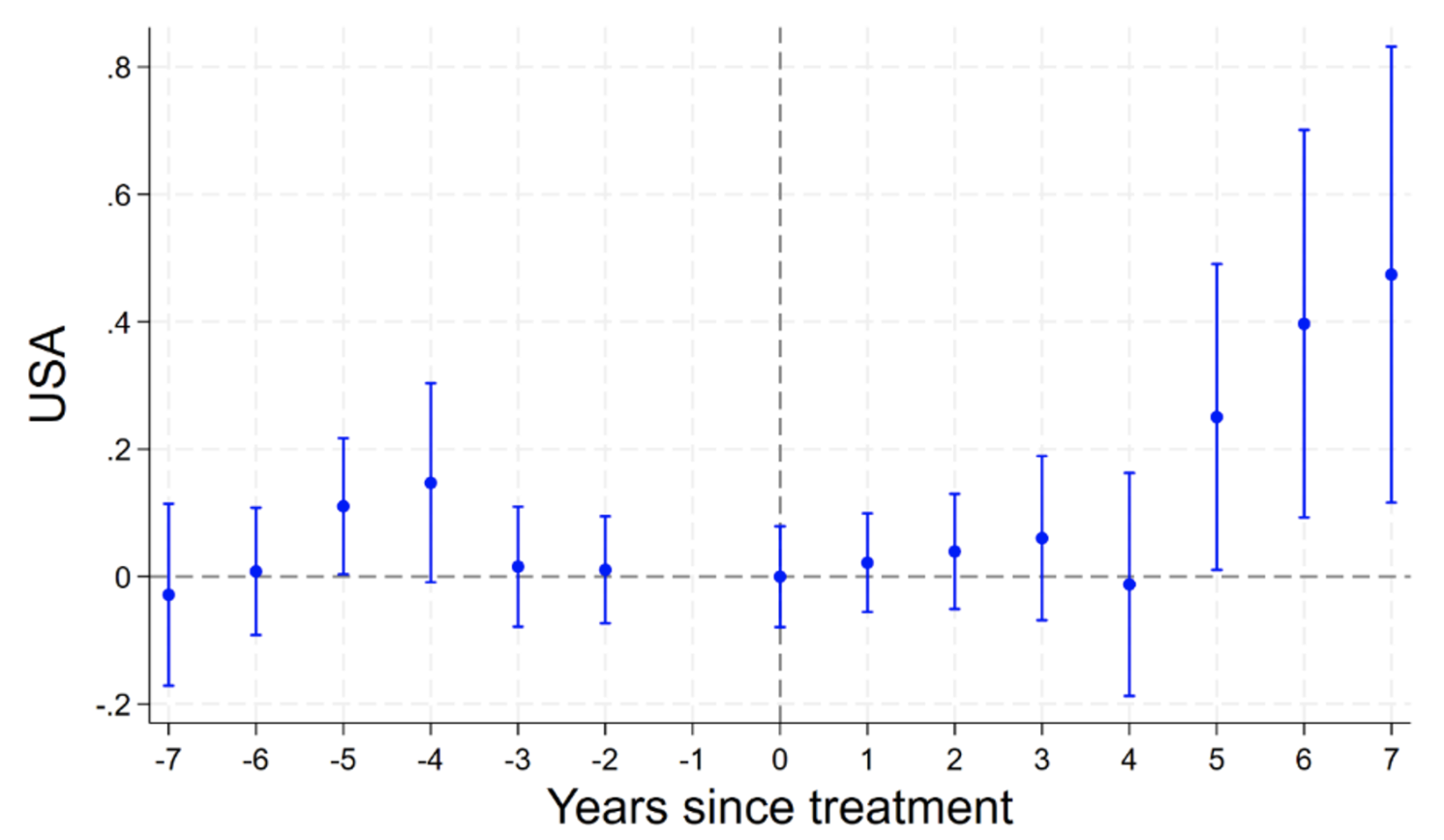
Figure 1 FDI from major Western investors to Belt and Road countries
a) United States
b) United Kingdom
c) Japan
Note: The horizontal axis shows the number of years since one year before the MOU was concluded between China and the Belt and Road member countries.
US: Countering China through FDI in Belt and Road countries
First, our empirical results show that despite refusing to join the BRI, the United States actually increased its investments in BRI countries after signing an MOU with China, as shown in panel (A) of Figure 1 . Our research suggests that strategic competition is a better reason for that investment.
China’s emergence as an economic and technological powerhouse and its strengthening of economic and political ties with other countries through the Belt and Road Initiative and other measures are spurring the US-China conflict (Li 2021). Through initiatives such as the Blue Dot Network and the G7’s “Build Back a Better World,” the United States has sought to provide an alternative to the Belt and Road (Savoy and McKeown 2022). FDI is part of that toolkit.
In fact, U.S. companies and development finance institutions have targeted the same infrastructure and energy sectors where China is most active. For example, former US President Biden visited Angola in December 2024 and launched a 1,344km rail project with other G7 countries to counter China, which had already invested heavily in Angola’s railways (BBC 2024).
This dynamic illustrates an important point. The Belt and Road does not exclude Western involvement everywhere. Sometimes it triggers it.
UK: Avoiding risks of supply chain links with Belt and Road countries
In contrast, the UK reduced its FDI to BRI countries (panel (B) of Figure 1). The withdrawal reflects a growing awareness of political and supply chain risks associated with China, especially since 2018, when concerns about 5G, technology transfer, and national security intensified. Notably, the UK government’s view of China and the BRI changed from positive to substantially negative in 2019, with a “systemic challenge” from China officially cited as the reason for this change (Ashbee 2024).
Recent literature on supply chains has demonstrated that global supply chains are vulnerable to foreign economic shocks caused by geopolitical issues (Alfaro and Chor 2023). Private efforts to reduce the risk of these supply chain disruptions appear to be having a negative impact on FDI from the UK.
Japan: Dealing with Belt and Road is not strategic
Japan’s pattern is even more mutated. Although Japan’s FDI in BRI countries increased after joining the BRI, the increase was not statistically significant (panel (C) of Figure 1). This result suggests that the positive effects of strategic competition with China and the negative effects of minimizing supply chains with unfriendly Belt and Road countries cancel each other out.
Furthermore, controlling for the influence of host country fixed effects, we find that FDI from Japan is quite stagnant both before and after the BRI. This means that host country characteristics that are not clearly represented in the data, such as the level of transport infrastructure or potential investment institutions, led to a (albeit small) increasing trend in FDI from Japan in the post-Belt and Road period. This analysis confirms that Japan’s FDI in BRI countries is not significantly influenced by its strategic stance toward China.
dictatorship and investment
We further analyze how the level of democracy of BRI member states affects FDI into these countries and find that authoritarian BRI members attract more FDI from both China and the United States than democratic member states. For China, this is consistent with its preference for regime-compatible partners whose infrastructure deals face fewer transparency constraints (Huang 2016). For the United States, these findings are consistent with our interpretation that the United States is investing in Belt and Road countries to compete strategically with China. The United States is more willing to invest in authoritarian BRI countries because they are more likely to strengthen economic and political ties with China than democratic BRI countries.
What should the West do?
Until recently, the BRI has been criticized for causing debt crises and labor unrest in many member countries. But with US President Donald Trump imposing high tariffs on most countries, shutting down USAID, and cutting foreign aid, countries in the Global South are now keen to strengthen their economic and political ties with China. China quickly responded to this change, increasing the amount of investment in Belt and Road projects to the highest level in 2024, after declining during the COVID-19 pandemic (Nedopil 2025).
Our results show that Western countries did not respond to BRI by increasing FDI to BRI countries. Regardless of this, a reduction in economic ties with the Global South could lead to increased supply chain vulnerabilities for Western countries. This is because supply chain diversification has been shown to increase its resilience (Ando and Hayakawa 2021, Kashiwagi et al. 2021). Furthermore, a reduction in economic relationships may also reduce political relationships. Western countries may therefore need to change their strategic response to the BRI revival and strengthen economic and political ties with the Global South to promote supply chain resilience and national security.
See original post for reference
