


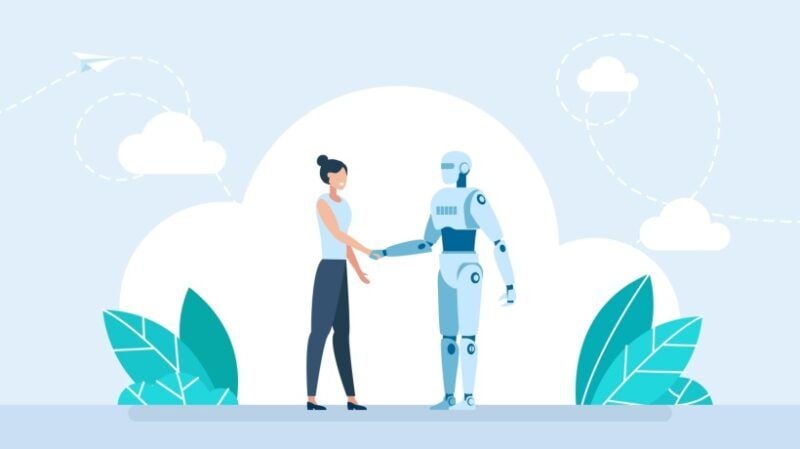
The next stage of AI in education is collaboration, not replacement
Higher education goes beyond the question of whether to use artificial intelligence (AI) in education. The real challenge now is to integrate AI as a meaningful partner in the learning process without losing the human essence that defines good education. The most promising vision to emerge from this change is the AI co-educator model, a framework in which teachers and AI systems work together to deliver, monitor, and improve learning experiences. In this model, AI supports educators by automating daily tasks, providing actionable insights, and personalizing student engagement, while teachers retain authority over pedagogy, ethics, and relationships. But it takes more than enthusiasm to turn that vision into practical reality. This requires clear roles, workflows, governance structures, and cultural readiness, elements that many institutions are only just beginning to define.
Defining the co-educator model
At the core of our coeducational model, we position AI not as a replacement for the teacher, but as a collaborative partner in the learning process. This model operates on three pillars: shared delivery, shared monitoring, and shared refinement. Through shared delivery, AI can assist with content generation, feedback, tutoring, or simulations under instructor supervision. Shared monitoring means that instructors and AI systems jointly track learner engagement, performance, and emotional and behavioral signals. Finally, shared refinement ensures that data from AI interactions informs iterative improvements to course design, instructional strategies, and student support. This model reflects the dynamics of team teaching, where human educators and intelligent systems each bring complementary strengths. Teachers provide judgment, empathy, and context; AI provides scale, consistency, and accuracy.
Step 1: Define clear roles for teachers and AI
A successful co-parenting partnership starts with clarifying roles. Without boundaries, AI tools risk stepping over ethical or educational lines or being underutilized out of fear.
Teachers remain the intellectual and ethical gatekeepers of learning. They set goals, evaluate results, and ensure academic integrity. Meanwhile, AI acts as a supportive tutor, automating routine tasks such as grading, summarizing, and feedback, suggesting learning resources, and analyzing patterns in student performance. Teachers and AI collaborate on common competencies to create adaptive pathways. AI can recommend interventions, but teachers decide whether to implement them.
A simple analogy will help you understand. Teachers are conductors. AI is a professional accompanist. Each performs best when each other’s expertise is understood and respected.
Step 2: Map workflows throughout the course lifecycle
Operating a co-teaching model requires an intentional workflow that embeds AI at strategic points in the course lifecycle. Understanding how faculty and AI contributions complement each other at each stage is essential for effective implementation.
During the course design phase, AI can generate draft outcomes, suggest sequences, and identify content gaps, while instructors curate, validate, and align content to certification requirements and learning outcomes. When it comes to delivery and engagement, AI provides instant feedback, generates quizzes, and tracks learner engagement, allowing instructors to facilitate discussions, contextualize AI output, and personalize human interactions.
During the assessment and feedback stage, AI evaluates low-stakes tasks, summarizes trends, and detects plagiarism and bias, while instructors perform high-stakes grading, provide qualitative feedback, and ensure fairness. Finally, to improve your course, AI analyzes your performance data, highlights patterns, and suggests design improvements. In turn, faculty interpret these insights, make informed modifications, and oversee the evolution of the course. This framework helps instructional design teams identify where AI can best add value while protecting human oversight.
Step 3: Establish governance and ethical guardrails
Without governance, co-teaching models cannot work. Governance provides “rules of engagement” between faculty and AI, covering transparency, privacy, intellectual property, and ethical boundaries.
Transparency policies ensure students know when and how AI is used in their courses. Transparency builds trust and supports informed consent. Data ethics requires that AI must not access or analyze student data without clear justification, consent, or institutional oversight. Academic integrity guidelines should define what is appropriate use of generative AI for both students and faculty.
Bias monitoring requires regularly reviewing AI output for accuracy, fairness, and comprehensiveness. Accountability frameworks assign responsibility for AI-related decisions and ensure that instructors maintain ultimate academic control even when AI systems automate tasks. Governance transforms the co-educational model from an experimental novelty to a sustainable institutional practice.
Step 4: Coordinate organizational support and change management
Introducing AI in education is as much a human issue as it is a technology one. Faculty recruitment relies on organizational support, clear communication, and trust.
To effectively manage change, educational institutions must provide structured training through faculty workshops and online modules that demonstrate the practical use of AI in teaching and learning. Creating a low-risk environment by encouraging pilot projects and sandbox courses allows faculty to safely experiment with AI tools. Celebrating early successes by highlighting real-world examples of increased engagement and efficiency can help build momentum.
Providing ongoing support means your instructional design team and AI support office need to act as consulting partners rather than compliance enforcers. To address cultural resistance, we need to recognize the fear of obsolescence and reinforce the message that AI will enhance, not replace, education. In other words, institutions need to treat the AI co-teaching model as an organizational innovation initiative, not just a technology upgrade.
Step 5: Use data to drive continuous improvement
AI’s greatest strength lies in its ability to generate data-driven insights. As teachers leverage these insights, the co-educator model evolves from a reactive to a proactive model. Real-time analytics allows educators to monitor learning levels and flag at-risk students early. Predictive insights help identify which resources or allocations will most effectively foster learning. Adaptive adjustments allow instructors to change learning order mid-course based on performance trends. Feedback loops combine faculty intuition with AI data to bridge the gap between design and delivery. When used responsibly, these analyzes support precision education: timely, targeted, and human-centered interventions.
Step 6: Cultivate a culture of reflection and trust
A true partnership between faculty and AI relies on an organizational culture that values experimentation, transparency, and shared reflection. Reflective practices encourage faculty to document what worked, what didn’t, and how AI shaped the experience. Peer collaboration through a teacher learning community focused on AI pedagogy enables collective comparison and improvement of experiences. Building trust allows instructors to trust that AI systems are reliable and in line with the organization’s ethics, while students need to trust that AI will enhance rather than judge learning. Reflection is where innovation becomes wisdom.
Step 7: Plan for scalability
After the initial pilot proves successful, infrastructure and leadership support is needed to scale the co-educator model. Developing AI-enabled course templates means incorporating co-educator checkpoints where AI provides feedback and data. Standardizing the toolkit involves curating a set of vetted AI tools for writing, tutoring, and analysis. Measuring impact requires collecting quantitative and qualitative data on engagement, faculty workload, and student outcomes. Institutionalizing policies moves initiatives from experimentation to adoption through public policy integration and professional development channels. Scaling ensures that the benefits of faculty-AI collaboration reach the entire institution rather than isolated innovators.
A snapshot of the classroom of the future
Imagine a classroom where an AI assistant analyzes student work for common misconceptions before class begins, allowing instructors to moderate in-person discussions. During the session, the AI generates visual descriptions and multilingual summaries on demand. Participation analysis is then compiled to allow instructors to intervene early with students who are having problems.
In this environment, AI will expand faculty influence and insight, while human judgment will ensure that meaning, empathy, and ethics remain central. That is the essence of the coeducational model. In other words, it’s a partnership, not a substitution.
move forward
The success of implementing a co-teaching model depends on several interrelated factors. Teachers need to lead their pedagogy while AI supports them with automation and insight. Workflows must be carefully mapped to identify where AI adds value across design, delivery, and evaluation. Ethical governance structures that cover transparency, data protection and accountability are essential. To support change, hiring must be treated as a cultural change, not just technical training. Finally, using analytics to improve your organization’s scalability and plan will ensure long-term success.
conclusion
The long-term success of AI in higher education will depend not on the technology itself, but on how institutions design partnerships between human expertise and machine capabilities. As faculty and AI systems co-design and co-deliver learning in a controlled, transparent, and thoughtful way, higher education moves closer to what it has always strived to be: personalized, inclusive, and deeply human. The co-educational model is not the end of education as we know it. This is the evolution of education as it should be.
