


Rising concerns about changing the way generative AI does homework
Homework has always played an important role in learning. It enhances what students learn in class and gives them the opportunity to practice their skills themselves. For years, homework has been seen as a way to build discipline, improve problem-solving skills, and promote independent thinking. However, not everyone is looking at homework positively. Many people argue that many of them feel like chores and do not promote actual learning. Needless to say, homework can also reveal inequality. Unfortunately, some students face challenges that make it difficult to complete assignments, such as unsupported environments, busy homes and other personal struggles.
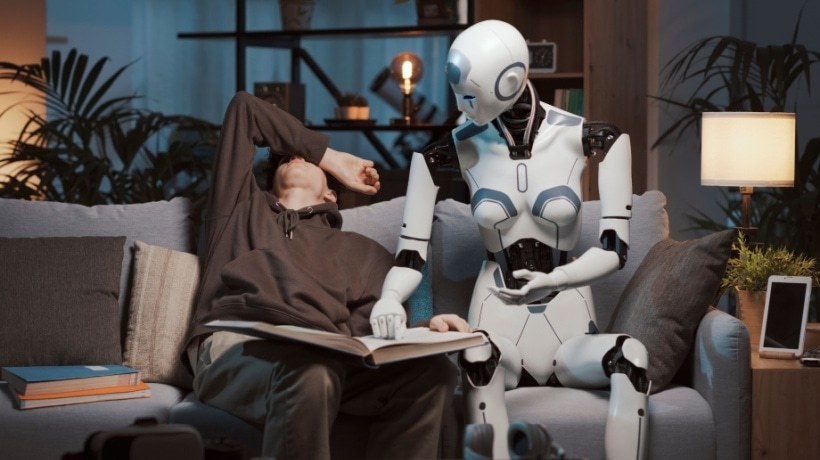
Currently, generation AI tools such as ChatGpt, Claude, and Gemini are becoming more common in education. These tools can answer questions, write essays, explain topics, and propose resources in seconds. Therefore, today’s students don’t have to struggle on their own as they can access help online at any time.
However, this change raises important questions. If AI can do homework for students, what does this mean for their learning? How can teachers really evaluate students’ knowledge when AI completes their tasks? Most importantly, how do homework ideas change? Here we explore all the ways in which generative AI is shifting the concept of homework and take a closer look at the benefits and risks that come with it.
Four Ways Generation AI Transforms Homework
1. Accessibility of AI Tools
The most obvious change is accessibility. Today, students are much easier to access to support their studies. In the past, choices were limited if you were caught up in an assignment at night. You can have a hard time, call a classmate, or wait until class the next day. Now students can enter their questions into AI tools and get an explanation of the correct answer and how to solve them. This change is important. Instead of spending hours getting frustrated, students can quickly overcome challenges. It’s like always having a private tutor, but for free.
2. Complete and understand your homework
Generation AI doesn’t just provide answers. The idea can be explained in many ways until the students understand it. This ability to coordinate explanations makes your homework feel more personal and attractive. Nonetheless, there are concerns. AI can help students learn better, but you may want to skip the learning process. After a long day, you may want to quickly write an essay using AI.
3. Personalized guidance
One of the exciting features of Generating AI is its ability to personalize learning. Traditional homework often uses a general approach. With this approach, all students receive the same homework and the same guidance. However, each student learns in their own way. With AI, homework can be tailored to each student. For example, if a student is struggling with mathematics, they can ask the AI for additional practice problems. On the other hand, students who find mathematics easy can request more advanced tasks to request more advanced tasks.
4. efficiency
One of the main changes to AI homework is that it allows things to be made more efficient. Some homework does not repeat what students already know or provide much benefit. In these cases, AI can help students complete their assignments faster and allow them to spend more time enjoying activities, such as sports, music, and spending time with their family. Knowing the answer is important, but understanding why it is correct is also important. Additionally, generative AI makes homework more efficient, but it doesn’t necessarily help students learn the reasons behind it.
Benefits of using Generator AI for homework
Personalized support
Personalization is one of the biggest benefits of AI homework. Traditional homework is treated the same way by all students. This approach can irritate both types of students. Advanced learners feel boring, but those struggling feel left behind. Generation AI changes this. For example, a confused student can ask AI to slow down. On the contrary, students ahead of the class can seek more challenging exercises. Homework can now be tailored to each student’s needs rather than adapting it to their homework.
Fill the gap
Not all students have access to the same resources outside of school. Some have parents who can help with assignments, private tutors, or quiet learning spaces. Others can balance their responsibilities at home and deal with parents who lack access to the internet or simply do not have the time or knowledge to provide academic help. Generating AI may fill these accessibility gaps by acting as a free tutor available 24/7. Therefore, AI ensures that it is not just a privileged minority support.
Encourage curiosity
AI allows students to ask as many questions as they like without being embarrassed. Many students are afraid of criticism and may not want to admit that they do not understand the lesson in front of the entire class. With AI, students can ask the same question in a variety of ways. This promotes authentic curiosity and deep learning.
Increased productivity
Many homework jobs can be felt repeatedly. Copying vocabulary words multiple times, having many similar mathematics problems, or summarizing book chapters is a task that will not motivate students. However, generation AI can help to make homework easier. Students can use it to practice vocabulary, create quizzes for self-tests, and break down long read assignments into short summary. This way, students can complete their homework quickly and with less stress.
Future preparation
When students learn to use the generated AI responsibly, they acquire the skills to help them in their future work. AI remains here and is becoming more important in how business works. Therefore, students who treat AI as a useful tool will have an advantage when they enter employees. They know how to use AI to brainstorm, edit, analyze, and resolve problems. Therefore, homework in the generation AI era is not only about doing things faster, but also about learning to deal with technology.
risk
Honesty and plagiarism
The problem with using generation AI for homework is not just that students can cheat. That means that fraud is simpler and harder to find. Unlike copies from websites leaving clear trails, the work generated by AI is unique every time, making it difficult for plagiarism detectors to catch. This causes serious problems. Because when AI is at work, homework no longer reflects the true abilities of the students.
Reduced critical thinking
Even if students are not directly cheating, using AI too much may result in poor understanding of the material. If students are constantly using AI, they will not learn how to tackle the tasks themselves. The homework generated by AI may feel like they have mastered the material, but they don’t really learn without having to do the work on its own.
Unequal access to tools
AI can help create equal opportunities, but it can also increase inequality when people don’t have the same access. Not all students have a reliable internet, a quiet place to study, or a device that can effectively run AI tools. If a wealthy student can use AI for homework and others can’t, it becomes unfair. Students with access can easily complete their assignments, but they struggle even more. Instead of reducing inequality, AI can actually make it worse.
Evaluation issues
The big challenge is to come up with ways to assess what students actually know. If students can complete their homework with the help of many AI, how can teachers communicate what skills they are actually developing? In the meantime, teachers have struggled to distinguish between AI-generated jobs and real students’ jobs. This uncertainty can cause frustration and conflict in the classroom.
Overdependence
What happens when students become too dependent on AI? If students can ask AI for help whenever they get stuck, they may not learn to be resilient. This excessive dependence affects more than mere academic work. It can affect other areas of life as well. Students may think that AI is always necessary to think for themselves.
Conclusion
Homework is changing, especially with the increase in generated AI. Educators and parents need to work together to rethink the meaning of homework. Instead of endless worksheets and repetitive essays, future homework can be more interactive, creative and student-driven. The challenge is to shape your homework and build essential skills while using new tools. Hopefully, AI can turn homework from a boring job to a real learning experience.
