


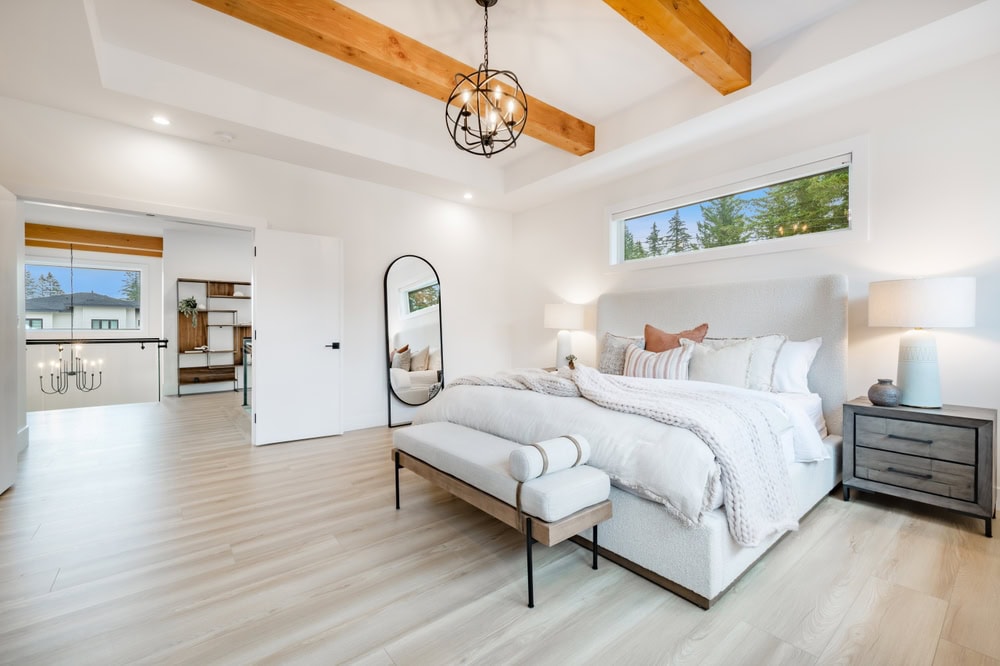
You are touring the house and stepping into a room that looks like a bedroom. Lots of space, windows, and perhaps a door leading to the hallway. But you realize that something is missing – there is no closet. Does the room need a closet to be considered a bedroom, or technically an office, a burrow or an extra room? The answer is not always easy. It depends on your local building codes, real estate guidelines, and even how you sell your home. Let’s take apart what is actually qualified as a bedroom.
What are the legal requirements for a bedroom?
To classify it as a bedroom, the room usually needs to meet certain criteria. The requirements vary, but here are some general criteria:
Minimum Size: Many jurisdictions require a bedroom of at least 70 square feet with a minimum width of 7 feet in any direction, but this may vary depending on your location. Exit (emergency exit): The bedroom requires at least one operable window or external door for emergency escape and rescue. Ceiling Height: The ceiling should generally be at least 7 feet tall in at least 50% of the room. Ventilation: Usually, proper airflow provided through the window is required. Lighting and Electrical Access: Building Codes requires a bedroom to have at least one permanent lighting fixture and at least two electrical outlets.
How about the closet?
So, where does it leave the closet space? If the room checks all legal boxes but does not have built-in storage, will it still count as a bedroom? It is common to expect a closet as part of a functional bedroom, but it is not legally necessary to classify a room into a bedroom in most areas.
Do I need a closet in my bedroom?
To address fiery questions, do rooms need a closet to be considered a bedroom? It’s not accurate. Many people assume that a closet is an essential item, but that is not necessarily a legal requirement. Most often, building standards focus on safety and functionality rather than storage. This means that the room is still eligible for one bedroom. It can be considered a bedroom as long as it meets important standards (good space, proper ventilation, emergency exits).
That said, expectations may vary depending on the local housing market. For example, New York City requires certain area and exit requirements, but no closet is required. The California housing code does not explicitly require a closet, but implements exit and ventilation standards. Many Texas cities don’t need closets, but buyers usually expect them in the bedrooms listed. Checking local building codes and consulting a real estate agent is the best way to check your specific requirements.
Real estate listings often reflect what buyers expect, with many associating their bedrooms with built-in storage. So, while a closet may not be legally necessary, it is often a practical feature that adds value to your space. However, if your room doesn’t have a built-in closet, there are plenty of creative ways to add functional storage in a stylish way.
Make the most of your bedroom without a closet
You fell in love with the house, but you are not sure about a bedroom without a closet. Don’t make it an escapee. There are plenty of stylish and functional alternatives that not only offer storage solutions, but also enhance the aesthetic appeal of your room.
Organize things
One of the first steps to navigate a room without a closet is to find a clever way to stay organized. Without the specified storage space, it’s about maximizing what you have. Lavender professional organizers provide organization and organization services to help you create systems that work for your space and lifestyle, and to keep your space cluttered while making the most of every inch. We share practical tips.
Multifunctional furniture: Use furniture such as storage ottomans and beds on beds with drawers to save space. Shelves: Install shelves on the wall for books and ornaments to keep the floor clean. Baskets and Bins: Store items with stylish baskets and label them for easy access. Hook: Add a wall hook or pegboard to hang your bag, hat or accessories. Create zones: organize things by dividing your room into areas for sleep, work and relaxation.
Adjust storage and design
Are you worried that extra storage will disrupt the style of your bedroom? With the right choice, organizations can actually enhance their space. Ellen B. Design, an Annapolis-based interior design company, offers design expertise.
“There are many pieces that can be matched to the style and colour of bedroom furniture. For example, there are beautiful armor, wardrobes and dressers with additional storage. They also bench ottoman matching the edge of the bed. It can also be placed as and provided storage inside. Many ottomen come in unique patterns and colors to tie them all together. Coat racks are cute additions to the corners where you hang hats, jackets and wallets. But there is.”
She continues. “For something more modest, there are many options for storage containers that slide under the bed. If not, floating shelves are perfect for displaying a collection of shoes. This in itself becomes a decoration. Plus, the clothing bar is perfect for anything you can hang. Add a shelf on top of the clothing bar to add space and decoration to complete the look.’
Enhance your storage solution
Take your alternative storage solutions to another level and strengthen your bedroom organization with docking drawer outlets. These outlets can be seamlessly installed on nightstands, dressers, or closet drawers, creating convenient charging stations for everyday wearable technology. Made with all durable metal construction and advanced safety features, it includes a patented automatic shutoff to prevent overheating. If you’re looking for a faster charging, a USB-C (PD) configuration is available to reduce cord confusion, tidy up the surface, and power your device quickly while also adding additional features to your storage. Masu.
What buyers and sellers need to know
There are great alternatives to bedrooms without closets, but it’s still important for home buyers and sellers to understand how this affects the value and function of the space.
It is essential for buyers to consider whether closet space is a must-have item or whether it is open to creative storage solutions. If you are assessing rooms where there is a lack of closet, can a closet be an essential or adapt to wardrobe, built-in, or underfloor storage? The flexibility of the space can outweigh the lack of traditional closets, especially when the room meets other important needs.
Transparency is important for sellers. Clearly tell each room’s functionality, such as whether a closet is included. If your room doesn’t have a built-in closet, but offers functional storage options such as shelves and large wardrobes, highlight the features that help potential buyers assume the room’s potential . By offering storage hacks, including tips on maximizing vertical space and using multipurpose furniture, your room feels just as functional as one with a closet.
Appraisers will determine the value of your home based on comparable sales, so if a home in this area has a bedroom closet, homes without them can get a lower rating. However, if rooms without closets are common in the neighborhood, the impact may be minimal.
Final Verdict: No closet or closet, it could still be a bedroom
So do you need a closet in your bedroom? The answer is no and it doesn’t have to be a red flag. Legal requirements vary, but bedrooms are ultimately defined by their functionality. Size, safety and livability are more important than built-in storage. Bedrooms without closets are still stylish and practical, as there are creative alternatives such as wardrobes, dressers, and bed underbed storage. Whether you buy or sell space or simply rethink it, the right setup will make any room feel like home.
