


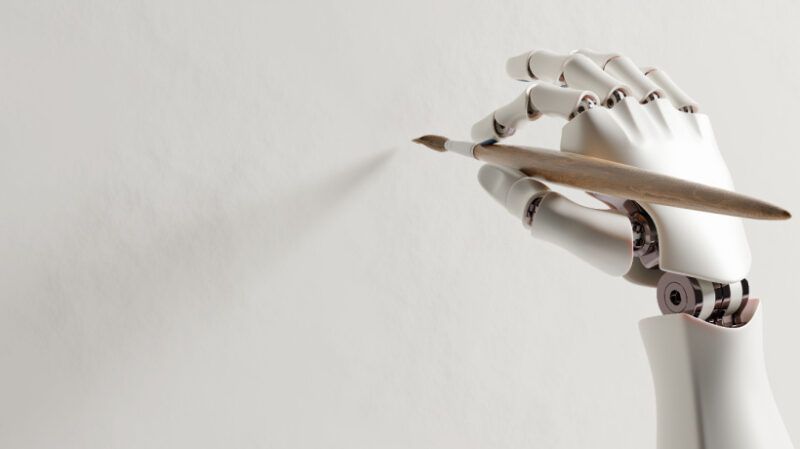
Impact of AI -drive content creation
With the emergence of AI -led content creation, creative industries have brought revolutions, fundamentally changed the role of employment, and reconstructed professional responsibilities. By utilizing machine learning and advanced algorithms, AI is rebuilt a method for experts to approach creativity and innovation, from writing, graphic design, video editing and campaign optimization. I will do it.
AI -led content creation causes productivity improvement and innovation.
The tools equipped with AI have greatly improved the efficiency of creative workflows. Platforms such as Chatgpt for text generation and DALL-E for image creation can generate high-quality output in one minute, so experts can focus on strategic thinking. According to a 2023 Gartner survey, creative teams using AI Tools have reported that the productivity is increased by 40 % due to repeated tasks, and human expertise is conceptual and storytelling. You can shine.
Beyond productivity, AI -led content creation promotes innovation and provides practical insights by analyzing trends and viewers’ preferences. For example, AI can evaluate a huge amount of datasets, predict market behavior, and predict a moving idea of the audience while challenging creative boundaries.
I will change the role of Job
As AI repeatedly automated the tasks, the focus of creative roles has shifted to strategic monitoring and quality assurance. For example, designers are currently leading AI to create a specific visual style, and turns its role into the “AI supervisor”. Similarly, writers work more and more as “quick engineers”, create accurate instructions for AI, and generate the desired content.
Future of Jobs 2023 of World Economic Forum emphasizes a major change in AI’s role within five years. This shift requires the development of new abilities such as AI tool management, data analysis, and ethical content curations, and guarantees that experts are related to the evolving industry.
Opportunities and ethical considerations
AI has efficiency and scalability in the creative industry, but has also introduced issues related to originality and ethics. The problem surrounding intellectual property, the bias of the products generated in AI, and the genuineness of human beings need to monitor human beings that enhance the irreplaceable value of humans.
At the same time, AI -led content creation will democratize creative tools so that small and medium -sized enterprises and independent creators can create large -scale high -quality content. This democratization has led to intensifying competition and collaboration, and has expanded the possibilities of innovation and engagement over various creative sector.
The statistical evidence PWC reports that AI can donate $ 15.7 trillion to the global economy by 2030, which creates a large share from enhanced creative processes. Statista predicts that the AI market in content creation will grow with a 21.5 % complex growth rate (CAGR) between 2023 and 2027, indicating the rapid adoption of AI technology throughout the creative industry.
Future of creativity
The adoption of AI -led content creation changes creative fields, combines human creativity with machine intelligence, and creates a more efficient, innovative and comprehensive ecosystem. Experts need to adapt to new roles, acquire technical skills, and deal with ethical considerations to fully utilize the potential of AI. As this transformation develops, the synergistic effect of human ingenuity and AI ability promises to be redefined the boundary between creativity and innovation.
Conclusion
With the rise of the creation of AI -led content, creative industries have been significantly changed, and the overall approach to work, workflow, and creativity has been rebuilt. The Technical Revolution provides an exciting opportunity for creative tools for productivity, innovation, and democratization, but also raises important questions about the future of human roles in the creative field. As AI continues to evolve, the relationship between human expertise and the intelligence of the machine is further intertwined, and understanding this dynamics is important for experts who are aiming for more and more automated environments. 。
Above all, it has been proven that AI is a very powerful tool to enhance the efficiency of creative processes. Thanks to the AI algorithm, tasks that once took several hours or days, such as creating articles, creating a design, creating a video, creating a video, creating a video, etc., have been completed for several hours or days. By automating these repetitive and time -consuming tasks, creating AI -led content focuses on high -level activities such as conceptual ideas, strategic development, and story structure. This improvement in efficiency not only enhances productivity, but also makes projects faster. This is a great advantage in the fast -paced industry, such as advertising and digital media.
In addition, AI has unlocked a new innovation lock by pushing the boundaries of what experts can do. AI -mounted tools can analyze a huge amount of data, identify new trends, predict viewers’ preferences, and provide valuable insights of fuel creativity. For example, a marketing person can use AI to create a hyperter gating campaign based on real -time data and guarantee that it will resonate with the appropriate audience at the right time. Similarly, designers can experiment with new styles and concepts that were previously out of reach due to restrictions on time and technical skills. In this way, AI enables creative experiments at a level that would be unimaginable just a few years ago.
However, AI plays a more important role in creative processes, and the responsibilities of human experts are evolving. Content creator’s traditional roles have been reconstructed, and not only performing tasks manually, but also focusing on directors, curations, and fine -tuned AI generation outputs. Designers, writers, and other creatives are becoming a facilitator of the AI process, leading technologies to generate output tailored to the intended vision. This shift is not only to learn to operate AI tools, but also to adapt to new workflows and understand the potential and limits of AI in creative space. Experts need to deepen the AI’s abilities and learn how to achieve the desired results effectively with these tools.
At the same time, an increase in dependence on AI proposes important ethical and philosophical issues. AI can create stunning visuals, generate compelling texts, and even create music, but cannot reproduce the unique perspective and intuition that human creatives bring to the table. There are concerns that you need to deal with all the reliability of the content generated in AI, the impact on the job displacement, and the potential bias unique to the algorithm. This emphasizes the importance of human surveillance in creative processes. Creative is more and more responsible for confirming that the content generated in AI is ethical, original, and has no bias. In addition, experts also need to protect intellectual property rights related to the work generated by AI. This is a complex and unstable topic.
The rise of AI has also democratized access to creative tools and lowered the barrier to the creative entry of aspirations. You can access an independent artist, small and medium -sized enterprises, or even amateur AI -driven platforms for large companies with a considerable budget. Democratization of this technology has made the stadium leveled and can compete with giants in the industry that has established small players. For example, solo content creators use AI tools to generate high -quality videos or design work, and open new possibilities for self -expression, entrepreneur spirit, and collaboration.
