


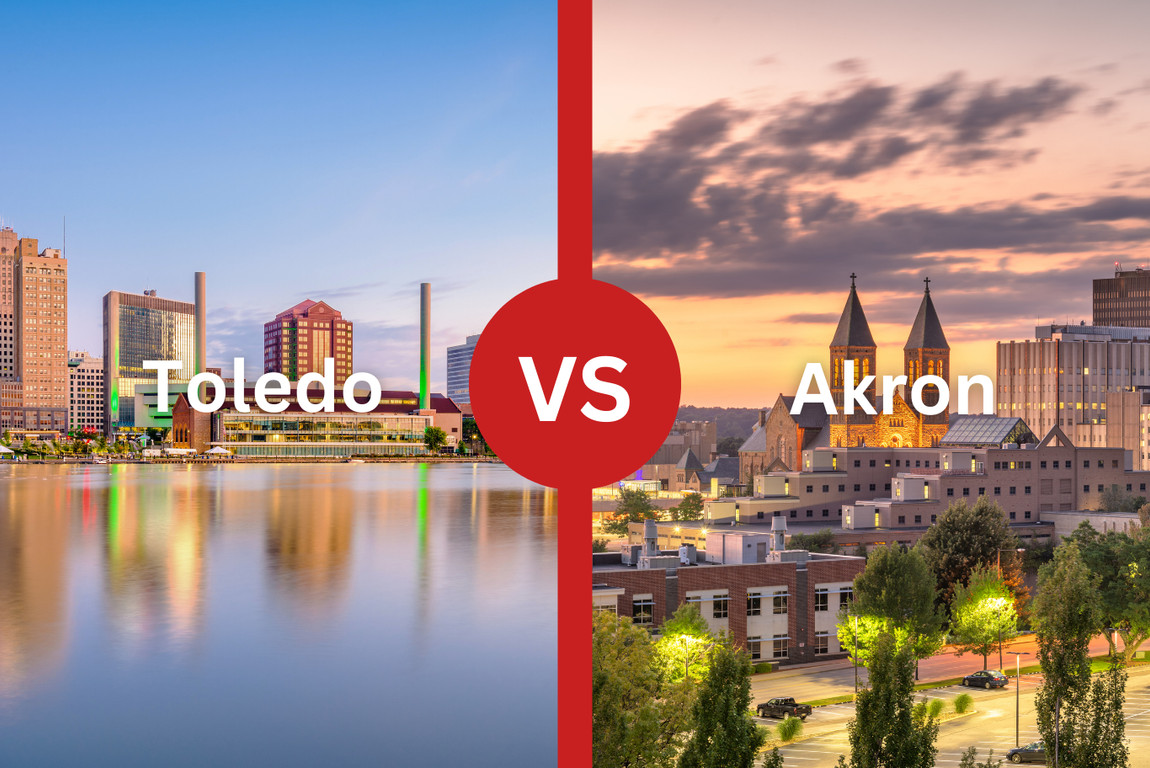
Want to settle in Ohio? Choosing between a modern apartment in Toledo or a charming home in Akron means choosing between two mid-sized cities that offer affordable living that combines urban and suburban perks. It means that. Toledo is known for its thriving arts scene and proximity to Lake Erie, while Akron boasts a close-knit community and an abundance of outdoor activities. Whether you’re drawn to Toledo’s energetic downtown or Akron’s charming neighborhoods, each city offers something unique.
This article details the cost of living, job opportunities, and lifestyle characteristics of both cities to help you find your perfect home in Ohio.
Toledo vs. Akron Housing
Toledo and Akron, medium-sized cities in Ohio, each offer affordable housing markets with unique appeals. From Toledo near Lake Erie to the community-focused Akron area, both cities offer buyers and renters a wide range of options.
Toledo housing
Toledo’s housing market is budget-friendly and ideal for those seeking suburban or lakeside living. Toledo neighborhoods like the Old West End are known for their historic homes, and areas near the lake offer beautiful views. Toledo offers a variety of single-family homes, townhouses, and apartments to suit different lifestyles.
Median home price: The median home price in Toledo is approximately $125,000, making it one of the most affordable markets in Ohio. Average Rental Cost: Rentals in Toledo average around $804 per month, which is a significant savings compared to larger cities.
akron housing
Akron’s housing market balances affordability with access to green space and community amenities. The city features a mix of unique old homes and new developments. Popular Akron neighborhoods like Highland Square have a great community feel.
Median home price: The median home price in Akron is approximately $134,000, slightly more expensive than Toledo, but still very affordable. Average Rental Price: Rental prices in Akron average around $887 per month, with options ranging from downtown apartments to suburban homes.
Cost of Living in Toledo and Akron
The cost of living in Toledo and Akron is budget-friendly, with Toledo being about 5% cheaper overall. Differences in utilities, groceries, transportation, and living costs highlight each city’s unique affordability.
1. Utility
Utility bills in Akron are 20% lower than in Toledo. Despite Toledo’s small population and mild winters, Akron’s utility costs benefit from an older but efficient infrastructure, resulting in lower energy bills.
2. Groceries
Groceries in Toledo are 12% cheaper than in Akron. Toledo’s proximity to agricultural areas and small population keep food costs low, while Akron’s urban environment slightly increases the price of fresh produce and goods.
3. Transportation
Transportation costs are about the same in the two cities, but Toledo is slightly more affordable due to less traffic and shorter commute times. However, public transportation in Akron costs 19% more. This reflects a more developed system that benefits residents who use buses and other forms of transportation.
4. Healthcare
Healthcare costs in Akron are 6% lower than in Toledo. Toledo’s community-based care keeps costs manageable, while Akron’s wide range of medical facilities and specialty services offer more options at slightly lower costs.
5. Lifestyle
The cost of living in Akron is 1% lower than Toledo. Akron’s focus on arts, food, and entertainment contributes to its cultural appeal, while Toledo offers a quieter, budget-friendly lifestyle with affordable outdoor and cultural activities. Masu.
Size and population of Toledo and Akron: two neighbors in Ohio
Toledo and Akron are both medium-sized cities in Ohio, with vastly different sizes and populations. Toledo is approximately 84 square miles and has a population of approximately 270,000 people, creating a more open and less crowded urban landscape. Akron is a bit smaller at 63 square miles, but home to about 190,000 people and has a more compact, community-driven feel. Toledo’s larger area allows its neighborhoods to be more spread out, while Akron’s smaller area fosters a tight-knit urban environment.
Toledo and Akron weather and climate
Toledo’s climate and Akron’s climate share the typical four-season Ohio climate of hot, humid summers and cold, snowy winters. Winters in both cities are similar, but Toledo’s proximity to Lake Erie means that it occasionally receives snow from the lake, and the storms are slightly more intense than in Akron. Summers in both cities are warm and humid, and thunderstorms are common. Although there are some differences, both cities have consistent seasonal changes and are characterized by classic Midwestern climates.
Toledo and Akron job market
Toledo: Manufacturing and healthcare are at the forefront.
Toledo’s economy is deeply rooted in manufacturing, with industries such as automobiles and glass manufacturing playing important roles. Companies like General Motors and Owens Corning offer stable employment opportunities, complemented by growth in the health care sector with employers like ProMedica. Toledo offers solid income potential with an employment rate of approximately 56%, a median household income of $46,000, and an average hourly wage of $27.61. While manufacturing is the dominant industry, the city is diversifying with small businesses and service industries contributing to the economy.
Akron: Focus on healthcare and polymers
Akron’s job market has evolved from its roots in the rubber industry and focuses on healthcare, education, and polymer science. Major employers such as Summa Health and the University of Akron are driving growth in these areas. With a 60% employment rate, median household income of $50,000, and average hourly wage of $28.24, Akron offers competitive opportunities, especially in research and health care. The city also focuses on nurturing small businesses and start-ups, adding diversity to the employment environment while maintaining its community-based appeal.
Transportation in Toledo and Akron
Toledo: Car-centric and transportation options are limited.
Toledo’s transportation system relies heavily on cars, with TARTA (Toledo Area Regional Transportation Authority) providing limited bus service. Most residents rely on cars because of the city’s extensive neighborhoods and easy access to roadways. The parking lot is large and there is little traffic, making it convenient for drivers. Biking and walking are only practical in limited areas, such as downtown.
Akron: car dependent, transit accessible
Akron offers a car-friendly environment with relatively little traffic and plenty of parking. The METRO RTA bus system provides public transportation within the city and surrounding areas, but it is not as robust as in larger cities. Although dedicated trails have been developed and cycling is becoming more popular, most residents still rely on cars to get around the city.
Traveling to and from Toledo and Akron
Toledo and Akron offer regional travel options with convenient road, rail, and air connections for residents and visitors traveling within and beyond the Midwest.
Toledo: Regional flights are available from Toledo Express Airport, and international flights are only an hour away from Detroit Metropolitan Airport. Amtrak’s Capitol Limited and Lake Shore Limited routes connect Toledo with Chicago, Cleveland, and the East Coast. Greyhound buses and major highways like Interstate 75 make road travel easy, and interstate and interstate travel options are available. Akron: Akron-Canton Airport offers regional flights, and nearby Cleveland Hopkins International Airport offers domestic and international flights. The closest Amtrak station is in Cleveland, providing rail connections to major cities. Greyhound buses and Interstate 77 provide easy access by car, making Akron an easily accessible city in Northeast Ohio.
Toledo and Akron Lifestyle and Activities
A day in the life of a Toledo person
Living in Toledo offers a laid-back, Midwestern charm with the excitement of an urban setting. Mornings often begin with a visit to a local coffee shop or a walk along the Maumee River before heading to work in industries such as manufacturing, healthcare, and education. In the evening, enjoy dinner at a local eatery, then catch a concert or show at the Huntington Center. Weekends are often spent exploring Toledo’s vibrant art scene, visiting local parks, or enjoying time at the Toledo Zoo.
Popular places to visit in Toledo:
Google Street View of the Maumee River
Outdoor activities in Toledo:
Google Street View of Wildwood Preserve Metropark
Toledo Attractions: Great Lakes National Museum Toledo Botanical Gardens Fort Meigs Historic Site Valentine Theater Tony Pacos Café for a local gourmet experience
A day in the life of an Achronite
Living in Akron is rooted in a strong sense of community, with easy access to cultural and outdoor activities. Residents may start their day with coffee and bagels from local shops before starting work in industries such as healthcare, education, and manufacturing. In the evening, explore Akron’s art galleries, attend a live performance at the Civic Theater, or enjoy a meal in the trendy Highland Square neighborhood. Weekends are perfect for hiking in Cuyahoga Valley National Park or visiting local farmers markets.
Popular places to visit in Akron:
Google Street View of Stan Hywet Hall and Gardens
Outdoor activities in Akron:
FA Seiberling Nature Google Street View
Akron Attractions: Akron Zoo Perkins Stone Mansion Dr. Bob’s House (AA Historic Site) MAPS Museum of Flight Rock 3 Park for concerts and events
Food and culture in Toledo and Akron
Toledo: City of Glass
Toledo’s food culture is as unique as its nickname, “City of Glass,” with a blend of traditional home cooking and modern culinary trends. Known for its iconic Tony Paco’s Hungarian hot dogs and pierogi, the city also boasts a growth in farm-to-table transportation. Toledo’s cultural events, such as the German American Festival and Toledo Night Market, celebrate its diverse traditions through food, music, and dance. The city’s art scene is centered around the Toledo Museum of Art and its famous Glass Pavilion, while local theater productions and live music venues add to the cultural tapestry.
Akron: Rubber City
Akron’s food and culture reflects a close-knit community atmosphere, with an emphasis on locally sourced ingredients and neighborhood amenities. The city is known for dishes like sauerkraut balls and Barberton chicken, as well as innovative craft breweries and coffee roasters. Events like the National Hamburger Festival and Akron Arts Expo highlight the city’s love of food and creativity. Akron’s Cuyahoga Valley National Park inspires a strong connection to nature, reflected in its cultural offerings, from outdoor music festivals to gallery openings featuring local artists.
Toledo and Akron sports scene
Toledo: Love for the local team
Toledo’s sports scene is rooted in local teams, and the Toledo Mud Hens minor league baseball team is the city’s pride and joy. Fifth Third Field regularly fills with enthusiastic fans and provides a classic baseball experience. The city’s ECHL hockey team, the Toledo Walleyes, also has a strong following at the Huntington Center. College sports from nearby universities such as the University of Toledo add to the city’s vibrant sports culture.
Akron: Focus on college and community sports
Akron’s sports culture is centered around collegiate athletics, and fans of football, basketball, and soccer flock to the University of Akron Zips. The city also enjoys recreational sports, with local parks and facilities hosting softball leagues, running clubs, and community events. Akron’s proximity to Cleveland allows residents to cheer on professional teams such as the Browns, Guardians, and Cavaliers, and the Double-A Akron RubberDucks baseball team provides entertainment at Canal Park.
