


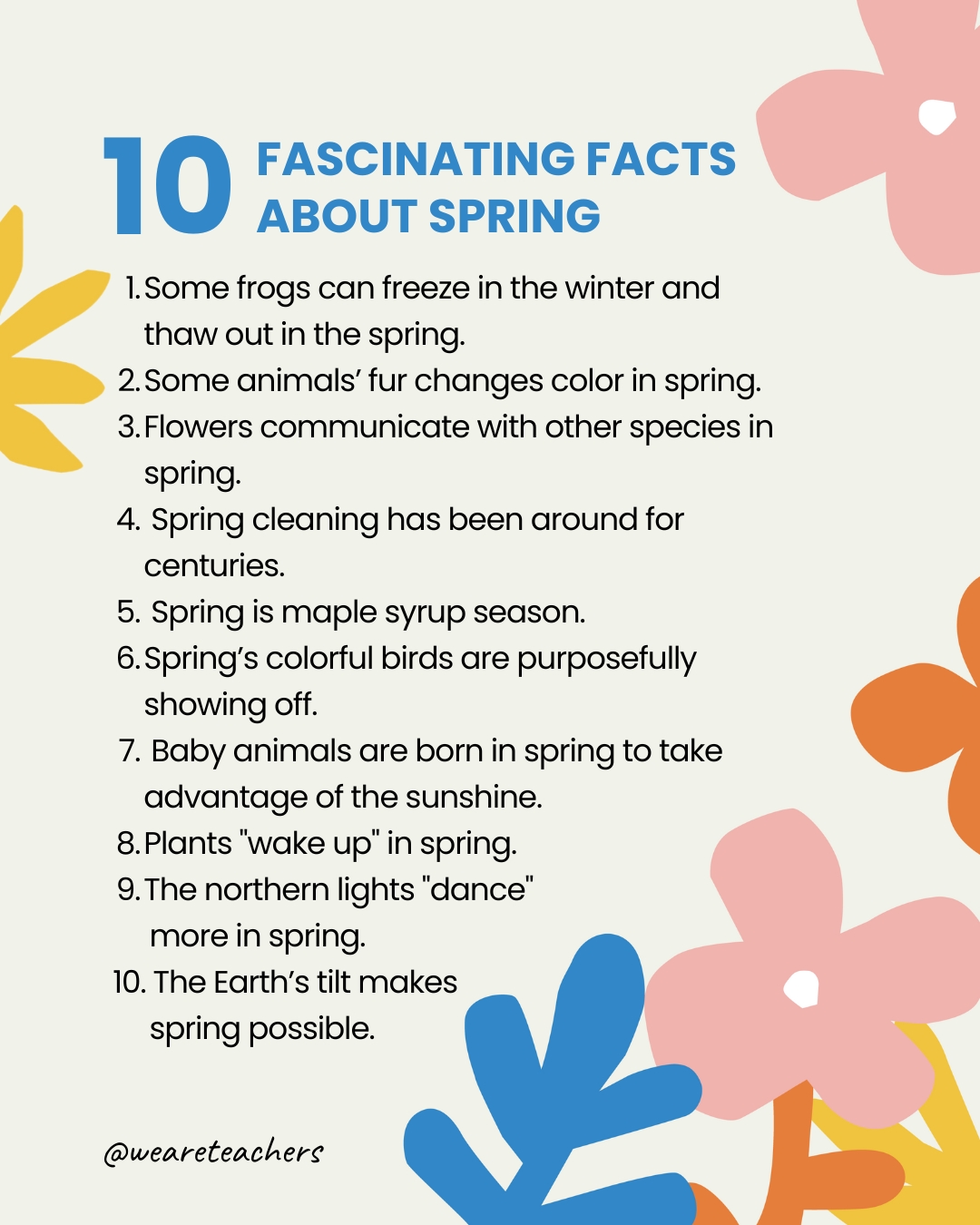
Spring is one of the most exciting times of the year, filled with blooming flowers, singing birds and long days. But there are more fascinating facts than warmer weather than spring!
These facts about spring help children (and even adults!) learn about the wonders of this vibrant season. If you are a teacher looking to attract a starter in classroom discussions, or a parent who wants to stimulate curiosity at home, these spring facts will bring smiles and encourage learning.
Additionally, click on the button below to receive a Google Slideshow of all the facts below.
Our Favorite Fun Facts About Spring
This is a collection of spring-themed facts perfect for fun, informative and curious young minds. From blooming flowers to bustling bees, these fun and informative little information can help you explore the wonders of this vibrant season.
1. The vernal equinox marks the first day of spring.
This is a day where the number of sunlight and night hours is roughly equal, usually around March 20th or 21st in the Northern Hemisphere.
2. Meteorologists say spring begins on March 1st.
Meteorologists – scientists studying weather and climate – expand the year into four equal seasons. For them, spring runs in the Northern Hemisphere from March 1st to May 31st, regardless of when the equinox occurs.
3. Spring is known for extreme changes in the weather.
This is when you see big snowstorms, heavy rain, large temperature changes and strong winds. That’s because warm air from the south and cold air from the north are fighting against it, making the weather very unpredictable. It’s like a natural way to keep us on our toes!
4. Baby animals are born in the spring and take advantage of the sunlight.
Long spring days and warm weather provide plenty of food for young animals. Deer, squirrels, foxes and even whales welcome babies in the spring when food is most abundant.
5. The frog and toad sing and spring is upon us.
As they emerge from hibernation, their calls fill the air. Male frogs such as chorus frogs, spring peeps, wooden frogs sing at dawn and dusk, attracting women. Some of their cloaks are as loud as a lawnmower!
6. Migratory birds return home in spring.
They’re back! Every spring, birds return from their winter homes. Many North American birds head to the Gulf countries in winter, but others travel all the way to Mexico, Central America and Panama. Panama is also home to the world’s most wintering birds.
7. Animal fur changes color in spring.
Animals like the Arctic fox will blend in with the new environment by replacing white winter coats for their spring brown coats. Think of it as a spring “transformation.”
8. The warmth of the spring causes a swarm of beehive activity.
As spring arrives, the beehives become lively with excitement as the larvae develop into young bees. These new pollinators are essential to supporting seasonal blooming flowers.
9. The tilt of the earth allows for springs.
The tilt of the earth gives the seasons that include spring. During spring, the Northern Hemisphere begins to tilt towards the sun, bringing longer days and warmer weather.
10. Spring can make you feel happy.
When the weather warms up in spring, your brain produces more serotonin, a chemical that makes you happy. This is why people tend to feel more lively and positive as spring arrives.
11. Tornadoes are most common in the spring.
Tornadoes are more likely to occur in the spring than in any other season. This is because spring brings warm air and stormy weather, creating the best conditions for tornadoes to form.
12. Flowers communicate with other species in the spring.
Spring flowers don’t look pretty and are full of secret signals. Their vibrant colours and sweet scents communicate with insects and animals, informing them that the flowers are ready to pollinate.
13. Flying thousands of miles north in spring.
Monarch butterflies travel from Mexico to the US and Canada every spring to lay their eggs.
14. Spring is maple syrup season.
This is one of the sweetest facts about spring! First, maple trees produce sap that farmers gather to produce sweet maple syrup. This process, known as sugar ingestion, only occurs when the day is warm but the night is still cold, and it has been a spring tradition for thousands of years.
15. The shower in April really brings May flowers.
Spring is known for rainy weather, and helps plants grow and bloom after winter. Flowers like tulips and daffodils thrive thanks to the rains of spring.
16. Spring pollen disrupts your immune system.
In spring, the immune system can mistake something harmless like pollen for a dangerous bacteria, causing allergies. This confusion causes the body to overreact and cause sneezing, itching and runny nose during the blue season.
17. Cherry blossoms are a sign of spring in Japan.
These flowers, also known as the Japanese name Sakura, are a major part of Japan’s spring and culture. These beautiful pink flowers bloom in early spring for about two weeks, representing a new beginning.
18. Arctic terns are world records and immigrants.
Arctic terns hold the world record for the longest travel journey of any animal on incredible trips that begin in spring. They return every year, around 25,000 miles from the Arctic to the Antarctic. It’s one serious trip!
19. A plant that “wakes up” in spring.
Plants fall into a kind of deep sleep during the winter. In spring, they wake up from dormancy, begin to bloom through the soil, and start to produce bright colors and fresh green leaves everywhere.
20. Spring cleaning has been around for centuries.
Spring cleaning is more than just a modern tradition. It dates back to ancient cultures. The Persian tradition of “Khooneh Tekouni” welcomes a new season of “shaking” to “shake the house”, and the pre-Passor Jewish cleaning habits have a similar purpose. It’s all about a new start!
21. Frogs may freeze in winter and thaw in spring.
The frog is amazing! Some people freeze solids in winter, but they only melt in the snow and return in spring. How do they do that? They have special antifreeze-like chemicals in their bodies.
22. Spring occurs at various times around the world.
In the Northern Hemisphere, spring begins in March and in the Southern Hemisphere in September. So, while we enjoy the spring, people in the Southern Hemisphere are experiencing the fall! This is one of the craziest facts about spring to wrap your head.
23. The colorful birds in the spring are intentionally showing off.
Male birds like the Peacock and Northern Cardinals become even brighter and colorful in the spring. They do this to impress women and show off their beautiful feathers to attract their peers.
twenty four. Aurora “dance” in spring.
Around the spring equinox, the Earth’s magnetic field is supercharged, creating a vivid display of the sky’s swirling light. A similar phenomenon occurs during the autumn equinox.
twenty five. Morel mushrooms are the delicateness of spring.
Morel mushrooms, known for their delicious flavors, are a rare snack that only appears in spring. These unique mushrooms have been praised by chefs and foragingrs, and are signs that the season has officially changed.
Get my print!
If you enjoyed these spring facts, click the button to receive your Google Slideshow and share your favorites with the classroom!
